

Courts Cannot Rewrite Commercial Contracts To Award Interest On Security Deposits Contrary To Explicit Terms: Supreme Court
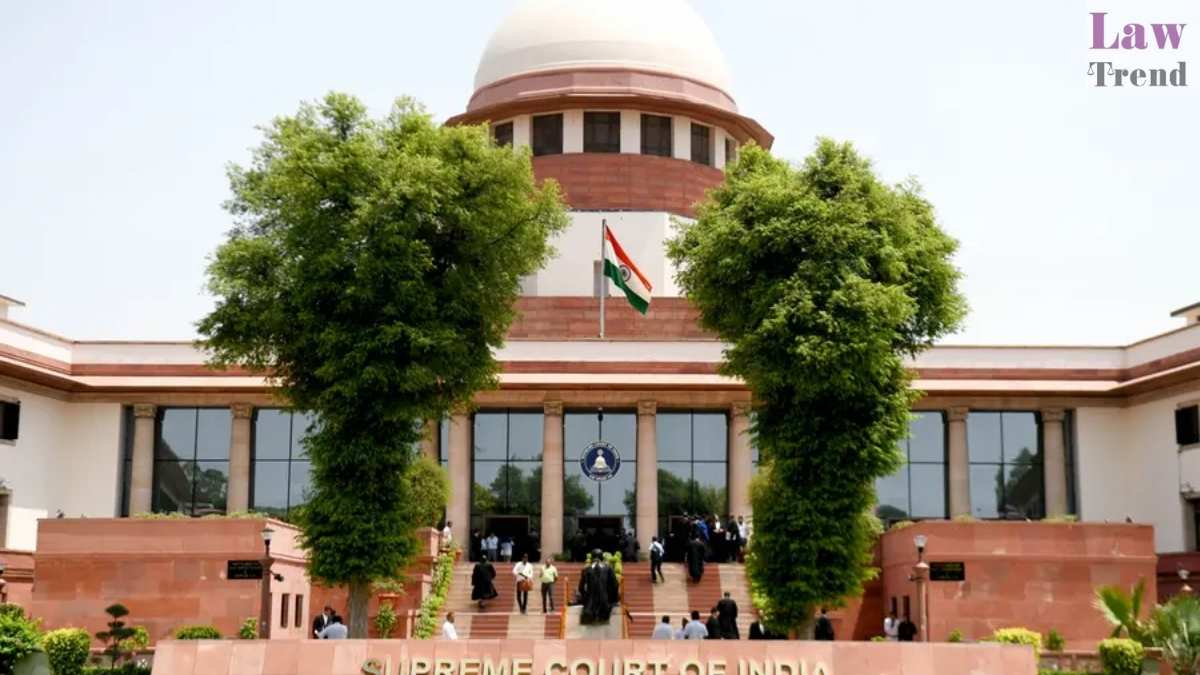

The Supreme Court of India has ruled that courts cannot rewrite the terms of a commercial contract to award interest on a security deposit when the agreement explicitly prohibits it. A bench comprising Chief Justice of India Surya Kant and Justice V. Mohana partly allowed the appeals filed by the State of Haryana, setting aside a Punjab and Haryana High Court directive that had declared a “no-interest” clause on security deposits unsustainable. The apex court clarified that while no interest is payable during the contract period and for three months post-termination, the State cannot hold such deposits indefinitely and must pay interest if it retains the money beyond the contractually mandated refund period.

Background of the Case

The dispute arose under the Punjab Minor Minerals Concession Rules, 1964. Rule 33 of these rules provides that once a bid is confirmed or a tender is accepted, the contractor must execute an agreement in Form-L within one month.

On March 26, 1998, the State of Haryana issued an auction notice for the extraction of Yamuna sand from the Bega Murthal Sand Zone. M/s. Jai Durgaa Finvest P. Ltd. (the respondent) emerged as the highest bidder, offering Rs. 1.48 crores per annum for a three-year mining contract ending on March 31, 2001. A formal agreement under Form-L was subsequently executed between the parties on November 30, 1998.

Under Clause 1 of the contract, the respondent was required to pay the monthly contract money in advance. Clause 2 mandated that if the contractor failed to pay any instalment on the due date, they would be liable to pay interest on the delayed amount at the rate of 24 percent per annum. Clause 16 provided that default in observing the terms or paying the contract money could lead to the termination of the contract with the forfeiture of the security deposit. Crucially, Clause 19 of the agreement explicitly stated:

“Security deposit shall carry no interest. It shall be refunded to the contractor within three months from the date of expiry or sooner determination of the contract.”

The respondent defaulted on monthly instalments starting in September 1999. Following a notice of termination issued on January 19, 2000, the Director of Mines and Geology officially terminated the contract on March 9, 2000, and ordered the forfeiture of the respondent’s security deposit.

The respondent appealed to the Appellate Authority, which allowed the forfeited security deposit to be adjusted against outstanding dues, provided the respondent paid the remaining outstanding balance. However, after making a partial payment of Rs. 26 lakhs, the respondent defaulted on the remaining schedule and filed a writ petition in the Punjab and Haryana High Court.

READ ALSO  Supreme Court Terms Tamil Nadu’s Challenge to Mekedatu Project “Premature”; Says DPR Can Proceed After Expert Scrutiny

Though initially rejected by a Single Judge, the matter was remanded by the Supreme Court in 2004 for fresh consideration. Upon re-examination, the Single Judge found that the contractor was solely to blame for the contract’s non-performance and that the termination was legal. However, the Single Judge declared Clause 19 “unsustainable in law” and directed the State to refund the security deposit of Rs. 37 lakhs with interest at 9 percent per annum from the date of deposit. This order was subsequently upheld by a Division Bench of the High Court, prompting the State of Haryana to appeal to the Supreme Court.

Arguments of the Parties

The appellants (State of Haryana) argued that the High Court could not rewrite an unambiguous contract that the parties had voluntarily entered into in an open commercial tender. They pointed out that Clause 19 was a standard statutory term that was never challenged during the currency of the agreement.

Furthermore, the appellants explained that security deposits are kept in a non-interest-bearing Treasury Head (8443-Civil Deposit and Advances) and that the department does not conduct banking business or earn interest on these deposits. They argued that the High Court’s comparison between the interest charged on delayed instalments and the interest on security deposits was flawed, as the interest charged under Clause 2 was merely compensatory for the contractor’s own default.

Conversely, the respondent-contractor contended that the contract was unconscionable, one-sided, and skewed in favor of the State because it denied the contractor interest on security deposits while charging high interest on delayed payments. They argued that the High Court’s judgment was founded on equity, justice, and good conscience, and asserted that the contract had been frustrated due to the State’s failure to procure land under Clause 27.

READ ALSO  All Services Rendered by Airports Authority at Airports Are Taxable, Including Export Cargo Handling: Supreme Court

The Court’s Analysis

The Supreme Court examined the legal boundaries of judicial intervention in commercial agreements, emphasizing that courts must respect the autonomy of contracting parties. Emphasizing this principle, the bench observed:

It is well settled that in matters of contract between the parties the function of a Court is to interpret and enforce the terms as has been agreed between parties. The Court will not re-write the terms howsoever reasonable the substituted term may appear to be.

The court highlighted that the respondent participated in the auction and signed the agreement with full knowledge of the statutory rules and Clause 19. The bench noted:

Once the parties with their eyes open without any protest whatsoever and with free will accept certain terms of a contract they cannot afterwards be permitted to go back on the same merely because at a later point of time the stipulation proves to be onerous.

The Court cited established precedents such as National Highways Authority of India v. Ganga Enterprises And Another and Shri Hanuman Cotton Mills and Others Vs. Tata Aircraft Limited to reinforce that agreed forfeiture and security terms must be enforced according to the contract. It also referred to the principles reaffirmed in Venkataraman Krishnamurthy And Another v. Lodha Crown Buildmart Private Limited, which drew from General Assurance Society Ltd. v. Chandumull Jain and Rajasthan State Industrial Development & Investment Corpn. v. Diamond & Gem Development Corporation Ltd, establishing that courts cannot construct a new contract for the parties.

Addressing the High Court’s decision to strike down Clause 19 on public policy grounds, the Supreme Court noted:

The public policy cannot be pressed into service to set at naught the commercial contract which expressly denies interest on security deposit. Such a stipulation is neither immoral nor unlawful nor can it be classified as unsustainable in the legal sense.

The apex court rejected the High Court’s reasoning regarding the lack of reciprocity of interest, stating:

The stipulations in Clause 2 and in Clause 19 operate in different fields and they serve different purposes.

While Clause 2 functions as liquidated damages or compensation for the contractor’s own breach, the security deposit under Clause 19 serves as a performance guarantee.

READ ALSO  Tenant Cannot Insist Maintainability Objection Be Decided as Preliminary Issue in Summary Rent Proceedings: Allahabad High Court

However, the Supreme Court ruled that Clause 19 must be read in its entirety. The clause consists of two interdependent limbs: the prohibition of interest and the mandate to refund the deposit within three months of expiry or termination. The court observed:

The correct interpretation of this Clause would mean the Respondent’s deposit will earn no interest and it will be returned to the Respondent within three months of the contract coming to an end or within three months of the termination of the contract.

The court held that the State cannot retain interest-free funds indefinitely. If the State retains the deposit beyond the contractually stipulated three-month window, the contractor is legally entitled to interest:

If the State retains the security deposit beyond three months the Respondent-contractor is entitled for interest which is very clear from a proper reading of Clause 19.

The Decision

Based on its interpretation, the Supreme Court partly allowed the appeals. It set aside the judgments of the High Court that had declared Clause 19 unsustainable and rejected the directive to pay interest from the date of the initial deposit.

The court declared Clause 19 to be a valid and binding contract term, meaning no interest is payable on the security deposit of Rs. 37 lakhs for the period up to three months post-termination (i.e., up to June 9, 2000). However, because the contract was terminated on March 9, 2000, and the three-month period expired on June 9, 2000, the court ruled that the respondent is entitled to simple interest at the rate of 9 percent per annum from June 9, 2000, until the date the amount was adjusted or refunded. The court made no order as to costs.

Case Details:

Case Title: State of Haryana & Ors. v. M/s. Jai Durgaa Finvest P. Ltd.
Case No.: Civil Appeal Nos. 3145-3146 of 2012
Bench: Chief Justice of India Surya Kant, Justice V. Mohana
Date: July 13, 2026

Law Trend
Law Trendhttps://lawtrend.in/
Legal News Website Providing Latest Judgments of Supreme Court and High Court

Related Articles

Latest Articles

