

State Disability Commissioner Has No Jurisdiction To Adjudicate Property Disputes: Jharkhand High Court
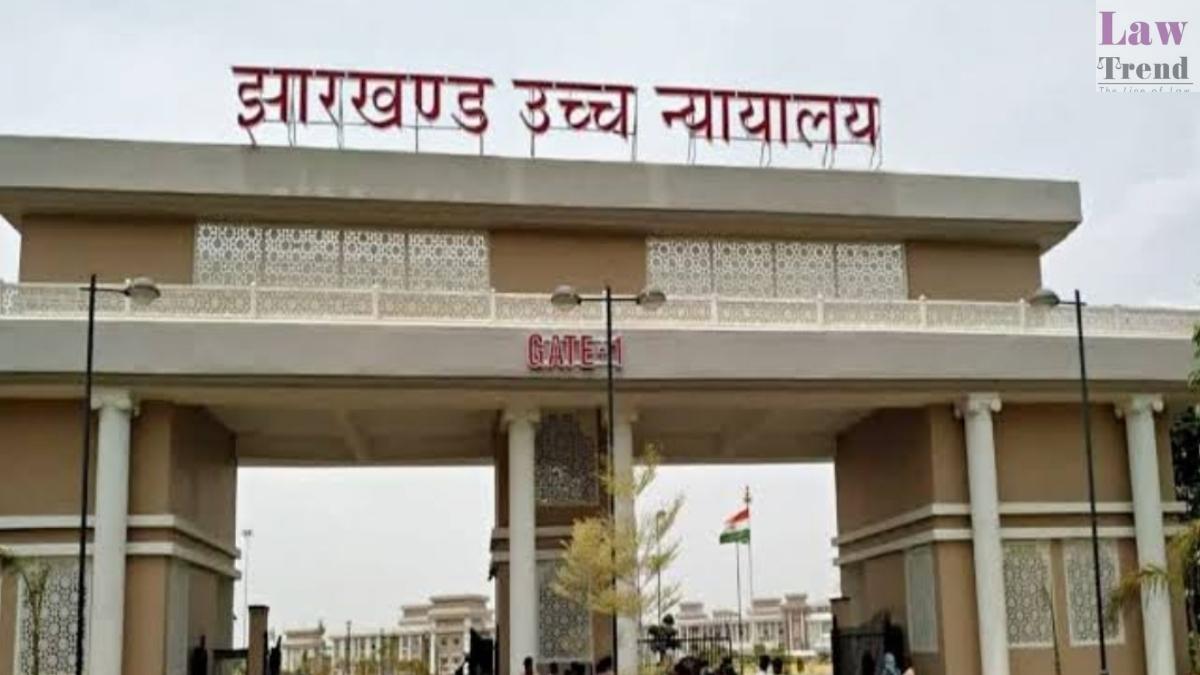

In a significant ruling, the High Court of Jharkhand at Ranchi, presided over by Justice Ananda Sen, has held that the State Disability Commissioner does not possess the jurisdiction to adjudicate property and land disputes. The Court clarified that such personal disputes fall strictly within the exclusive domain of competent civil courts, and cannot be resolved by forums established under the Rights of Persons with Disabilities Act, 2016. Consequently, the High Court allowed W.P.(C) No. 451 of 2020, setting aside an order passed by the State Disability Commissioner, and dismissed the connected petition, W.P.(C) No. 915 of 2020.

Background of the Case

The dispute centers around a tract of land measuring 2.97 acres across several plots under Khata Nos. 35, 25, 39, and 01 in Dholiya Village, Chatra District. The petitioners in W.P.(C) No. 451 of 2020—Krit Yadav, Sudhir Yadav, and Dilchand Yadav—claimed that the land belonged to their ancestors and that they maintained peaceful possession over it.

Conversely, Narendra Prasad Singh, a resident of the same village and a person with a benchmark disability under the Rights of Persons with Disabilities Act, 2016, alleged that certain local individuals were attempting to grab his landed property due to his disability. Singh lodged a complaint with the State Disability Commissioner, Jharkhand, who subsequently issued an order via Letter No. 388 dated June 28, 2019, declaring Singh’s claim valid based on his possession of land documents and revenue receipts.

Aggrieved by this determination of land title, Krit Yadav and others moved the High Court to quash the Commissioner’s letter and protect their possession. Meanwhile, Singh filed W.P.(C) No. 915 of 2020, seeking directions for state authorities to enforce the Commissioner’s order and take action against those obstructing him from farming his land.

Arguments of the Parties

Counsel representing Krit Yadav and the other petitioners argued that Narendra Prasad Singh had no valid right, title, or interest over the disputed land and had raised false claims solely to harass them. They contended that the State Disability Commissioner acted completely outside his legal boundaries by deciding on matters of land title and possession, which are exclusively reserved for civil courts.

READ ALSO  Court Has to Dismiss the Time-Barred Suit, Even If the Plea of Limitation Is Not Set Up as a Defense: SC

In response, counsel for Singh argued that as a person with a disability, Singh rightfully approached the State Disability Commissioner for protection. He asserted that local circle and revenue officers, accompanied by police, faced physical obstruction from certain individuals when attempting to act on the property. Singh sought court protection for his property rights and the initiation of actions against those obstructing official duties.

The Court’s Analysis

Justice Sen analyzed the statutory framework of the Rights of Persons with Disabilities Act, 2016, which was enacted to implement the principles of the United Nations Convention for empowering disabled persons. The Court acknowledged that the Act provides robust protections against discrimination, cruelty, and exploitation, while securing equal access to justice under Section 12.

However, the Court highlighted that the powers of the Chief Commissioner and State Commissioner, outlined in Sections 75, 77, 80, and 82 of the Act, are strictly defined. While these authorities are vested with certain procedural powers of a Civil Court—such as summoning witnesses and requiring the production of documents—this is limited to the purpose of conducting inquiries and investigations under the Act.

To support this interpretation, the High Court cited the landmark Supreme Court decision in State Bank of Patiala v. Vinesh Kumar Bhasin (2010), which examined equivalent provisions under the predecessor 1995 Act. The apex court had held:

READ ALSO  A Witness Need Only See the Testator Sign the Will: Supreme Court Clarifies Section 63 of Indian Succession Act

“neither the Chief Commissioner nor any Commissioner functioning under the Disabilities Act has power to issue any mandatory or prohibitory injunction or other interim directions.”

The Supreme Court had further clarified:

“The fact that the Disabilities Act clothes them with certain powers of a civil court for discharge of their functions (which include the power to look into complaints), does not enable them to assume the other powers of a civil court which are not vested in them by the provisions of the Disabilities Act.”

Similarly, referencing the Supreme Court’s ruling in All India Indian Overseas Bank SC and ST Employees’ Welfare Assn. v. Union of India, the Court reiterated that the power of granting temporary or permanent injunctions does not inhere in such commissions.

Regarding the land revenue receipts relied upon by the State Disability Commissioner, the High Court referred to the Supreme Court judgment in Suraj Bhan v. Financial Commissioner (2007) (which relied on Jattu Ram v. Hakam Singh), confirming that entries in revenue records do not confer title and only serve a “fiscal purpose” for paying land revenue. Citing State of Gujarat v. Patil Raghav Natha (1969), the Court emphasized that when a title is disputed, the appropriate course for commissioners or collectors is to refer the parties to a competent court.

Applying these precedents, the High Court observed that the ongoing dispute was a personal land dispute between two parties and had nothing to do with Singh’s disability. The Court observed:

READ ALSO  Jharkhand High Court: Permanent Lok Adalats Have the Jurisdiction to Adjudicate Disputes About Insurance Claims

“The State Disability Commissioner is not vested with the power to adjudicate a land dispute between the parties, which is absolutely within the domain of a Civil Court.”

The Court remarked that Singh had not been denied access to justice; he could have easily approached a competent Civil Court but instead chose a forum that was not legally equipped to resolve property disputes.

Decision of the Court

The High Court concluded that by adjudicating a land dispute, the State Disability Commissioner had completely exceeded his jurisdiction. Consequently, the Court set aside the order contained in Letter No. 388 dated June 28, 2019.

W.P.(C) No. 451 of 2020 was allowed, and W.P.(C) No. 915 of 2020 was dismissed. The Court ruled that the parties remain free to approach a competent Civil Court to declare their right, title, and interest, or to seek a permanent injunction.

Case Details:

Case Title: Krit Yadav and Others v. The State of Jharkhand and Others
Case No.: W.P.(C) No. 451 of 2020
Bench: Justice Ananda Sen
Date: June 29, 2026

Law Trend
Law Trendhttps://lawtrend.in/
Legal News Website Providing Latest Judgments of Supreme Court and High Court

Related Articles

Latest Articles

