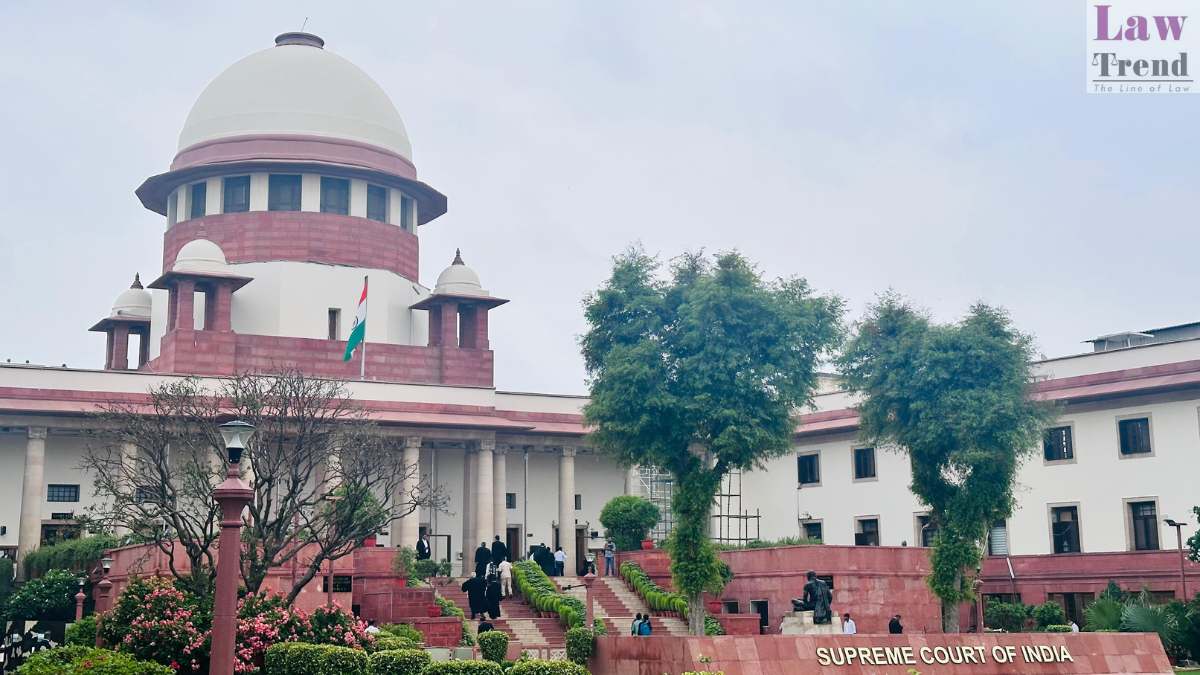
The Supreme Court of India has ruled that voluminous evidence or administrative oversight cannot water down the strict statutory timelines and rigours of the Commercial Courts Act, 2015. A bench comprising Justice Sanjay Karol and Justice N. Kotiswar Singh dismissed an appeal by M/S. Levitate Mobile Technologies Pvt. Ltd. (LMT), which sought to place additional documents on record and recall its key witness years after the trial commenced. The apex court upheld a Delhi High Court decision rejecting the plea, clarifying that a stop-and-go approach is impermissible in commercial litigation.
Background of the Case
The dispute originated from an IT Professional Services Agreement entered into on February 19, 2013, under which LMT was tasked by Standard Chartered Bank (SCB) with developing and managing a mobile application. Although the app was launched on both Android and iOS platforms, SCB soon instructed LMT to take it down.
Because the agreement contained a revenue-sharing clause, LMT alleged substantial losses and initiated legal proceedings. On April 15, 2015, LMT sent a legal notice demanding Rs. 4,46,50,000 with 18% annual interest. SCB denied the claim, prompting LMT to file a civil suit in the Delhi High Court. Issues were framed on November 16, 2016. LMT’s first application to place additional documents on record was allowed on January 30, 2018, and on the same day, the suit was renumbered as a commercial suit, CS(Comm.) 169 of 2018.
The trial proceeded slowly, and the evidence of LMT’s first witness, Sunil Jasuja (PW-1), was concluded on May 9, 2023. Subsequently, LMT filed a new application (IA No. 24359 of 2023) seeking to introduce additional documents—including emails, third-party vendor agreements, and backend server data—and to recall PW-1 for further examination.
On February 12, 2025, a Single Judge of the Delhi High Court rejected LMT’s application. The High Court applied the “reasonable cause” test, finding that LMT had not explained the extensive delay and was merely attempting to fill gaps in its witness’s evidence.
Arguments of the Parties
Appearing for LMT, Senior Counsel Gopal Sankaranarayanan argued that the delay in producing the documents was justified due to the sheer volume of emails and records, which made tracking difficult despite due diligence. He contended that certain specific averments made during the cross-examination of PW-1 necessitated the introduction of these new documents to substantiate their existing case without altering the pleadings. Furthermore, LMT argued that the court must assess the relevance of these documents and that a rigid application of the Commercial Courts Act to a pending 2015 suit would amount to a “piecemeal application” of the law.
SCB, represented by counsels Sanjay Gupta and Ateev Mathur, opposed the application, defending the High Court’s findings that the appellant had slept over the documents and failed to meet the statutory threshold for introducing late evidence.
The Court’s Analysis
The Supreme Court examined the core legislative objective of the Commercial Courts Act, 2015 (CCA). Justice Sanjay Karol traced the history of the CCA back to the Law Commission’s 188th and 253rd Reports, noting that the Act was specifically enacted to ensure the fast-tracked resolution of high-stakes commercial disputes.
The Court referred to its previous ruling in Ambalal Sarabhai Enterprises Ltd. v. K.S. Infraspace LLP, noting that “the provisions of the Act require to be strictly construed.” It also cited Patil Automation (P) Ltd. v. Rakheja Engineers (P) Ltd., highlighting that “Disputes of a commercial hue, must be extinguished with the highest level of expedition.”
Addressing the procedural rules under Order XI Rules 1(4) and 1(5) of the Code of Civil Procedure (as amended by the CCA), the Court referenced Sudhir Kumar vs. Vinay Kumar G.B. to reiterate that a plaintiff is mandated to file all documents in their possession along with the plaint. Any late filing requires the establishmemt of a “reasonable cause.”
The Court further discussed the standard of “sufficient cause” in the context of the legal maxim dura lex sed lex (the law is hard but it is the law), citing State of Maharashtra vs. Borse Bros. Engineers & Contractors (P) Ltd., which established that statutory timelines must be applied with full rigour and cannot be ignored on equitable grounds.
The Bench rejected LMT’s justification that the delay was due to the voluminous nature of the files and unexpected questions during cross-examination. Justice Karol observed: “the plaintiff when leading evidence, is expected to not only produce all documents but also properly anticipate the questions that may be put to its witnesses by the other side. What cannot be countenanced is a stop and go or a piecemeal approach.”
The Court held that “evidence, however voluminous, cannot water down the statutory intent and rigours of the statute.” It noted that LMT had been in possession of all these documents since the filing of the suit and had already been granted one round of additional evidence submission in 2018.
Critiquing the protracted timeline of the litigation, the Court remarked: “The suit in question was filed in 2015. As of 2026, plaintiff’s evidence is ongoing. We may say that even a snail may question the speed at which this trial is proceeding.”
The Court also dismissed LMT’s argument that the strict provisions of the CCA should not apply to a pending 2015 case. Pointing to Section 15 of the CCA, the Bench clarified that the statute expressly mandates the transfer of pending commercial suits of specified value and dictates that the procedures of the CCA apply directly to them.
The Decision
The Supreme Court fully agreed with the Delhi High Court Single Judge’s findings, concluding that LMT had failed to provide any reasonable cause or justifiable explanation for the delayed application.
The Court dismissed the appeal, ordering no costs, and directed that the pending suit be decided as expeditiously as possible.
Case Title: M/S. Levitate Mobile Technologies Pvt. Ltd. v. M/S. Standard Chartered Bank & Anr.
Case No.: SLP (C.) No. 13250 of 2026
Bench: Justice Sanjay Karol, Justice N. Kotiswar Singh
Date: July 09, 2026