

Fairness Is Not a One-Way Street; Chronic Defaulters Cannot Defeat Recovery by State Financial Corporations: Supreme Court
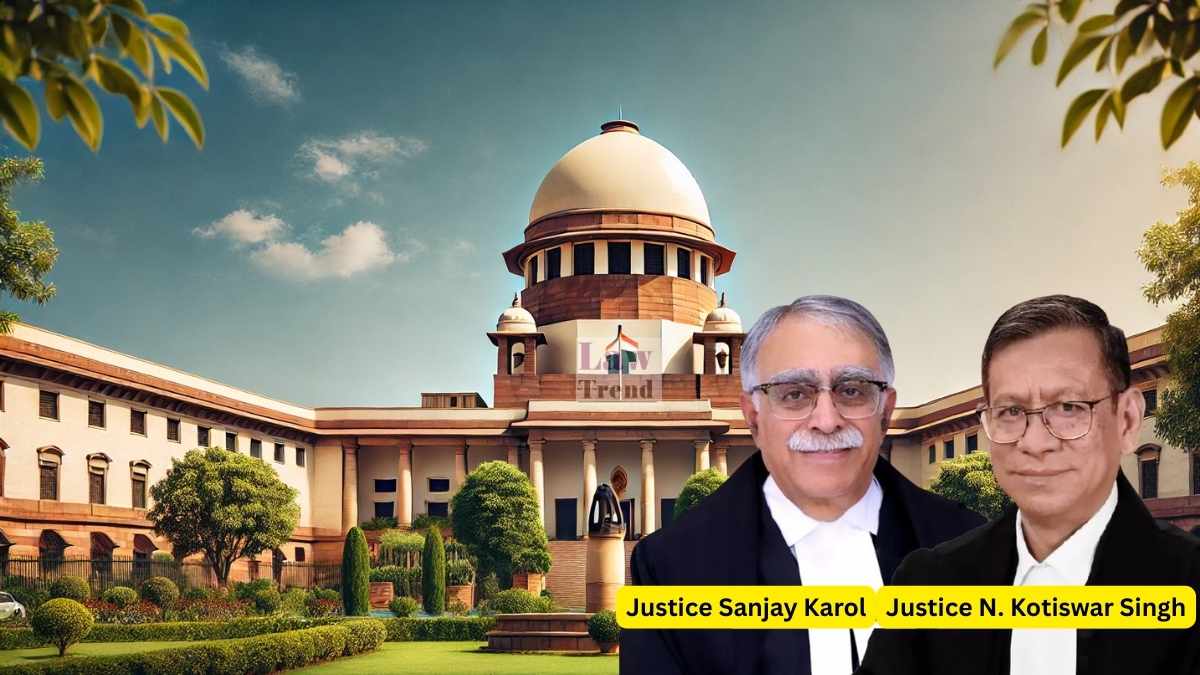

The Supreme Court of India has ruled that courts cannot sustain the nullification of a confirmed auction sale of a mortgaged property when the borrowers have persistently failed to regularize their accounts despite multiple opportunities. A division bench of the Supreme Court, comprising Justice Sanjay Karol and Justice N. Kotiswar Singh, allowed the appeals filed by the Bihar State Financial Corporation (BSFC) and the legal heirs of the successful auction purchaser. In doing so, the Supreme Court set aside the concurrent findings of the Patna High Court and the Begusarai Trial Court, which had previously set aside the auction sale in a civil suit.

Background of the Dispute

The roots of the case trace back to May 29, 1982, and July 12, 1984, when Ranjeet Motel and others (the borrowers) approached BSFC for financial assistance to set up an industrial unit. BSFC sanctioned loans of Rs. 8.50 Lakhs and Rs. 3.15 Lakhs, respectively, against which the borrowers created an equitable mortgage by depositing original title deeds of their land and building.

Following a default in repayment, BSFC issued its first notice under Section 29 of the State Financial Corporations Act, 1951 (SFC Act) on November 24, 1988. Aggrieved, the borrowers filed a writ petition (CWJC No. 6104 of 1990) before the Patna High Court. On November 6, 1990, the High Court disposed of the petition by establishing a strict installment-based repayment schedule, reserving liberty for BSFC to sell the mortgaged assets in case of any default.

The borrowers failed to comply with the repayment schedule and subsequently filed an application for an extension of time. On July 11, 1991, the High Court dismissed the extension application, noting that the conduct of the borrowers did not entitle them to any further indulgence.

Due to continuous non-payment, BSFC issued a statutory notice under Sections 29 and 30 of the SFC Act on September 27, 1994, demanding full clearance of dues within three months. When the account remained unregularized, BSFC published an advertisement in the Hindustan Times on March 2, 1996, inviting tenders for the purchase of the mortgaged property.

READ ALSO  Manipur Violence: SC castigates HC judge, says he did not correct his orders on quota to Meiteis

The auction was conducted on March 18, 1996, wherein Sri Ramshekhar Singh emerged as the successful bidder. While the sale was being finalized, the borrowers filed a civil suit (Title Suit No. 39/1996) before the Begusarai Trial Court seeking to set aside the auction.

Even after the auction commenced, BSFC issued a notice to the borrowers on April 17, 1996, offering them an option to match the terms of the successful tender and retain the property if they accepted and paid within 21 days. The borrowers did not respond to the offer. Instead, they moved the High Court via another writ petition, offering an undertaking to deposit Rs. 10 Lakhs, which was later withdrawn.

On August 3, 1996, possession of the mortgaged property was handed over to the auction purchaser. However, on May 19, 1999, the Begusarai Trial Court partially decreed the civil suit, setting aside the auction sale. The Trial Court held that the property had not been formally valued before the auction and that the delivery of possession was void. On March 18, 2025, the Patna High Court dismissed the first appeals filed by BSFC and the auction purchaser, upholding the Trial Court’s decree.

Arguments Presented by the Parties

The appellant, BSFC, argued that the borrowers were habitual defaulters who had persistently neglected their contractual obligations despite receiving repeated notices and opportunities. They contended that BSFC was entirely justified in exercising its statutory powers under Section 29 of the SFC Act to recover public money.

The legal heirs of the auction purchaser supported BSFC’s submissions, arguing that they were bona fide purchasers who had deposited the entire sale consideration. They emphasized that they had remained in undisturbed possession of the property for nearly three decades and that the borrowers’ right of redemption stood extinguished upon the publication of the auction notice.

Conversely, the borrowers argued that BSFC had acted arbitrarily and in collusion with the auction purchaser. They alleged that no public bidding actually took place on March 18, 1996, and that the sale was finalized through private negotiations on April 3, 1996. They further contended that the property was sold at a grossly undervalued price without a proper valuation report and that BSFC had unfairly extended financial accommodation to the purchaser by allowing payment in installments, a benefit denied to the borrowers.

READ ALSO  Making unfounded allegations to jeopardise a spouse's job amount to mental cruelty

The Court’s Analysis and Precedents

The Supreme Court examined the statutory scope of Section 29 of the SFC Act, which empowers financial corporations to realize their dues by taking over management or selling mortgaged assets of defaulting concerns.

Justice Sanjay Karol, writing the judgment, referenced the three-judge bench ruling in Haryana Financial Corpn. v. Jagdamba Oil Mills, which established that corporations deal with public money and must ensure regular realization of installments. The court reiterated that fairness in these matters cannot be a “one-way street” and that corporations cannot be disabled from recovering their dues in the name of fairness.

The Court further relied on U.P. Financial Corpn. v. Gem Cap (India) (P) Ltd. to emphasize that promoting industrialization at the cost of public funds does not serve public interest, and that courts should not substitute their business judgments for those of specialized financial bodies. Additionally, the Bench cited S.J.S. Business Enterprises (P) Ltd. v. State of Bihar, Karnataka State Industrial Investment & Development Corpn. Ltd. v. Cavalet India Ltd., and Punjab Financial Corpn. v. Surya Auto Industries to outline the limits of judicial interference in commercial recovery actions.

Addressing the primary ground on which the lower courts nullified the sale—the lack of a valuation report—the Supreme Court observed that the borrowers had never objected to the terms of the sale advertisement or the matching offer at the relevant time. Since the borrowers themselves had sought to retain the property on those very terms, the Court held that they could not subsequently argue that the absence of a valuation report prejudiced them.

The Court strongly criticized the borrowers’ conduct in filing successive litigations over eight years to stall the recovery process while failing to make genuine repayment efforts. Citing Orissa State Financial Corpn. v. Hotel Jogendra, the Court highlighted:

“Public money is meant to be recycled to all the needy entrepreneurs. The dilatory tactics defeat the public policy and the court process becomes an instrument of abuse. Court would protect only honest and sincere litigants.”

Furthermore, the Bench addressed the issue of the confirmed auction sale. Citing Celir LLP v. Sumati Prasad Bafna and Valji Khimji and Co. v. Official Liquidator of Hindustan Nitro Product (Gujarat) Ltd., the Court pointed out that courts must ordinarily refrain from unsettling a confirmed auction after a long lapse of time unless fraud or collusion is established. The borrowers, the Court observed, had failed to prove any fraud or collusion.

The Supreme Court, however, agreed with the lower courts on a limited legal point, rejecting the appellants’ contentions that the civil suit was barred by the principles of res judicata or Section 69(2) of the Partnership Act, 1932. The Court affirmed that because the suit challenged statutory recovery actions rather than enforcing a contract with a third party, these bars did not apply.

READ ALSO  Order II Rule 2 CPC | Failure to Seek Declaration of Title in Earlier Suit Bars Subsequent Claim: Supreme Court

The Decision

The Supreme Court concluded that the Trial Court and the High Court had erred in setting aside the auction sale of March 18, 1996. The bench ruled that the findings of unfairness, arbitrariness, or illegality against the corporation were unsustainable in law.

Accordingly, the Supreme Court allowed the appeals, setting aside the common judgment of the Patna High Court dated March 18, 2025, and the decree of the Begusarai Trial Court dated May 19, 1999, thereby upholding the validity of the auction sale.

Case Title: Bihar State Financial Corporation & Anr. v. Bhushan Singh & Ors.
Case No.: SLP (C) Nos. 16552-53 of 2025 with SLP (C) No. 24073 of 2025
Bench: Justice Sanjay Karol, Justice N. Kotiswar Singh
Date: July 9, 2026

Law Trend
Law Trendhttps://lawtrend.in/
Legal News Website Providing Latest Judgments of Supreme Court and High Court

Related Articles

Latest Articles

