

Viscera Report Cannot Be Relied Upon Unless Put to Accused During Section 313 CrPC Examination: Allahabad High Court
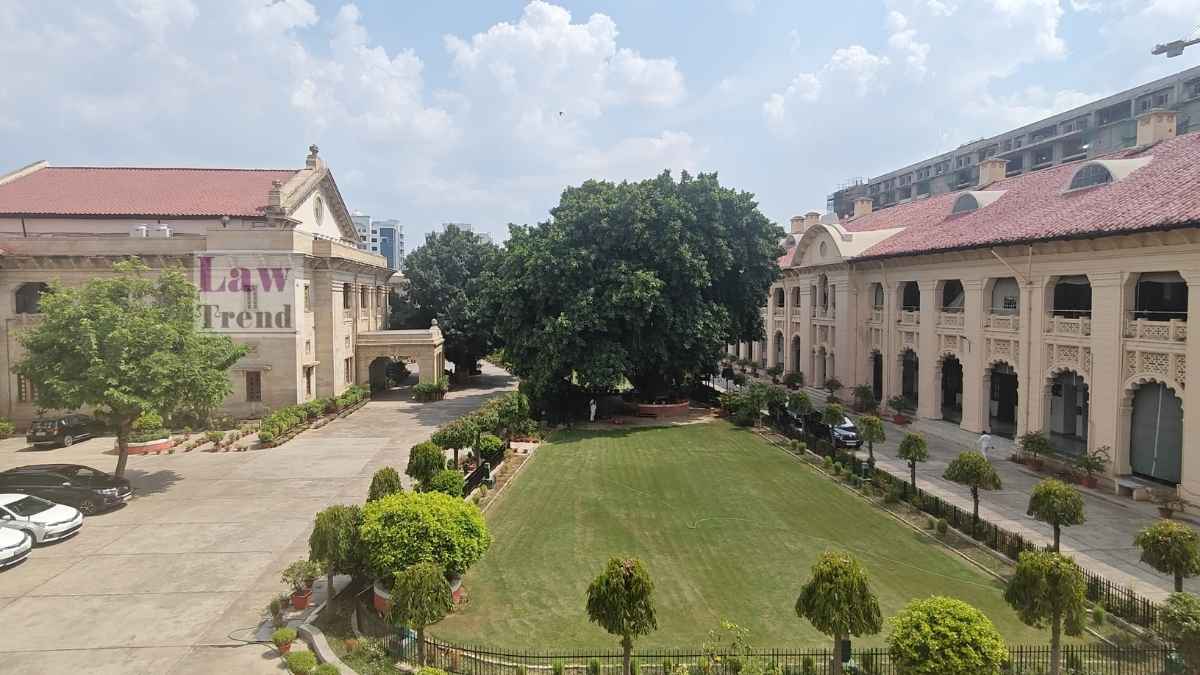

The High Court of Judicature at Allahabad has set aside a 1989 conviction of three family members accused of poisoning a woman for dowry, ruling that a viscera report cannot be relied upon by the prosecution if it was never put to the accused during their examination under Section 313 of the Code of Criminal Procedure (CrPC). A Division Bench comprising Justice Siddhartha Varma and Justice Jai Krishna Upadhyay allowed the appeal, emphasizing that confronting the accused with all incriminating circumstances is a non-negotiable requirement of a fair trial. The court also highlighted serious gaps in proving the safe custody of the viscera sample and major contradictions between key prosecution witnesses.

Background of the Case

The case dates back to the summer of 1984, when the deceased, Vijay Laxmi, was married to Rakesh Kumar Misra @ Doctor. On January 13, 1986, her brother, Ganga Ram Sevak Pandey, lodged a First Information Report (FIR) at Police Station Maharajpur, District Kanpur Nagar. The informant alleged that his sister was consistently tortured and beaten by her husband and in-laws, who demanded money for the husband’s business or a partnership in the brothers’ business.

According to the prosecution, on January 12, 1986, another brother, Ganga Charan, and a nephew, Vijay Kishor @ Munna, went to Vijay Laxmi’s matrimonial home to bring her back. Her mother-in-law refused, reiterating the business demands. While Ganga Charan returned home, the nephew stayed behind. The next morning, the nephew ran to the informant’s house, claiming that Vijay Laxmi was being beaten and forced to eat something. When the informant reached the house, he was told she had cholera, but Vijay Laxmi allegedly told him her in-laws had given her something to eat, causing her tongue to falter. Her brothers arranged a tempo to take her to Kanpur for treatment, but she died on the way on January 13, 1986.

Based on these allegations, the trial court (I Additional District & Sessions Judge, Kanpur Nagar) on December 7, 1989, convicted the husband, his father Ram Autar, and his brother Laddan Misra @ Mahesh under Sections 498A, 302, and 323 of the Indian Penal Code (IPC). Smt. Rajdei, the mother-in-law, was also convicted but passed away during the pendency of this appeal, causing the case against her to abate.

Arguments of the Parties

The counsel for the appellants raised several key arguments to contest the conviction:

  • There were no eye-witnesses to the actual administration of poison, and it was highly probable that the deceased, unhappy with her matrimonial life, consumed it herself.
  • The testimonies of the brother (PW-1) and the nephew (PW-3) were contradictory. PW-1 claimed the deceased told him she was given medicine, while PW-3 asserted that a liquid mixture was forcefully poured into her mouth.
  • Zinc phosphide is a bitter, foul-smelling pesticide. Forceful administration would have resulted in powerful resistance, yet there were no struggle injuries on the deceased’s mouth or on any of the accused.
  • The integrity of the viscera report was entirely compromised because the prosecution failed to show register entries proving its safe custody, and the forensic analyst was never examined. Crucially, the trial court failed to put the viscera report to the accused during their Section 313 CrPC examinations.
READ ALSO  भ्रष्टाचार के आरोप में इलाहाबाद हाईकोर्ट ने तीन अतिरिक्त जिला जजों को किया बर्खास्त- जानें विस्तार से

The learned Additional Government Advocate (A.G.A.) opposed the appeal, arguing that the deceased’s statements to her family members were reliable. He contended that because she was physically weak, she might not have been able to resist the administration of the poison, explaining the lack of struggle marks. He urged that the conviction be sustained.

Court’s Analysis and Observations

The High Court meticulously analyzed the evidentiary value of the testimonies and the legal procedure adopted during the trial. First, the court identified glaring inconsistencies between the accounts of PW-1 and PW-3. The medical officer (PW-6) had testified that the deceased was in a very bad condition and had to be rushed to Kanpur, making it highly doubtful that she was in a speaking state. On the divergence of witness testimonies, the court observed:

READ ALSO  GST Department Cannot Issue Notice to the Advocate Appearing on Behalf of the Assessee: Calcutta HC

“In a case where the guilty has to be punished with a punishment as grave as life imprisonment, the prosecution case has to be dealt very cautiously and when there was a definite digression in the cases taken by the PW-1 and the PW-3 then the Court should deal with the matter very prudently and if there is inconsistency in the case taken by the prosecution witnesses then it should lean in favour of the accused.”

The court further evaluated the physical characteristics of the chemical agent, zinc phosphide, noting that it could not be administered secretly to a conscious individual without a struggle:

“Also, we find that the poison “zinc phosphide” is not such a poison which can be administered on the sly. It tastes bitter and has a very bad smell. Thus if a person who is hale and hearty is administered that poison then he or she would resist to the administration of the same and would get injuries on her body and if he or she would resist powerfully then the person who was administrating would also get injured.”

No such struggle injuries were found on either the deceased or the accused family members.

Turning to the decisive legal issue, the court noted that the viscera and its subsequent report were never presented to the accused during their statements recorded under Section 313 of the CrPC. Citing several Supreme Court precedents—including Chandan Pasi & Ors. v. The State of Bihar, Kalicharan & Ors. v. State of Uttar Pradesh, Samsul Haque v. The State of Assam, Sujit Biswas v. State of Assam, and Maheshwar Tigga v. State of Jharkhand—the High Court reaffirmed that any incriminating circumstance not put to the accused during their examination must be entirely excluded from consideration.

The court noted: “Definitely, as per all the judgments which have been cited by the learned counsel for appellants, the viscera report should therefore not be taken into account at all.”

Furthermore, the court found the chain of custody of the viscera sample to be entirely unproven. No entries in any preservation register were produced; no witness deposed to having safely carried the sealed sample from the doctor to the Chief Medical Officer’s (CMO) office; and no staff from the CMO office testified about its safe keeping. The constable who finally delivered the sample to the Forensic Science Laboratory (PW-10) could not clarify from whose custody he received it or to whom he handed it over, and no forensic lab representative was called to testify.

Decision of the Court

The High Court held that because the viscera report was legally inadmissible and procedurally compromised, the prosecution’s case collapsed entirely:

READ ALSO  दरगाह में उर्स पर प्रतिबंध को चुनौती देने वाली याचिका में हाईकोर्ट ने याचिकाकर्ताओं से पूछा: क्या है आपकी वैधानिक पात्रता?

“The viscera report alone was a conclusive piece of evidence which would have gone to show that murder was done by the accused persons by administering poison and since the viscera report itself now becomes such an evidence which as per us cannot be read in evidence, we are definitely of the view that the appeal should be allowed and the accused be acquitted.”

The court set aside the conviction order dated December 7, 1989, passed by the I Additional District & Sessions Judge, Kanpur Nagar. The appellants—Ram Autar, Rakesh Kumar Misra @ Doctor, and Laddan Misra @ Mahesh—were acquitted of all charges. The court ordered that if the appellants are on bail, they need not surrender, and their sureties and bail bonds stand discharged.

Case Details:

Case Title: Ram Autar And Others Versus State

Case No.: CRIMINAL APPEAL No. – 2343 of 1989

Bench: Justice Siddhartha Varma, Justice Jai Krishna Upadhyay

Date: July 3, 2026

Law Trend
Law Trendhttps://lawtrend.in/
Legal News Website Providing Latest Judgments of Supreme Court and High Court

Related Articles

Latest Articles

