

PMLA Cannot Be Invoked to Criminalise Purely Civil and Commercial Disputes: Allahabad High Court
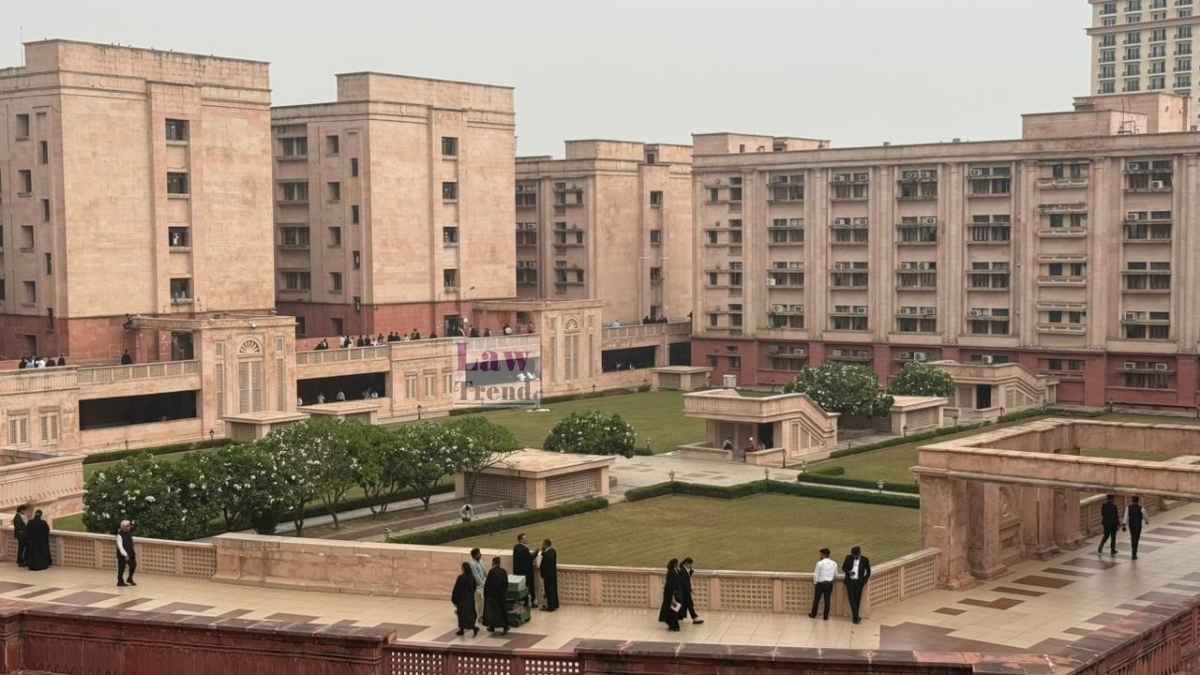
The Allahabad High Court, Lucknow Bench, has quashed the money laundering proceedings and a summoning order against Tulsiani Construction and Developers Ltd. and its directors, ruling that purely civil and commercial disputes cannot be weaponized through criminal prosecution under the Prevention of Money Laundering Act, 2002 (PMLA). Delivering the judgment, Justice Subhash Vidyarthi allowed the application filed under Section 482 of the Code of Criminal Procedure (Cr.P.C.), holding that the Enforcement Directorate (ED) abused the process of law by projecting settled commercial disputes as money laundering offenses and illegally attaching property acquired long before the alleged crime. The Court set aside the order dated January 30, 2026, passed by the Special Judge, Anti-Corruption, CBI West/E.D., Lucknow, which had taken cognizance of offenses under Sections 3 and 4 of the PMLA.

During the proceedings, the applicants were represented by Senior Advocate Sri Vaibhav Kalia, assisted by Sri Abhinav Mishra. The State of U.P. was represented by Sri Ganesh Dutt Bhatt, the learned A.G.A. I, while the Enforcement Directorate was represented by Sri Rohit Tripathi. Sri Anuuj Tandon appeared as counsel for the intervener, Sri Sanjeev Agarwal.

Background of the Case

The case originates from FIR No. 336 of 2022, registered on September 24, 2022, at Police Station Hazratganj, Lucknow, based on a complaint filed by Punjab National Bank (PNB). The bank alleged that Tulsiani Construction and Developers Ltd., along with its directors Mahesh Kumar Tulsiani and Anil Kumar Tulsiani, had defrauded the bank to the tune of Rs. 4.63 Crores. According to the bank, home loans were sanctioned to four buyers—Mr. Narendra Singh Verma (with Smt. Shashi Verma), Baldeep Arora (with Smt. Jaya Arora), Hemant Tulsiani (with Manohar Kumar Tulsiani), and Tarun Shekhar Singh (with Smt. Sarika Singh)—for residential flats in the developers’ project in Sushant Golf City, Lucknow. The project was not completed within the stipulated time, and the flats were not delivered. Consequently, the borrowers defaulted on their loan repayments. PNB further alleged that the builders did not execute the sale deeds or deposit them with the bank as security, siphoning off the loan amounts for personal gains.

In March 2023, while rejecting a bail application filed by Anil Kumar Tulsiani in the predicate offense, a Co-ordinate Bench of the High Court directed the ED to investigate the money laundering aspects of the case. Though this direction was challenged before the Supreme Court, the apex court dismissed the Special Leave Petition, directing the ED to examine the material on its own merits, uninfluenced by the High Court’s observations.

Subsequently, the ED registered ECIR/LKZO/43/2023. During its investigation, the ED merged several other complaints against the company, including FIR No. 595 of 2021 lodged by an intervener, Sanjeev Agarwal, concerning a dispute over flats booked in 2012. The ED calculated the total alleged proceeds of crime to be Rs. 9.948 Crores and provisionally attached several properties. This included a flat belonging to Anil Kumar Tulsiani that had been purchased via a registered sale deed in March 2012—nearly a decade before the PNB FIR was registered.

READ ALSO  21 वर्ष से कम उम्र के लड़के के साथ लिव-इन रिलेशनशिप को इलाहाबाद हाईकोर्ट का सुरक्षा देने से इनकार; कहा- 'विवाह कानूनों की अनदेखी नहीं की जा सकती'

Arguments of the Parties

The applicants contended that the entire dispute with the bank and the flat buyers was purely civil and commercial in nature. They placed evidence on record showing that out of the four PNB loan accounts mentioned in the FIR, one (belonging to Tarun Shekhar Singh and Sarika Singh) was completely regular and had never been declared a Non-Performing Asset (NPA). For two other loan accounts (Baldeep Arora and Hemant Tulsiani), PNB had already issued “No Dues Certificates” following successful One-Time Settlements (OTS). For the fourth account (Narendra Singh Verma), an OTS had been approved on March 20, 2026, and the first installment had already been paid. They argued that because the financial liabilities were settled, there were no “proceeds of crime” as defined under Section 2(u) of the PMLA. Furthermore, they argued that attaching a flat purchased in 2012 was highly illegal as it had no nexus with the alleged offenses of 2022.

The Enforcement Directorate, represented by its counsel, argued that the applicants had diverted the home buyers’ loan amounts to meet other liabilities, such as repaying loans from SIDBI, rather than completing the specific housing project. The ED asserted that Section 2(u) of the PMLA permits the attachment of the “value of such property” if the direct proceeds of crime are untraceable. They contended that under Section 23 of the PMLA, there is a legal presumption of interconnected transactions in money laundering activities.

READ ALSO  Cruelty Cannot Be Defined with Mathematical Precision: Kerala High Court Grants Divorce After 14-Year Separation

The intervener, Sanjeev Agarwal, represented by his counsel, opposed the applicants’ plea, claiming that he was a bona fide claimant with a legitimate interest recognized under Section 8(8) of the PMLA, having suffered quantifiable losses due to the non-delivery of his flats.

The Court’s Analysis

The High Court began its analysis by examining the cognizance order passed by the Special Judge on January 30, 2026. Justice Subhash Vidyarthi observed that while the trial court had summarized the ED’s allegations and noted the applicants’ objections, it had dismissed the objections as “not maintainable” without assigning any logical reasons. Citing the Supreme Court’s decisions in S.N. Mukherjee v. Union of India and Kranti Associates (P) Ltd. v. Masood Ahmed Khan, the Court observed that:

“the reasons are the soul of any judicial order and a judicial order passed without recording reasons is unsustainable in law”

The Court further emphasized that the requirement to observe the principles of natural justice and provide reasons is even higher in criminal matters where personal liberty is at stake. Citing Inox Air Products Ltd. v. State of Andhra Pradesh, the Court highlighted that:

“Summoning of an accused in a criminal case is a serious matter. Criminal law cannot be set into motion as a matter of course…”

Evaluating the merits of the case, the Court analyzed whether the disputes involved could be classified as criminal offenses under the PMLA. Justice Subhash Vidyarthi referred to the landmark rulings in Indian Oil Corpn. v. NEPC India Ltd. and Sarabjeet Kaur v. State of Punjab, noting a growing and undesirable trend of converting purely civil and commercial contract breaches into criminal cases to exert undue pressure for settlements. Quoting Indian Oil Corpn., the Court observed:

“Any effort to settle civil disputes and claims, which do not involve any criminal offence, by applying pressure through criminal prosecution should be deprecated and discouraged.”

The Court further referenced Sarabjeet Kaur, noting:

“A breach of contract does not give rise to criminal prosecution for cheating unless fraudulent or dishonest intention is shown right at the beginning of the transaction.”

With respect to the attachment of the flat purchased by the applicant in 2012, the Court found the ED’s actions to be entirely outside the scope of the law. Pointing to the Supreme Court’s rulings in Vijay Madanlal Choudhary v. Union of India and Pavana Dibbur v. Directorate of Enforcement, the High Court held that property acquired before the commission of the scheduled offense cannot be connected to the proceeds of crime. It also relied on the Punjab & Haryana High Court decision in Seema Garg v. Deputy Director, Directorate of Enforcement, which held that the phrase “value of such property” does not allow the attachment of legitimately acquired property that has no direct or indirect link to the alleged criminal activity.

READ ALSO  No Offence If Married Man Stays in Consensual Live-in Relationship with Adult Woman; Morality and Law Must Be Kept Apart: Allahabad High Court

The Court observed that the flat in question was acquired a decade before the PNB loan dispute arose and therefore:

“the attachment of the Flat purchased in the year 2012 is absolutely illegal and without jurisdiction.”

The Court also criticized the ED for inflating the alleged proceeds of crime to Rs. 9.948 Crores by continuing to include the Rs. 4.63 Crore bank loan, which had already been settled, as well as amounts from cases that had already been quashed by competent courts. The Court stated that the fact that multiple buyers and the bank had settled their financial disputes clearly showed that the issues were of a civil nature, and that the complainants were simply weaponizing criminal law to achieve their civil ends.

Ultimately, the Court concluded that:

“the present case is a clear case of the abuse of the PMLA.”

The Decision

The High Court allowed the application under Section 482 Cr.P.C. and quashed the cognizance and summoning order dated January 30, 2026, passed by the Special Judge, Anti-Corruption, CBI West/E.D., Lucknow. The Court also quashed the entire proceedings in Criminal Misc. Case No. 4851 of 2025 arising out of ECIR No. ECIR/LKZO/43/2023, declaring that all necessary legal consequences of this quashing shall follow.

Case Details

Case Title: Tulsiani Construction and Dev. Ltd. Thru its Director Anil Kumar Tulsiani and 2 others Versus State of U.P. Thru. Addl. Chief Secy. Home Deptt. U.P. Lko. and another

Case No.: APPLICATION U/s 482 No. 3198 of 2026

Bench: Justice Subhash Vidyarthi

Date: July 02, 2026

Law Trend
Law Trendhttps://lawtrend.in/
Legal News Website Providing Latest Judgments of Supreme Court and High Court

Related Articles

Latest Articles


