

Habeas Corpus Not Maintainable to Decide Disputed Child Custody When Guardianship Proceedings Are Pending: Andhra Pradesh High Court
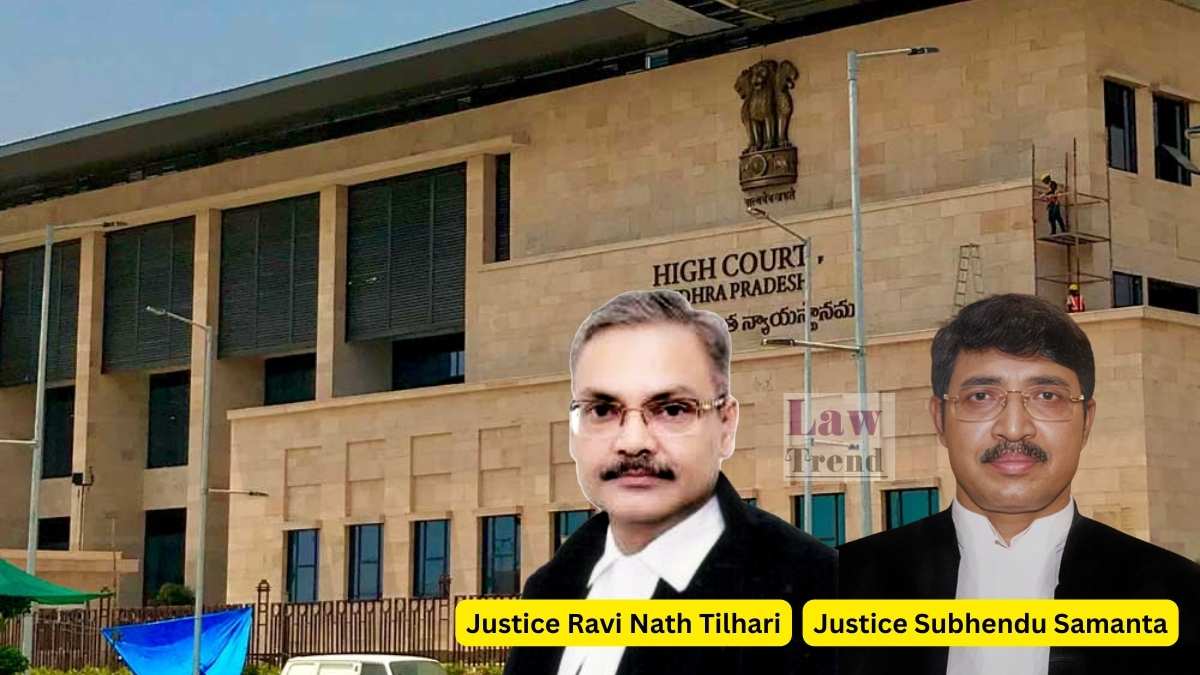

The High Court of Andhra Pradesh at Amaravati, comprising a bench of Justice Ravi Nath Tilhari and Justice Subhendu Samanta, has ruled that a writ of habeas corpus is an extraordinary remedy and is not maintainable or to be entertained in child custody disputes if the petitioner has already actively availed of an effective, alternative statutory remedy under the Guardians and Wards Act, 1890. Dismissing a petition filed by a father seeking the custody of his two minor daughters, the court observed that complex custody disputes requiring detailed inquiries into child welfare cannot be effectively resolved in a summary writ proceeding.

Background of the Case

The petitioner, Kondrakunta Chandrakanth, approached the High Court with a writ of habeas corpus (Writ Petition No. 8105/2026) seeking custody of his two minor daughters, aged five and three years. The children have been residing with their maternal grandmother, arrayed as respondent No. 5.

The dispute arose following the death of the children’s mother under suspicious circumstances. Consequently, an FIR (No. 31 of 2024) was registered against the petitioner under Sections 428A (also referenced in the judgment as 498A) and 306 of the Indian Penal Code (IPC). The petitioner later registered a counter-FIR (No. 11 of 2025) against the maternal grandmother.

Before filing the writ petition, the petitioner had already initiated statutory custody proceedings under the Guardians and Wards Act, 1890. He filed GWOP No. 50 of 2025 under Section 25, read with Sections 10 and 17 of the Act, which remains pending before the Court of the XIII Additional District Judge, Narasaraopet.

Arguments of the Parties

The petitioner was represented by Ms. Geetha Nallam through virtual mode. Sri Krishna Praneeth appeared as the learned Assistant Government Pleader for respondent Nos. 1 to 4, and Sri Venkata Durga Rao Anantha represented the maternal grandmother (respondent No. 5).

The counsel for the respondents raised a primary objection regarding the maintainability of the writ petition. They contended that since the petitioner had already initiated custody proceedings before a competent civil court under the Guardians and Wards Act, 1890, a parallel writ of habeas corpus was not maintainable.

Thus, the core legal question before the High Court was whether a writ of habeas corpus should be entertained under Article 226 of the Constitution of India when alternative statutory proceedings are actively pending.

READ ALSO  Supreme Court Quashes NGT Orders Stalling Petrol Pump; Rebukes "Busy Body" for Six-Year Delay of Public Utility

The Court’s Analysis

In analyzing the legal position, the High Court observed that while a writ of habeas corpus can be used to restore custody of a minor to a legal guardian who has been wrongfully deprived of it, the ordinary and proper remedy lies under personal laws or specific statutory guardianship acts.

The court extensively cited the landmark Supreme Court of India ruling in Tejaswini Gaud v. Shekhar Jagdish Prasad Tewari, quoting its observations on the limited scope of habeas corpus in child custody matters:

“Habeas corpus proceedings is not to justify or examine the legality of the custody. Habeas corpus proceedings is a medium through which the custody of the child is addressed to the discretion of the Court. Habeas corpus is a prerogative writ which is an extraordinary remedy and the writ is issued where in the circumstances of the particular case, ordinary remedy provided by the law is either not available or is ineffective; otherwise a writ will not be issued. In child custody matters, the power of the High Court in granting the writ is qualified only in cases where the detention of a minor by a person who is not entitled to his legal custody. In view of the pronouncement on the issue in question by the Supreme Court and the High Courts, in our view, in child custody matters, the writ of habeas corpus is maintainable where it is proved that the detention of a minor child by a parent or others was illegal and without any authority of law.”

The High Court further highlighted the procedural differences between summary writ proceedings and trial court inquiries under guardianship laws, again quoting from Tejaswini Gaud:

“In child custody matters, the ordinary remedy lies only under the Hindu Minority and Guardianship Act or the Guardians and Wards Act as the case may be. In cases arising out of the proceedings under the Guardians and Wards Act, the jurisdiction of the court is determined by whether the minor ordinarily resides within the area on which the court exercises such jurisdiction. There are significant differences between the enquiry under the Guardians and Wards Act and the exercise of powers by a writ court which is summary in nature. What is important is the welfare of the child. In the writ court, rights are determined only on the basis of affidavits. Where the court is of the view that a detailed enquiry is required, the court may decline to exercise the extraordinary jurisdiction and direct the parties to approach the civil court. It is only in exceptional cases, the rights of the parties to the custody of the minor will be determined in exercise of extraordinary jurisdiction on a petition for habeas corpus.”

The bench noted that this legal position has been consistently reaffirmed by the Apex Court in subsequent rulings, including Nirmala v. Kulwant Singh and Gautam Kumar Das v. State (NCT of Delhi). Verbatim, the bench cited the following principle from Gautam Kumar Das:

“…no hard-and-fast rule can be laid down insofar as the maintainability of the habeas corpus petition in the matters of custody of minor child is concerned. It has been held that as to whether the writ court should exercise its jurisdiction under Article 226 of the Constitution of India or not will depend on the facts and circumstances of each case.”

Drawing a direct parallel to the Supreme Court’s decision in Jose Antonio Zalba Diez Del Corral v. State of W.B., where a writ petition was dismissed because statutory proceedings under the Guardians and Wards Act were already ongoing, the bench highlighted the Apex Court’s clear directive:

READ ALSO  आंध्र प्रदेश हाई कोर्ट ने अमरावती आर5 जोन में मकानों के निर्माण पर रोक लगा दी

“The statutory remedy available under the Guardians and Wards Act is the appropriate remedy, which has already been availed by the petitioner.”

The Court’s Decision

Applying these established legal principles, the High Court observed that because the minor daughters are aged five and three, their mother has passed away, an IPC FIR is pending against the father, and they currently reside with their maternal grandmother, the case does not present any “extraordinary or exceptional circumstances” to bypass statutory procedures.

READ ALSO  मेधावी उम्मीदवारों को नियुक्ति में राज्य की गलती के कारण नुकसान नहीं उठाना चाहिए: आंध्र प्रदेश हाईकोर्ट

The court held that determining child welfare requires a detailed inquiry and appreciation of evidence, which is impossible to conduct effectively in a summary writ proceeding. Since the petitioner is already actively pursuing the most efficacious remedy under the Guardians and Wards Act through GWOP No. 50 of 2025, parallel writ proceedings cannot be entertained.

Accordingly, the High Court dismissed the writ petition. The bench clarified that it did not enter into the merits of the petitioner’s claim for custody, leaving it to be decided in accordance with the law in the pending statutory proceedings before the District Court. No order was made as to costs.

Case Details

Case Title: Kondrakunta Chandrakanth v. The State of A.P., & 4 others
Case No.: Writ Petition No: 8105/2026
Bench: Justice Ravi Nath Tilhari & Justice Subhendu Samanta
Date: 23.06.2026

Law Trend
Law Trendhttps://lawtrend.in/
Legal News Website Providing Latest Judgments of Supreme Court and High Court

Related Articles

Latest Articles

