

A Litigant Cannot Approbate and Reprobate After Accepting Benefits of a Mediation Settlement: Himachal Pradesh High Court
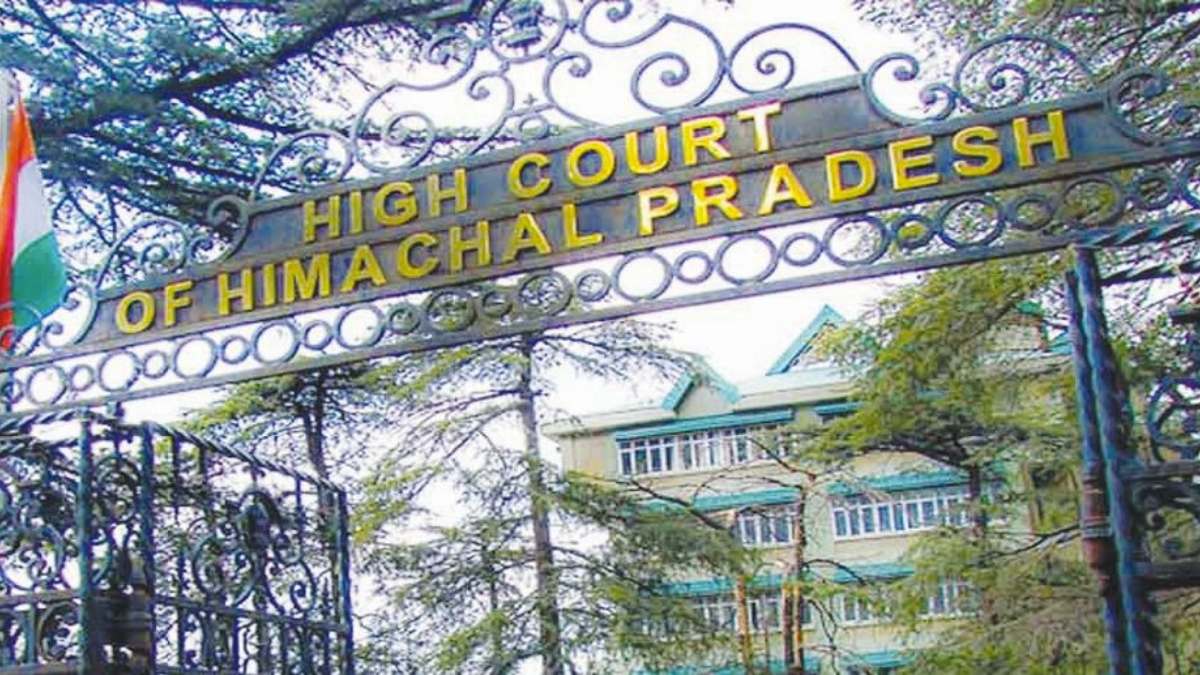

The High Court of Himachal Pradesh, presided over by Justice Romesh Verma, has ruled that once a party has accepted the monetary consideration agreed upon in a mediation settlement, they cannot unilaterally back out or reopen the civil suit. Dismissing a petition filed under Article 227 of the Constitution of India, the court emphasized that a litigant cannot be permitted to accept the benefits of an agreement and subsequently challenge its terms, validating the binding nature of successful mediation proceedings.

Background of the Case

The petitioner, Dila Ram Verma, filed a suit for permanent prohibitory and mandatory injunction in the Court of the Senior Civil Judge, Shimla, against the defendant, Mangat Ram (who has since deceased and is represented by his legal heirs).

The petitioner claimed to be in possession of 0.5 bighas of land in Kufta-Dhar, Shimla, where he constructed a retaining wall measuring 4.15 meters in height and 10.09 meters in length to prevent landslides. According to the plaintiff, the defendant owned adjacent lower land and carried out excavation work in a negligent and reckless manner, causing the plaintiff’s retaining wall and a cemented septic tank to collapse. The plaintiff sought a mandatory injunction directing the defendant to reconstruct the wall, or alternatively, pay Rs. 50,000 in damages.

The defendant contested the suit, refuting all allegations of negligence. He argued that the plaintiff constructed the retaining wall carelessly using loose stones without cement, and filled the gap with debris.

During the pendency of the suit, the trial court referred the dispute to mediator Sh. Niranjan Verma, Advocate. A successful settlement was reached on July 25, 2018, where the plaintiff agreed to withdraw the suit in exchange for a payment of Rs. 20,000 as damages. The payment was received and acknowledged by the plaintiff on July 30, 2018. However, on the next court date, the plaintiff refused to withdraw the suit, asserting that the issue of reconstructing the retaining wall remained unresolved.

READ ALSO  Merely Because an Accused Person Absconded, He Cannot Be Held Guilty of the Alleged Crime: Orissa HC

Arguments of the Parties

The petitioner filed an application under Mediation Rule 25 read with Section 151 of the Civil Procedure Code (CPC), arguing that the mediation compromise only settled the monetary compensation and not the critical issue of the collapsed retaining wall’s reconstruction. He contended that the issue of wall reconstruction was severable from the compensation and requested that the court proceed with the suit on this unresolved issue.

Conversely, the respondents argued that the petitioner was abusing the process of law. They pointed out that the plaintiff had willingly entered into the compromise, signed the statements and agreement three separate times before the mediator, received the Rs. 20,000 without objection, and was now impermissibly resiling from his commitment to withdraw the suit.

The Court’s Analysis

In its analysis, the High Court examined the mediator’s report and the signed statements of both parties. It observed that the compromise explicitly mandated the withdrawal of the suit upon the payment of Rs. 20,000, which the plaintiff received in full and final settlement.

The court highlighted the petitioner’s inconsistent conduct. During the application proceedings, the trial court had appointed a Local Commissioner, Ms. Anjana, to oversee the construction of a new wall as part of another potential compromise. However, the commissioner’s report revealed that the plaintiff misbehaved on-site, failed to provide materials or labor, and refused to pay the commissioner’s legal fee of Rs. 3,000. A similar resolution attempt by the High Court in June 2026 failed for the same reason—the petitioner refused to pay the commissioner’s fee.

READ ALSO  Cheque Bounce Case be Compounded Even After Conviction: HP HC

Criticizing the petitioner’s actions, Justice Romesh Verma observed:

“The petitioner cannot be permitted to approbate and reprobate as he has done in the present case. After receiving Rs. 20,000/-, the plaintiff cannot be permitted to re-opon the issue again. Once he has chosen to compromise the matter before the learned Mediator after duly appending his signatures, he cannot be permitted to say that the issue of construction of retaining wall still subsists.”

The High Court relied on the Supreme Court of India’s decision in Dhananjay Rathi v. Ruchika Rathi (Criminal Appeal No. 1924 of 2026), which observed:

“It is trite law that once the parties have entered into a settlement agreement which was duly authenticated by the mediator, in case of any resilement from such terms as agreed upon in the settlement, the resiling party must be encumbered with heavy costs. Any deviation from the terms of the settlement arrived in mediation and later confirmed by the Court should be dealt with strictly as such deviation harbors an attack to the foundational basis of the entire process of mediation.”

The Court also referenced Gimpex Private Limited v. Manoj Goel (2022) to underline that a mediation settlement agreement subsumes the original complaint, and the parties cannot reverse its effects by pursuing original claims. Furthermore, referring to the precedents of Jiwan Lal Sharma v. Kashmir Singh Thakur (2014) and the landmark Salem Advocate Bar Association, T.N. v. Union of India (2005), the court reiterated that when mediation succeeds, the court must record the settlement and pass a decree in accordance with those terms:

“when mediation succeeds and parties agree to the terms of settlement, the mediator will report to the Court and the Court, after giving notice and hearing to the parties, “effect” the compromise and pass a decree in accordance with the terms of settlement accepted by the parties.”

The court held that exceptions only exist if a party demonstrates that the settlement agreement was procured by force, fraud, or undue influence, or if the opposing party failed to fulfill settlement conditions. Neither condition was met in this case.

Addressing its supervisory jurisdiction under Article 227 of the Constitution of India, the High Court cited State of Haryana & others v. Manoj Kumar (2010) and Ibrat Faizan v. Omaxe Buildhome Private Limited (2022), reiterating that supervisory jurisdiction is not appellate in nature and cannot be used to correct mere errors of fact or law, or to reweigh evidence. Its scope is strictly limited to keeping subordinate courts within the bounds of their authority.

READ ALSO  Criminal Court Can’t Review Its Own Order Under the Garb of Clarification/Modification: Sikkim HC

The Decision

The High Court concluded that the Senior Civil Judge, Shimla, committed no illegality or jurisdictional error in dismissing the plaintiff’s application on January 16, 2020.

Consequently, the High Court dismissed the petition (CMPMO No. 349 of 2022) as devoid of merit and disposed of all pending miscellaneous applications.

Case Title: Dila Ram Verma Versus Mangat Ram (deceased) through LRs.
Case No.: CMPMO No. 349 of 2022
Bench: Justice Romesh Verma
Date: 02.07.2026

Law Trend
Law Trendhttps://lawtrend.in/
Legal News Website Providing Latest Judgments of Supreme Court and High Court

Related Articles

Latest Articles

