

DNA Test Can Be Directed in Exceptional Cases Where No Other Evidence Can Resolve Paternity Dispute: Supreme Court
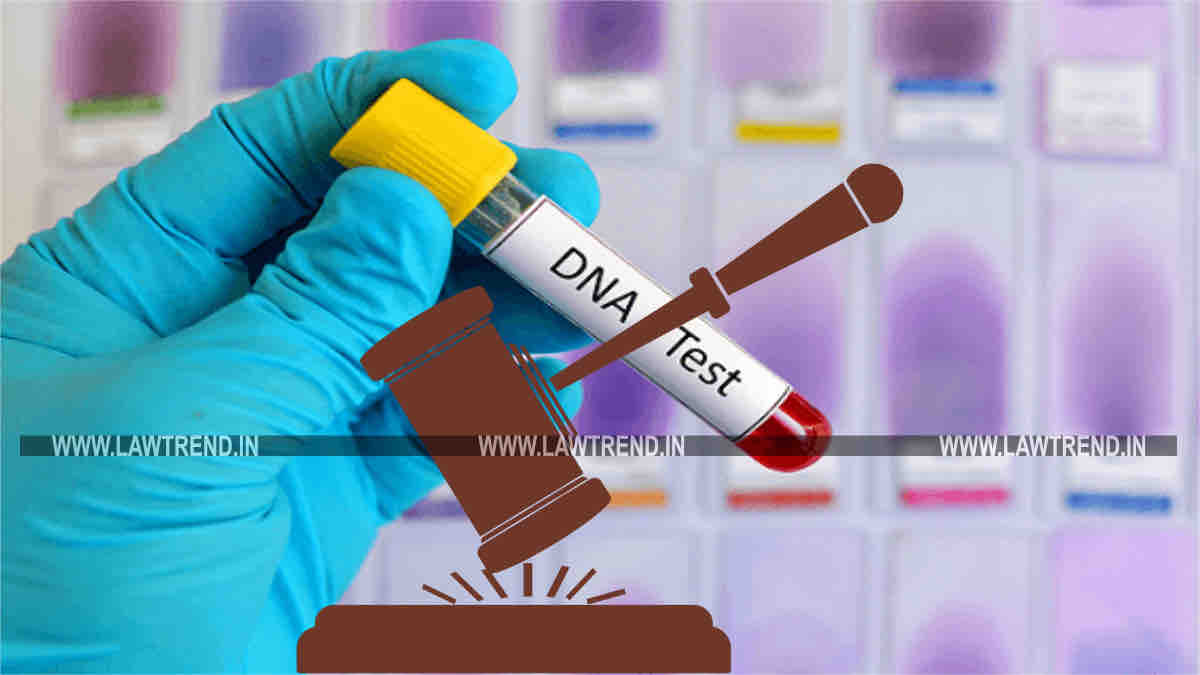

The Supreme Court of India has ruled that a DNA test can be ordered when the question of paternity is directly in issue and no other evidence is available on record to determine the truth. Dismissing an appeal against concurrent orders of the lower courts, a bench comprising Justice Sanjay Karol and Justice Nongmeikapam Kotiswar Singh held that a child’s legitimate interest in seeking closure regarding their biological parentage outweighs an individual’s right to privacy in such cases. The Court emphasised that when there is no other categorical evidence to resolve the controversy, scientific verification is in the best interest of justice.

Background of the Case

The dispute arose from a civil suit filed by the first respondent, Amar Pradhan (Amar), who is the son of the second respondent. Amar asserted that he is the biological son of the appellant, Chaturbhuj Pradhan (CP), born on 10th September 1999 as a result of consensual relations between CP and his mother in January 1999. CP denied these claims, relying in part on his acquittal in a rape case registered by the mother under Section 376 of the Indian Penal Code, 1860, which was decided in December 1999.

Between 2003 and 2010, the parties engaged in multiple maintenance disputes. In a 2005 miscellaneous criminal case, the High Court observed that Amar and his mother had failed to establish any relationship with CP. This order was subsequently challenged before the Supreme Court and resolved in a Lok Adalat in July 2024, which noted that since Amar had attained majority and was 24 years old, nothing survived in the maintenance matter.

During the pendency of that appeal, having reached majority, Amar filed a civil suit seeking a declaration of paternity and an entitlement to a 1/3rd share in CP’s property. Within these proceedings, the First Additional Civil Judge, Class-II, Basna, ordered CP to undergo a DNA test in September 2019. CP’s subsequent challenge before the High Court of Chhattisgarh at Bilaspur was dismissed in June 2025, with the High Court observing that no other evidence would suffice to clearly establish paternity. CP then approached the Supreme Court.

Arguments of the Parties

Before the Supreme Court, CP contended that he could not be compelled to provide a DNA sample, arguing that there was no eminent need for such a test. He further argued that no adverse inference could be drawn against him under Section 114(h) of the Indian Evidence Act, 1872, at this stage. Additionally, CP claimed that Amar’s civil suit was barred by the doctrine of res judicata due to previous findings in the maintenance litigation.

READ ALSO  Supreme Court Grants UPSC One Week to File Compliance Affidavit on Screen-Reader Software for Visually-Impaired Candidates

Conversely, counsel for Amar argued that CP’s continuous denial of paternity left no other recourse to resolve the dispute, making the DNA test essential in the interest of justice. It was argued that the presumption of legitimacy under Section 112 of the Indian Evidence Act (which applies to children born during the subsistence of a valid marriage) was inapplicable to this case. Amar’s counsel also maintained that the right to privacy is not absolute, and res judicata did not apply because the prior maintenance proceedings under Section 125 of the Code of Criminal Procedure (CrPC) were summary in nature and did not constitute a proper, final finding on paternity.

The Court’s Analysis of Legal Precedents

To evaluate the competing claims, the Supreme Court reviewed several landmark judgements governing the ordering of DNA and blood tests:

  1. Goutam Kundu v. State of W.B. (1993): The Court noted the established rule that “courts in India cannot order blood test as a matter of course” and that there must be a strong prima facie case to dispel the presumption under Section 112 of the Evidence Act.
  2. Dipanwita Roy v. Ronobroto Roy (2015): The Court highlighted that DNA tests are permissible to determine the veracity of allegations that decide the outcome of a case, though they should be avoided if possible because “the legitimacy of a child should not be put to peril.”
  3. Aparna Ajinkya Firodia v. Ajinkya Arun Firodia (2024): The bench cited the principles laid down for ordering DNA tests, reiterating that “only in exceptional and deserving cases, where such a test becomes indispensable to resolve the controversy the court can direct such test.”
  4. Ivan Rathinam v. Milan Joseph (2025): The Court recalled the necessity of balancing the interests of the parties and assessing if there is an “eminent need” for the test, observing: “First and foremost, the courts must, therefore, consider the existing evidence to assess the presumption of legitimacy. If that evidence is insufficient to come to a finding, only then should the court consider ordering a DNA test.”

The Court confirmed that all these precedents were recently followed by the same bench in Nikhat Parveen v. Rafique (2026).

The Verdict and Decision

Applying these legal standards, the Supreme Court concluded that a DNA test was warranted. The bench noted that the alleged relationship occurred in January 1999, Amar was born in September 1999, and CP has consistently denied paternity. Since there was no allegation that the mother had had an intimate relationship with anyone else, no other evidence could provide a categorical answer.

READ ALSO  Pendency of a Vigilance Inquiry Cannot Be an Impediment for an Individual to Travel Abroad: Delhi HC

The Court dismissed CP’s argument on res judicata, clarifying that previous findings regarding the lack of relationship were not the result of a full-dress trial. Since Amar’s civil suit was filed specifically for a declaration of paternity, the question was directly in issue.

Addressing the conflict between the right to privacy and the right to know one’s parentage, the Court observed:

“when the Court is confronted with the question whether or not to order a DNA test, the only test to be satisfied is whether the result of the DNA test is directly in issue and whether any other evidence-on-record can substitute for the answer that may be arrived at through this scientific process. Also, whether it is in the best interest of the parties and/or justice.”

The bench further noted:

READ ALSO  No Bail Under Section 479(1) BNSS for Accused in Multiple Cases Despite Serving Half or One-Third of Sentence: Karnataka High Court

“As far as the right of privacy is concerned, we are balancing, in this case CP’s privacy with Amar’s desire for closure on a question that has loomed large on his life throughout.”

Warning of the consequences of denying the test, the Court added:

“If no positive answer is ever found out to the question, it is quite possible that Amar would forever be denied the rights he may otherwise be entitled to by virtue of being CP’s son.”

Concluding that “The balance of interests definitely lies in favour of Amar,” the Supreme Court found no error in the judgements of the lower courts and dismissed the appeal. The Court directed the concerned Civil Court to fix a date for conducting the DNA test and to proceed with the pending civil suit based on the results.

Case Details

Case Title: Chaturbhuj Pradhan v. Amar Pradhan & Anr.
Case No.: Civil Appeal No. of 2026 (Arising out of SLP (Civil) No. 4016 of 2026)
Bench: Justice Sanjay Karol and Justice Nongmeikapam Kotiswar Singh
Date: May 29, 2026

Law Trend
Law Trendhttps://lawtrend.in/
Legal News Website Providing Latest Judgments of Supreme Court and High Court

Related Articles

Latest Articles

