

Maintenance Is a Continuing Liability; Wife Need Not File Successive Execution Applications: Allahabad High Court
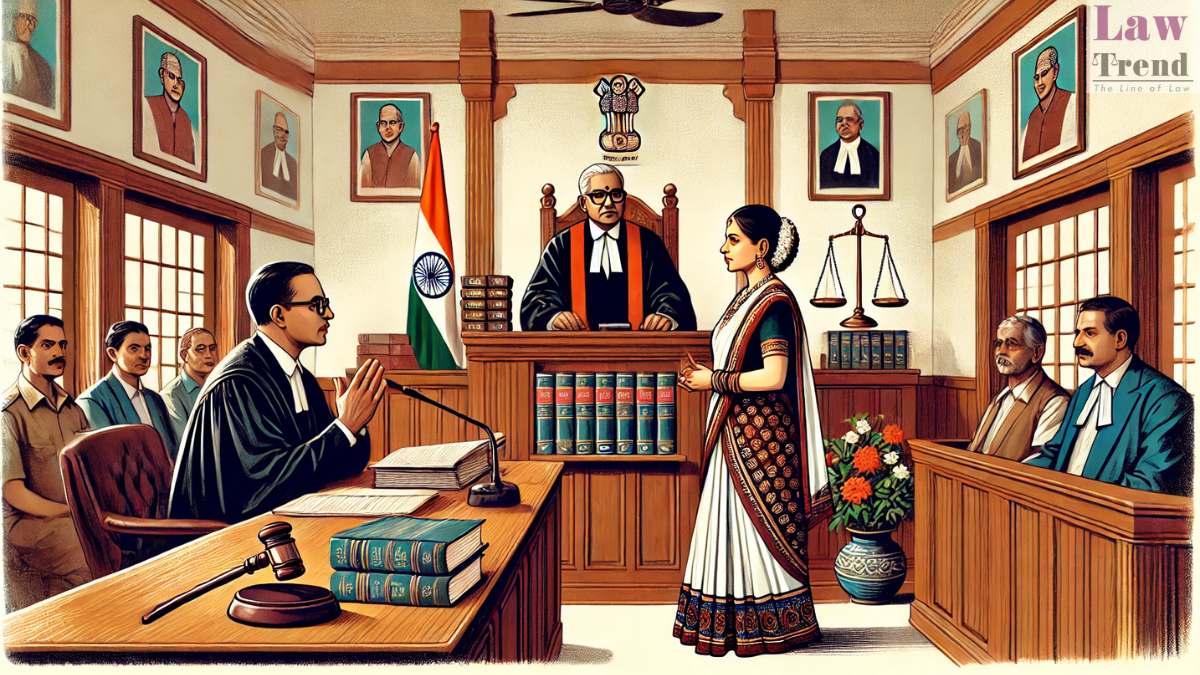
The Allahabad High Court, presided over by Justice Praveen Kumar Giri, has held that the obligation to pay maintenance under Section 125 of the Code of Criminal Procedure (CrPC) and Section 144 of the Bharatiya Nagarik Suraksha Sanhita (BNSS) is a continuing liability, making it unnecessary for a wife to file repeated execution applications for monthly maintenance. Setting aside an order of the Family Court that rejected an execution application upon partial payment of arrears, the High Court directed the husband to clear all pending dues and deposit future monthly maintenance directly into the wife’s verified bank account. The High Court also issued binding statewide directions to all Family Courts and Gram Nyayalayas across Uttar Pradesh to ensure seamless enforcement of maintenance orders.

Background of the Case

The matter originated from a maintenance application filed under Section 125 CrPC on May 11, 2018. On March 4, 2023, the Additional Principal Judge-I, Family Court, Jaunpur, granted maintenance of Rs 5,000 per month to the wife from the date of application.

To enforce this order, the wife filed an execution application under Section 128 CrPC on April 13, 2023. This proceeding was disposed of on March 10, 2025, after the husband cleared all accumulated arrears up to February 2025.

On April 9, 2025, the wife filed a second execution application under Section 128 CrPC / Section 147 BNSS, seeking regular monthly maintenance from April 2025 onwards along with unpaid arrears of Rs 5,000 for March 2025. On October 29, 2025, the Family Court issued a recovery warrant against the husband for 11 months of arrears. However, on December 6, 2025, after the husband deposited Rs 5,000 for March 2025, the Family Court recalled the recovery warrant for the remaining period despite total arrears of Rs 55,000 having accrued till then.

Subsequently, on January 27, 2026, the Family Court rejected the wife’s execution application under the proviso to Section 144(3) BNSS (corresponding to Section 125(3) CrPC), holding that since the Rs 5,000 claimed for March 2025 had been deposited, the application stood fully satisfied, and consigned the case record to the record room. Aggrieved by this decision, the wife filed a criminal revision before the High Court.

READ ALSO  Payment of Rs 450 Per Month as Wages is Exploitation: Allahabad HC Directs to Pay Minimum Wages

Arguments of the Parties

Counsel for the revisionist submitted that the original maintenance order dated March 4, 2023, remained valid and in force, having never been recalled or set aside by any competent court. It was argued that the proviso to Section 144(3) BNSS / Section 125(3) CrPC merely restricts the issuance of recovery warrants after a specified period and does not extinguish the claimant’s underlying right to receive maintenance or bar enforcement under Section 128 CrPC / Section 147 BNSS.

Despite notice being served through the Chief Judicial Magistrate, no representative appeared on behalf of the husband. State Counsel Mayank Awasthi assisted the court and submitted that the maintenance order remained operative, creating an ongoing legal obligation for the husband to make monthly payments.

Court’s Analysis

The High Court examined the statutory scheme and observed that the Family Court had misapplied the proviso to Section 144(3) BNSS / Section 125(3) CrPC. The Court highlighted settled precedents establishing that the liability to pay maintenance under Section 125(1) CrPC is continuous in nature.

Relying on the Supreme Court’s decision in Shantha Alias Ushadevi and another v. B.G. Shivananjappa (2005), as well as its own ruling in Mohammad Usman Alias Bhai Lal v. State of U.P. (2021), the Court quoted:

READ ALSO  Supreme Court Converts Death Penalty of Convict to Life Imprisonment in Triple Murder Case

“Section 125 Cr.P.C. is a measure of social legislation and it has to be construed liberally for the welfare and benefit of the wife and daughter. It is unreasonable to insist on filing successive applications when the liability to pay the maintenance as per the order passed under Section 125(1) is a continuing liability.”

Addressing the scope of limitation in the proviso to Section 125(3) CrPC, the High Court referred to the Supreme Court judgment in Poongodi and Another v. Thangavel (2013), reiterating:

“What the proviso contemplates is that the procedure for recovery of maintenance under Section 125(3) CrPC, namely, by construing the same to be a levy of a fine and the detention of the defaulter in custody would not be available to a claimant who had slept over his/her rights and has not approached the Court within a period of one year commencing from the date on which the entitlement to receive maintenance has accrued. However, in such a situation the ordinary remedy to recover the amount of maintenance, namely, a civil action would still be available.”

The Court also referred to recent Supreme Court decisions in Aarti Rai v. Satish Rai (2025), which encouraged direct bank transfers of maintenance, and Dimpal v. Nishant Pravinbhai Soni (2026), which authorized direct salary deductions by employers to ensure compliance.

Decision and Directions

The High Court directed the husband to clear all arrears of maintenance up to date and to continue paying the monthly maintenance sum of Rs 5,000 into the wife’s verified bank account in compliance with the March 4, 2023 order.

Furthermore, the High Court issued mandatory directions for all Presiding Officers of Family Courts and Gram Nyayalayas in Uttar Pradesh:

  1. Trial courts must follow Shantha Alias Ushadevi and ensure claimants are not required to file successive execution applications for monthly maintenance.
  2. Trial courts must follow Poongodi, recognizing that the one-year proviso under Section 125(3) CrPC / Section 144(3) BNSS does not extinguish entitlement to arrears.
  3. Courts must direct maintenance payors to deposit monthly amounts directly into the claimant’s verified bank account, as held in Aarti Rai.
  4. Where the payor is a salaried employee, courts must direct the employer to deduct maintenance dues or arrears directly from their salary and transfer them to the claimant’s bank account, per Dimpal.
  5. In case of non-payment or refusal, courts shall attach the payor’s property. If attached property is insufficient, simple imprisonment for up to one month for each month of default may be ordered under Section 125(3) CrPC / Section 144(3) BNSS and Rajnesh v. Neha.

The High Court warned that non-compliance by judicial officers would invite disciplinary and contempt proceedings. District Administration and Police Authorities were instructed to assist in execution, and District Judges were directed to discuss maintenance enforcement during monthly Monitoring Cell meetings.

Case Title: Mala Kumari Versus State of U.P. and another
Case No.: Criminal Revision No. 1552 of 2026
Bench: Justice Praveen Kumar Giri
Date: July 24, 2026

READ ALSO  Allahabad HC: Delivery of a Signed Copy of the Arbitral Award is not a mere Formality but a Substantive Requirement
Ad 20- WhatsApp Banner

Law Trend
Law Trendhttps://lawtrend.in/
Legal News Website Providing Latest Judgments of Supreme Court and High Court

Related Articles

Latest Articles
