

Mediclaim Reimbursement Not Deductible From Motor Accident Compensation Under MVA: Supreme Court
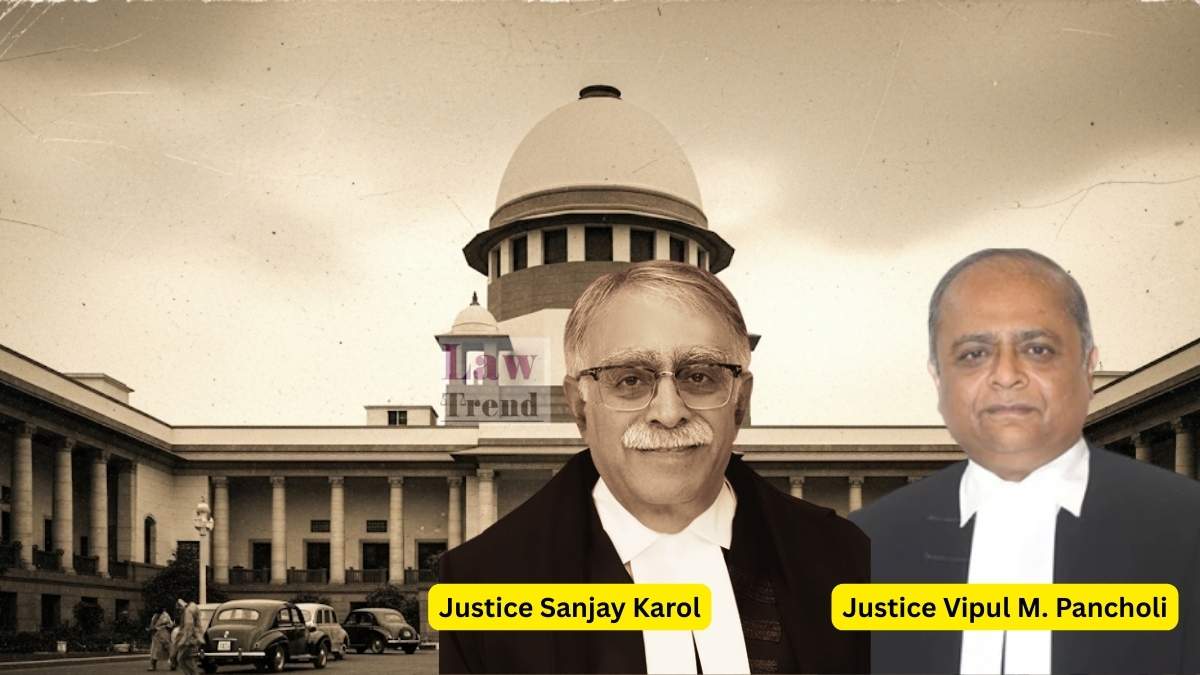
In a landmark judgment resolving widespread judicial conflicts across various High Courts, the Supreme Court of India has held that the reimbursement of medical expenses received by an accident victim under a private Mediclaim policy cannot be deducted from the compensation awarded by a Motor Accidents Claims Tribunal (MACT) under the Motor Vehicles Act, 1988 (MVA).

The Division Bench comprising Justice Sanjay Karol and Justice Vipul M. Pancholi delivered this decision on May 15, 2026, in the case of New India Assurance Company Limited v. Dolly Satish Gandhi & Anr. (Civil Appeal arising out of Special Leave Petition (Civil) Nos. 18267 of 2025). Authoring the judgment, Justice Karol concluded that statutory compensation under the MVA and contractual benefits under a private Mediclaim policy operate in entirely separate domains.

Legal Issue

The central question of law before the Supreme Court was whether the amount of money received by a claimant under a Mediclaim policy is deductible from a compensation award passed by a Claims Tribunal under the MVA.

The Court answered in the negative. It ruled that Mediclaim payouts and MACT compensation stand on different footings—one being contractual and the other statutory. Consequently, the Supreme Court dismissed the appeal filed by the appellant-insurer, New India Assurance Company Limited, and remanded the matter to the High Court for determination consistent with this opinion.

Background of the Case

The case arose from an accident involving an individual identified as ‘A’, who subsequently filed a claim for compensation before the jurisdictional MACT, claiming inter alia loss of income, future prospects, special diet, transportation, and medical expenses. Concurrently, the claimant had also received reimbursement for the same medical expenses under their personal medical insurance policy.

A conflict of decisions arose within the High Court of Judicature at Bombay on whether such deductions are permissible. In The New India Assurance v. Dineshchandra Shantilal Shah and Ors., a single judge had held that Mediclaim payouts are deductible. Contrarily, in Vrajesh Navnitlal Desai v. K. Bagyam and Anr. and Royal Sundaram Alliance Insurance Co. Ltd., Kolkata v. Ajit Chandrakant Rakvi and Anr., the court held that they are not.

Resolving this internal conflict, a three-judge Bench of the Bombay High Court delivered the impugned judgment, holding that Mediclaim benefits are not deductible from the compensation awarded for injuries suffered in a motor accident. Aggrieved by this finding, the appellant-insurer, New India Assurance Company Limited, approached the Supreme Court.

Arguments of the Parties

Appellant’s Submissions (New India Assurance Co. Ltd.)

The learned Counsel for the appellant raised the following contentions:

  1. Just Compensation and Neutralized Loss: Once a respondent-insured has been reimbursed for medical expenses through a Mediclaim policy, the loss under that head is neutralized. Awarding the same amount again under the MVA would go beyond restitution, resulting in a duplication of benefits, which is inconsistent with the principle of “just compensation”.
  2. Precedent on Double Benefits: The appellant relied on Reliance General Insurance Co. Ltd. v. Shashi Sharma (2016) 9 SCC 627, where the Supreme Court emphasized that double benefits should not be granted in motor accident claims, holding that ex gratia financial assistance received by claimants was liable to be deducted to avoid distorting “just compensation”.
  3. Distinguishing Independent Benefits: While acknowledging Helen C. Rebello v. Maharashtra SRTC (1999) 1 SCC 90—which held that life insurance, provident funds, and pensions are non-deductible—the appellant argued that those benefits accrue irrespective of the accident. Conversely, a Mediclaim reimbursement is directly and causally linked to the injuries sustained in the accident.
  4. Statutory Premise of Actual Loss: Under Sections 146 and 147 of the MVA, third-party risk insurance is mandatory to indemnify actual loss. If the loss has already been reimbursed, no liability remains to compensate for it.
  5. Reimbursement by Employers: The appellant cited Oriental Insurance Co. Ltd. v. R. Swaminathan (CA 2715 of 2002), where the Supreme Court approved the deduction of medical expenses that had already been reimbursed to the claimant by their employer.
READ ALSO  Anticipatory Bail Granted On Payment Of Maintenace To Wife; SC Rejects SLP

Respondent’s Submissions (Dolly Satish Gandhi & Anr.)

The learned Counsel for the respondent-insured countered with the following points:

  1. Statutory vs. Contractual Entitlements: Compensation under the MVA is a statutory right triggered by negligence and injury, requiring no prior contribution by the claimant. In contrast, a Mediclaim policy is a private contract supported by premium payments. The two operate in separate domains.
  2. Direct Correlation Requirement: Relying on Helen Rebello, the respondent argued that deductions are permissible only where a direct correlation or nexus exists between the receipt of the sum and the accidental death or injury.
  3. No Advantage to Tortfeasors: Citing United India Insurance Co. Ltd. v. Patricia Jean Mahajan (2002) 6 SCC 281 and Sebastiani Lakra v. National Insurance Co. Ltd. (2019) 17 SCC 465, the respondent argued that contractual or service-related benefits (including insurance) cannot be deducted, as they accrue independently and should not unjustly benefit the wrongdoer.
  4. The Prudence Rule: Under the principle recognized in Bradburn v. Great Western Railway Co. (1874-80) All ER Rep 195, damages payable by a tortfeasor cannot be reduced on account of insurance benefits, ensuring that a wrongdoer does not benefit from the claimant’s prudence.
  5. Beneficial Nature of MVA: Under Sections 166 and 168 of the MVA, the Tribunal is obligated to award “just compensation” based on fairness, equity, and a realistic assessment of loss, as elucidated in National Insurance Co. Ltd. v. Pranay Sethi (2017) 16 SCC 680.

The Court’s Analysis

The Supreme Court took notice of the “surprising” divergence of views among single judges and division benches across various High Courts (such as the Delhi, Kerala, Punjab & Haryana, Bombay, and Madhya Pradesh High Courts) on whether Mediclaim payouts are deductible.

Distinguishing the Legal Character of Benefits

The Bench analyzed the source and nature of the payments to address the “double benefit” argument:

  • Statutory Benefits: Flow from the authority of law, are available to all who fulfill the statutory conditions, and do not involve private negotiation or consent.
  • Contractual Benefits: Flow from the mutual agreement and consent of the parties. They are limited inter se the contracting parties and are supported by consideration (premiums).

Evaluating past precedents, the Court noted:

  • Life Insurance and Savings (Helen Rebello): The Court quoted Justice A.P. Misra’s observations in Helen Rebello to outline why private investments cannot be balanced against statutory motor accident claims:
    “How thus an amount earned out of one’s labour or contribution towards one’s wealth, savings, etc. either for himself or for his family which such person knows under the law has to go to his heirs after his death either by succession or under a Will could be said to be the “pecuniary gain” only on account of one’s accidental death. … How can an amount of loss and gain of one contract be made applicable to the loss and gain of another contract. Similarly, how an amount receivable under a statute has any corelation with an amount earned by an individual. Principle of loss and gain has to be on the same plane within the same sphere, of course, subject to the contract to the contrary or any provisions of law.”
  • Social Security and Investments (Patricia Jean Mahajan): In Patricia Jean Mahajan, the Court had observed:
    “…The High Court has rightly disallowed any deduction on account of receipts under the insurance policy and other receipts under the social security system which the claimant would have also otherwise been entitled to receive irrespective of accidental death of Dr Mahajan. If the proposition ‘receipts from whatever source’ is interpreted so widely that it may cover all the receipts, which may come into the hands of the claimants, in view of the mere death of the victim, it would only defeat the purpose of the Act providing for just compensation on account of accidental death. Such gains, maybe on account of savings or other investment etc. made by the deceased, would not go to the benefit of the wrongdoer and the claimant should not be left worse off, if he had never taken an insurance policy or had not made investments for future returns.”
  • Statutory Overlaps (Shashi Sharma): In Shashi Sharma, the Court had permitted deductions because both the compassion rules and the MVA had statutory force, and the claimants could not seek statutory compensation twice for the exact same head (“pay and allowances” vs. “loss of pay and wages”):
    “The claimants or dependants of the deceased government employee… cannot set up a claim for the same subject falling under the first part of Rule 5—’pay and allowances’, which are receivable by them from employer… Any other interpretation of the said Rules would inevitably result in double payment towards the same head of loss…”
  • Non-Statutory Schemes (Sebastiani Lakra): The Court distinguished Shashi Sharma from Sebastiani Lakra, where payments under the Employees Family Benefit Scheme were not statutory and therefore held non-deductible.
  • Employer Reimbursements (Swaminathan): The Bench clarified that the deduction of medical expenses in Swaminathan arose out of the specific fact of an employer reimbursing the medical expenses, which is not a general condition and does not apply to a personal Mediclaim policy held in the claimant’s own name.
READ ALSO  Supreme Court Refuses to Modify Order Suspending State Probe Into Karur Stampede

Crucial Finding on Mediclaim Policies

Applying these principles, the Supreme Court held that a Mediclaim policy is purchased by an individual to secure financial backing against the general uncertainties of life and health, and is “not a matter of Sherlockian deduction” to understand its independence.

The Court highlighted the “peculiar situation” and unjust outcomes that would result if such deductions were allowed:

  1. Denial of Premium Benefit: It would deprive the claimant of the benefits of their own hard-earned money spent on securing Mediclaim premiums over the years.
  2. Undue Advantage to the Mediclaim Company: The company issuing the Mediclaim policy would receive premiums but avoid payouts if the claimant’s expenses were covered solely by the MACT award.
  3. Unjust Enrichment of the Tortfeasor’s Insurer: The insurer of the offending vehicle would escape its liability under the medical expenses head simply because the victim was prudent enough to maintain private health insurance.
  4. Different Guiding Yardsticks: A Mediclaim policy has a strict contractual ceiling (the sum insured), whereas MVA compensation is guided by the broad, limitless principle of “just and fair compensation.”
READ ALSO  सुप्रीम कोर्ट ने दी सलाहः बच्चों को कम उम्र में स्कूल न भेजें, इसका परिणाम उनके स्वास्थ्य पर पड़ सकता है

Consequently, the Court concluded:

“Only because they appear same or similar, they cannot be termed as ‘double benefit’. … To equate these two amounts to pulling down the MVA or unnecessarily hyping up the Mediclaim policy.”

Secondary Issue: Judicial Inconsistency

The Court expressed deep concern over “unsettled” and “contrary positions of law being taken by the same High Court, whether it be by the benches of the same strength or by the benches of lesser strength in ignorance of pronouncements made by the benches of higher strength.”

The Bench warned that such inconsistencies directly lead to “judicial inconsistency and uncertainty,” adding that “it becomes a matter of choice to follow one and leave aside the other, and it remains no longer, a matter of law.”

The Court reminded the Bar and the Bench of their shared responsibility:

  • The Bar (Counsel): Must fulfill their duty toward the Court by disclosing all judgments, including those that do not aid their client’s case.
  • The Bench (Judges): Must independently apply the correct law, ensure consistency with precedent, and avoid per incuriam decisions, despite facing heavily crowded daily dockets.

The Decision

The Supreme Court summarized its ultimate conclusion as follows:

“In fine, we hold that the amount received as part of Mediclaim/medical insurance is not deductible from compensation as calculated by the concerned Tribunal, adjudicating a claim for compensation under the MVA which may also include compensation under the head of medical expenses, if claimed. These two stand on a different footing – one is statutory while the other is contractual and the latter is only a sequitur of premiums having been paid in the past while the other is an entitlement as a consequence of an accident or death in a motor vehicle accident.”

The appeal filed by New India Assurance Company Limited was dismissed as meritless, and the matter was remanded to the High Court for a fresh determination in conformity with this opinion. All pending applications were also disposed of.

Case Details

  • Case Title: New India Assurance Company Limited v. Dolly Satish Gandhi & Anr.
  • Case No.: Civil Appeal No. of 2026 (Arising out of SLP (Civil) No. 18267 of 2025)
  • Bench: Justice Sanjay Karol and Justice Vipul M. Pancholi
  • Date: May 15, 2026

Law Trend
Law Trendhttps://lawtrend.in/
Legal News Website Providing Latest Judgments of Supreme Court and High Court

Related Articles

Latest Articles


