

Filing NCLAT Appeal Without Certified Copy Is No Appeal in Eyes of Law: Supreme Court Sets Aside Delay Condonation Order
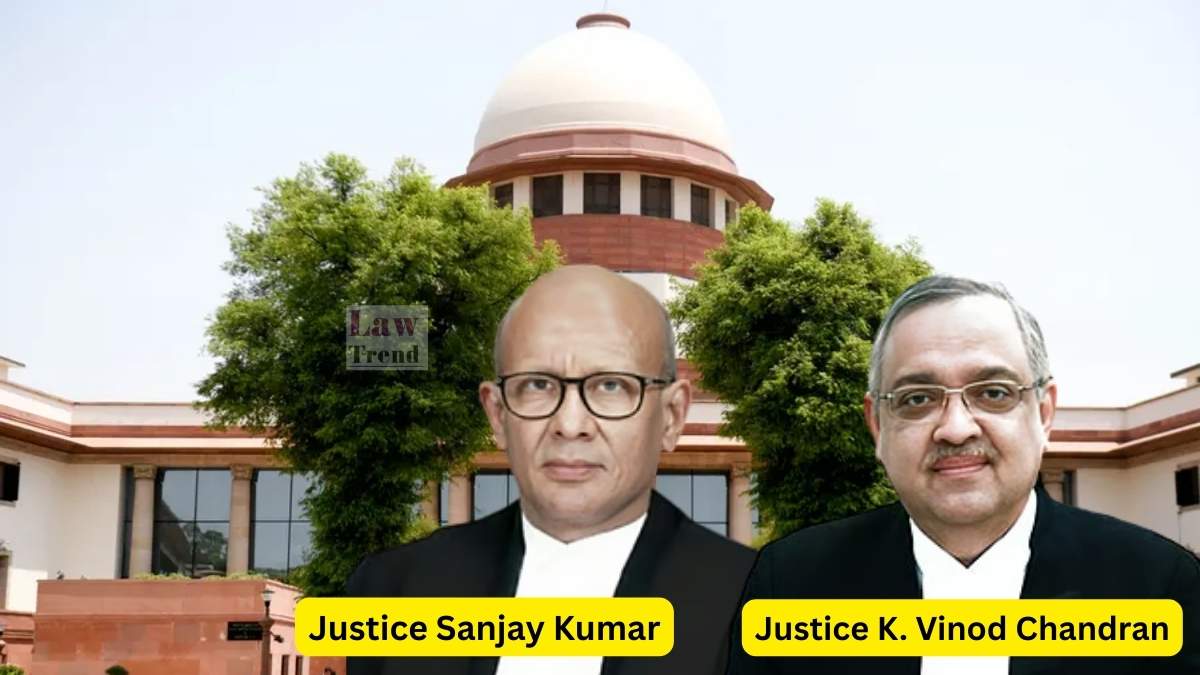

The Supreme Court of India has set aside an order of the National Company Law Appellate Tribunal (NCLAT), Chennai, which had condoned a 150-day delay in refiling an appeal. The Court held that an appeal filed without a certified copy of the impugned order—and without an accompanying application for exemption—is not merely “defective” but “wholly incompetent.”

Background

The case originated from an order passed by the National Company Law Tribunal (NCLT), Kochi Bench, on August 14, 2024, which approved a resolution plan submitted by the Angelwoods Apartment Allottees Association (the appellant).

Respondent No. 1, M Lalitha, the mother of a suspended director of the corporate debtor (Samson and Sons Builders and Developers Pvt. Ltd.) and a self-claimed financial creditor, challenged this approval. She e-filed her appeal before the NCLAT on September 28, 2024, which was the final day of the 45-day outer limit prescribed under Section 61(2) of the Insolvency and Bankruptcy Code (IBC).

The NCLAT Registry communicated defects on October 4, 2024. Respondent No. 1 refiled the appeal on March 10, 2025, after a delay of 150 days. Despite the appellant’s opposition, the NCLAT condoned the delay in refiling upon payment of ₹50,000 costs, observing that refiling delay was a matter “exclusively between the NCLAT and the appellant.”

Court’s Analysis

A Bench comprising Justice Sanjay Kumar and Justice K. Vinod Chandran scrutinized the NCLAT records, including the Scrutiny Report. The Court noted that even after the 150-day refiling period, ten major defects remained, including the absence of the certified copy of the NCLT order.

READ ALSO  Employees’ Compensation Act | Functional Disability Can Exceed Statutory Percentage in Schedule When Multiple Fingers Are Affected: Supreme Court

The Court emphasized Rule 22(2) of the NCLAT Rules, 2016, which mandates that every appeal must be accompanied by a certified copy of the impugned order. The Bench observed:

“The appeal, as filed and refiled, was not a merely defective appeal, wherein the defects could be cured, but was a wholly incompetent appeal that did not satisfy the essentials to pass muster.”

The Court further noted that “the filing of such appeal, without even applying for a certified copy of the order dated 14.08.2024, practically meant that there was no filing of an appeal in the eyes of law.”

The Court highlighted several lapses by Respondent No. 1:

  1. Belated Application: Respondent No. 1 applied for the certified copy only on April 21, 2025—long after both the initial filing and the refiling.
  2. Lack of Diligence: Referring to V. Nagarajan vs. SKS Ispat and Power Limited, the Court noted that applying for a certified copy is an “indication of the diligence of the party.”
  3. No Exemption Sought: Respondent No. 1 did not file an application for exemption from filing the certified copy under Rules 14 and 15 of the NCLAT Rules at any stage.
READ ALSO  पदोन्नति के लिए विचार किए जाने के अधिकार का मतलब तत्काल पदोन्नति का अधिकार नहीं है: सुप्रीम कोर्ट

The Bench criticized the NCLAT’s approach, stating it “totally lost sight of these vital aspects” and “ought not to have extended such indulgence… without first ascertaining whether her appeal was instituted in accordance with the norms.”

The Decision

The Supreme Court held that the filing and refiling of the appeal were “incurably tainted” and should have been rejected at the threshold. Consequently, the Court set aside the NCLAT’s common order dated November 10, 2025, and allowed the appeals of the Allottees Association.

READ ALSO  Supreme Court Directs CBI to Report on Financial Irregularities at R G Kar Hospital

Case Details

Case Title: Angelwoods Apartment Allottees Association vs. M Lalitha and another
Case No.: Civil Appeal Nos. 14439-14440 of 2025
Bench: Justice Sanjay Kumar and Justice K. Vinod Chandran
Date: May 12, 2026

Law Trend
Law Trendhttps://lawtrend.in/
Legal News Website Providing Latest Judgments of Supreme Court and High Court

Related Articles

Latest Articles

