

Denial of Regular Appointment After Selection Through Regular Recruitment Process Is ‘Patently Illegal and Unconstitutional’: Supreme Court
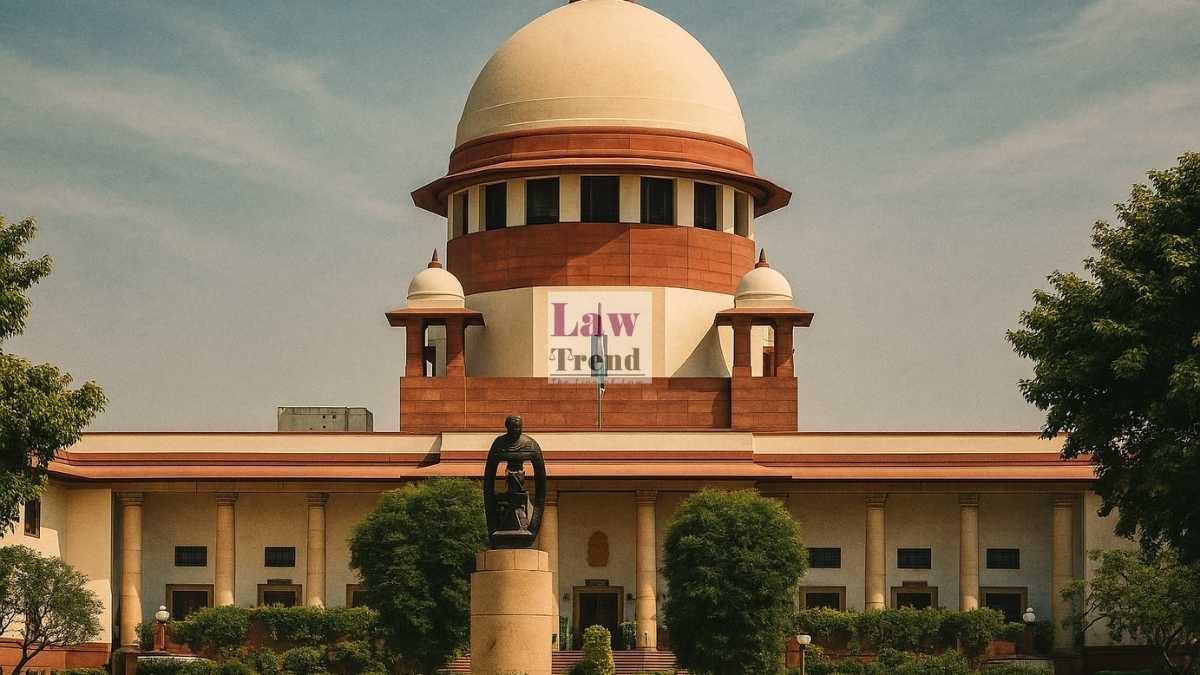

The Supreme Court of India has held that granting a contractual appointment to a candidate who applied for a regular vacancy and successfully cleared the regular selection process is arbitrary and unconstitutional. A Bench comprising Justice Pankaj Mithal and Justice S.V.N. Bhatti set aside the orders of the High Court of Judicature at Allahabad, directing the Indian Institute of Information Technology (IIIT), Allahabad, to appoint the appellant as a regular Assistant Professor.

Background of the Case

In January 2013, the IIIT-Allahabad (Respondent No. 2) issued an advertisement (FS-01/2013) inviting applications for regular posts of Professor, Associate Professor, and Assistant Professor. The appellant, Lokendra Kumar Tiwari, who possessed a Ph.D. in Information Security and an M.S. in Cyber Law & Information Security with a CGPA of 9.02/10, applied for the post of Assistant Professor.

Following an interview on March 18, 2013, the Selection Committee recommended thirteen candidates for regular appointments. However, the appellant and one other candidate, Dr. Ranjana Vyas, were recommended only for contractual appointments for 12 months. The appellant accepted the offer and joined the institute.

In 2014, the Institute cancelled all appointments from that selection cycle due to perceived omissions. This led to a series of litigations. After a remand from the Supreme Court in 2017, the Institute reiterated its decision, offering the appellant a contractual role again while regularizing all other candidates. The appellant’s challenge against this differential treatment was dismissed by both a Single Judge and a Division Bench of the Allahabad High Court, leading to the present Civil Appeal.

Arguments of the Parties

The Appellant contended that the advertisement was exclusively for sanctioned regular posts and that the recruitment rules prescribed distinct committees for regular and contractual appointments. It was argued that the Selection Committee bypassed this procedure and arbitrarily singled out the appellant for contractual appointment despite him being fully qualified. The appellant further stated that his acceptance of the contractual offer was under “economic compulsion” and did not operate as an estoppel against an illegality.

READ ALSO  सुप्रीम कोर्ट के जज एसवीएन भट्टी ने आंध्र प्रदेश के पूर्व सीएम एन चंद्रबाबू नायडू की याचिका पर सुनवाई से खुद को अलग कर लिया

Respondent No. 2 (IIIT-Allahabad) argued that the Selection Committee had the discretion to recommend appointments on either a regular or contractual basis based on merit. They asserted that the appellant had voluntarily accepted the contractual terms without written protest and worked for nearly a year. The Respondent also maintained that the decision was well-reasoned and fell outside the scope of judicial review.

Court’s Analysis and Observations

The Supreme Court clarified that the central issue was not whether a contractual appointee is entitled to regularization, but whether the process of issuing a contractual appointment against a regular vacancy was sustainable.

READ ALSO  Motor Vehicle Accident or Murder? Andhra Pradesh High Court Rules on Key Legal Questions

The Court noted several “admitted circumstances”:

  1. The advertisement made “no mention of any appointment being made on a contractual basis.”
  2. The appellant was found suitable for consideration for a regular appointment and was shortlisted accordingly.
  3. The selection process was “one and the same for all candidates.”

The Bench observed that no reasons were recorded for giving the appellant differential treatment.

“To justify a singular treatment, at least the record must disclose reasons. The record does not disclose any reason for denying the post for which the Appellant was shortlisted and interviewed.”

While acknowledging that courts generally do not interfere with the views of a Selection Committee, the Bench emphasized the constitutional mandate of fairness:

“We note that denying a regular appointment is patently illegal and unconstitutional… we are unable to discern a just and real reason for denying the Appellant a regular appointment.”

The Decision

The Supreme Court allowed the appeal and set aside the impugned judgments of the High Court. The Court held that the appellant is entitled to a regular appointment as an Assistant Professor at IIIT-Allahabad.

READ ALSO  सुप्रीम कोर्ट ने शबीर शाह की अन्य मामलों में हिरासत की स्थिति पर NIA से मांगी रिपोर्ट

The Court issued the following directions:

  • Respondent No. 2 must issue a regular appointment order to the appellant within four weeks.
  • The appellant shall be granted continuity of service from the date of the original selection (April 6, 2013).
  • The appellant’s seniority shall be fixed as the last candidate among those appointed via the 2013 selection process.
  • The relief was “moulded” to deny any back-wages or financial benefits for the intervening period.

Case Details Block:

  • Case Title: Lokendra Kumar Tiwari v. Union of India and Others
  • Case No.: Civil Appeal No. 5307 of 2024 (2026 INSC 487)
  • Bench: Justice Pankaj Mithal and Justice S.V.N. Bhatti
  • Date: May 13, 2026

Law Trend
Law Trendhttps://lawtrend.in/
Legal News Website Providing Latest Judgments of Supreme Court and High Court

Related Articles

Latest Articles

