

‘First Date of Hearing’ Must Be Determined Before Striking Off Tenant’s Defence: Supreme Court Remands Eviction Suit
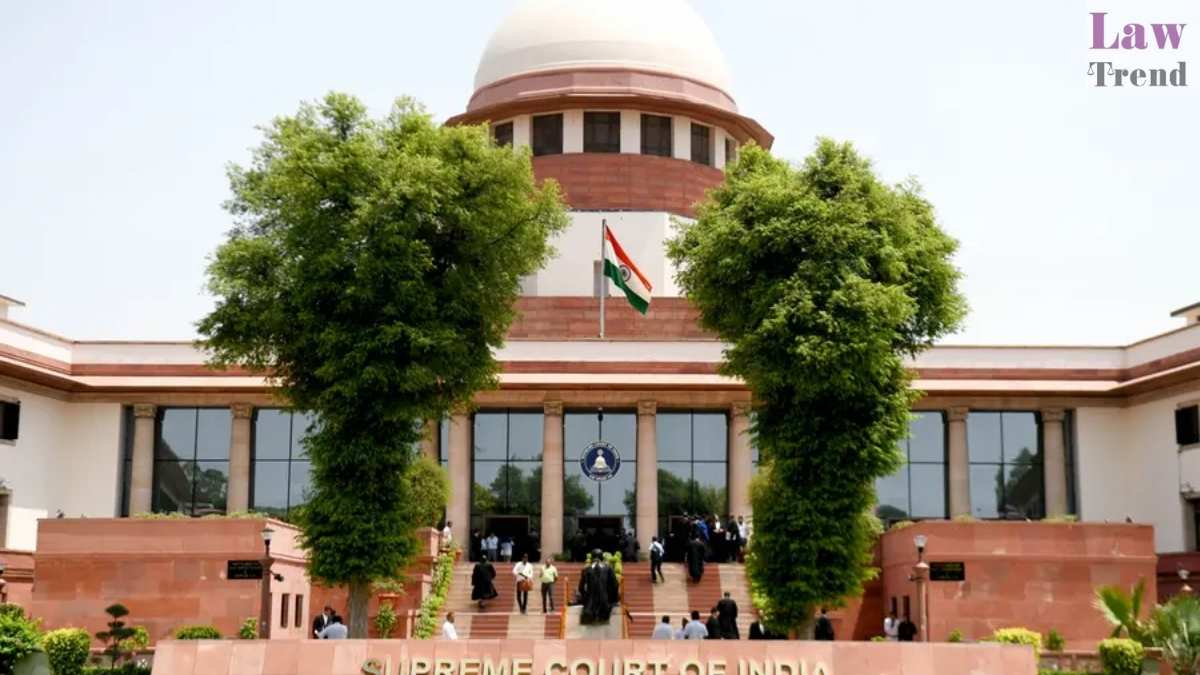

The Supreme Court of India has set aside a judgment of the Allahabad High Court in a landlord-tenant dispute, emphasizing that the “first date of hearing” must be conclusively determined before invoking the penal consequences of Order XV Rule 5 of the Code of Civil Procedure (CPC). The bench, comprising Justice S.V.N. Bhatti and Justice Prasanna B. Varale, observed that the power to strike off a tenant’s defence for non-payment of rent is discretionary and should not be exercised mechanically.

Background of the Case

The appellants, Dharmendra Kalra and others, are owners of premises in Kanpur Nagar, where the respondent, Kulvinder Singh Bhatia, runs ‘Gyan Vaisnav Hotel’ as a tenant. According to the appellants, the monthly rent was revised to ₹25,000 in September 2020. However, the tenant allegedly stopped paying rent from November 2020.

The appellants filed a suit (S.C.C. Suit No. 52 of 2021) for eviction and recovery of arrears. During the proceedings, the Trial Court struck off the tenant’s defence under Order XV Rule 5 CPC, noting that the tenant failed to deposit the entire arrears of rent and interest on or before the first date of hearing. The High Court, in revision, allowed the tenant to deposit a lower admitted rent (₹1,500) and later extended the time for this deposit, which led the landlords to approach the Supreme Court.

Arguments by the Parties

The appellants contended that the High Court committed a manifest error by interfering with the Trial Court’s well-reasoned order. They argued that the respondent’s conduct was contumacious and that the High Court’s extension of time, despite a prior “final opportunity” order, was impermissible in law. They further stressed that mere denial of a landlord-tenant relationship does not absolve a tenant from the statutory obligation to deposit rent under Order XV Rule 5 CPC.

Per contra, the respondent argued that the delay in depositing rent was minimal (seven days) and occurred due to the bona fide reason of his counsel being abroad. They submitted that the High Court rightly adopted a pragmatic approach. Furthermore, the respondent challenged the maintainability of the suit itself under the Uttar Pradesh Regulation of Urban Premises Tenancy Act, 2021.

Court’s Analysis and Observations

The Supreme Court noted that Order XV Rule 5 CPC is intended to ensure tenants do not occupy premises without paying admitted rent during litigation. However, the Court clarified that striking off a defence is a “drastic” and “exceptional step.”

Citing Bimal Chand Jain v. Sri Gopal Agarwal (1981), the Court observed:

READ ALSO  Allahabad High Court Orders Removal of 72 Illegal Advocate Chambers and Shops Near Lucknow District Court

“The word ‘may’ in sub-rule (1) merely vested power in the court to strike off the defence. It does not oblige it to do so in every case of default… The power is not to be exercised mechanically.”

The Court also referred to Santosh Mehta v. Om Prakash (1980), noting that the power is meant for “grossly recalcitrant situations” where there is “wilful failure, deliberate default or volitional non-performance.”

Crucially, the Court highlighted that the “first date of hearing” is not merely a procedural date but the date the Court applies its mind to the case. Citing Siraj Ahmad Siddiqui v. Prem Nath Kapoor (1993), the Court stated:

“The date of first hearing… is the date on which the court proposes to apply its mind to determine the points in controversy between the parties to the suit and to frame issues, if necessary.”

The Bench found that in the present case, the Trial Court had not conclusively determined this foundational date before striking off the defence.

The Decision

The Supreme Court held that procedural laws are the “handmaid of justice” and should advance the cause of justice rather than defeat it. Finding that both the Trial Court and the High Court failed to comprehensively address the relevant aspects—one acting mechanically and the other failing to reconcile its own orders—the Court remanded the matter.

READ ALSO  Counter-Claim Cannot be Filed After Issues are Framed or Solely Against a Co-Defendant: Supreme Court

The Trial Court has been directed to:

  1. Determine the “first date of hearing” in accordance with law.
  2. Examine if there was substantial compliance with Order XV Rule 5 CPC.
  3. Consider whether any default was wilful or bona fide.
  4. Pass a reasoned order within six months.

The appeal was disposed of, with all rival contentions on merits left open for the Trial Court’s adjudication.

Case Details:

  • Case Title: Dharmendra Kalra & Ors. vs. Kulvinder Singh Bhatia
  • Case No.: Civil Appeal No.(s) OF 2026 (@SLP (C) No. 7116 of 2025)
  • Bench: Justice S.V.N. Bhatti, Justice Prasanna B. Varale
  • Date: May 15, 2026

READ ALSO  [Section 319 CrPC] More than Prima Facie Case Needed at the time of framing of Charges: SC
Ad 20- WhatsApp Banner

Law Trend
Law Trendhttps://lawtrend.in/
Legal News Website Providing Latest Judgments of Supreme Court and High Court

Related Articles

Latest Articles

