

Supreme Court Seeks Detailed Pendency Data from Allahabad High Court; Quashes 35-Year-Old Case to Protect Right to Speedy Trial
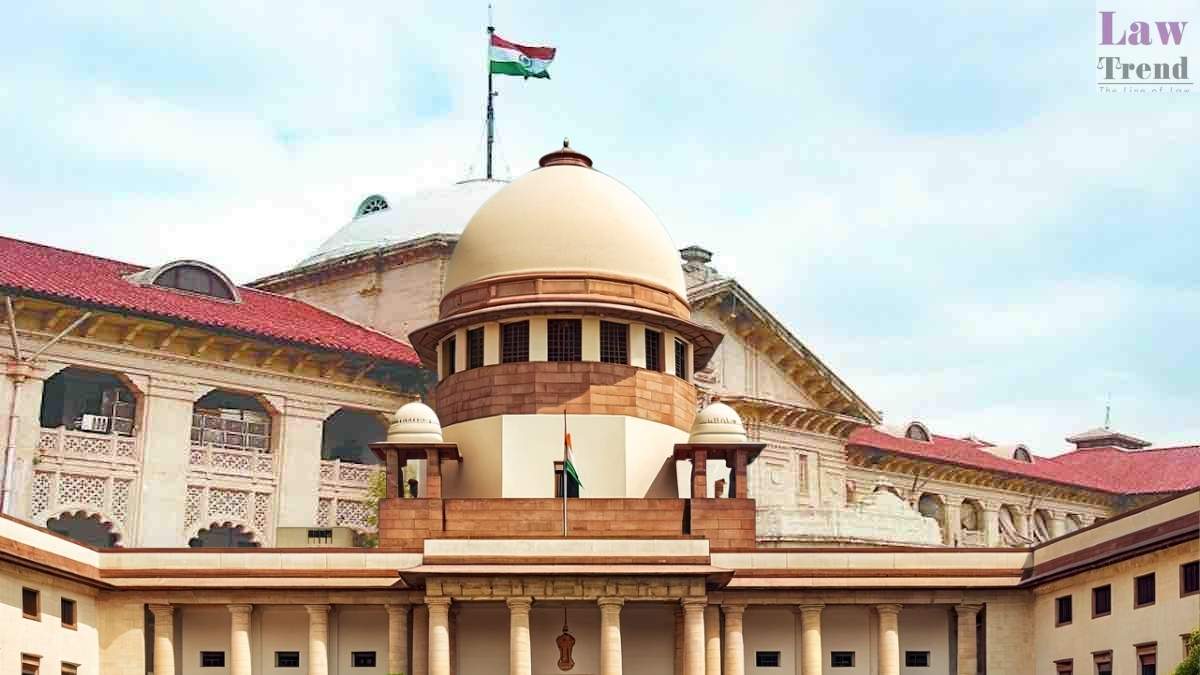

The Supreme Court of India has quashed a criminal proceeding that remained pending for 35 years, asserting that the right to a speedy trial is an integral part of the fundamental right to life and liberty under Article 21 of the Constitution. Observing that “the tag of ‘accused’ would deprive a man the right to live with full human dignity,” the Court has now sought detailed data from the Registrar General of the Allahabad High Court regarding the pendency of criminal cases and bail applications in the State of Uttar Pradesh.

Background of the Case

The case originated from a First Information Report (FIR) lodged on February 19, 1989, at GRP Rambagh Police Station. The complainant, a police constable, alleged that five other constables, including the appellant Kailash Chandra Kapri, assaulted him following a trivial dispute in the police mess regarding his proximity to the Mess Manager.

A chargesheet was filed for offences punishable under Sections 147 (rioting), 323 (voluntarily causing hurt), and 504 (intentional insult) of the Indian Penal Code, along with Section 120 of the Railways Act. Criminal Case No. 545 of 1991 was subsequently registered. While two co-accused passed away during the pendency of the case, two others were acquitted in February 2023 because the prosecution failed to produce any witnesses for 33 years.

The appellant, who was 22 years old at the time of the incident and is now 59, moved the High Court of Allahabad for quashing the proceedings. The High Court dismissed his application on February 23, 2006 (noted as 2024 in application numbering), leading to this appeal.

Arguments and State’s Position

The State of Uttar Pradesh contended that the trial against the appellant did not proceed alongside the co-accused because the appellant had been transferred to the State of Uttarakhand following the bifurcation of Uttar Pradesh. The State claimed that since the appellant left the state, summons could not be served upon him. However, the appellant argued that no summons were actually issued to him by the trial court until the year 2021.

READ ALSO  राज ठाकरे के खिलाफ नफ़रत फैलाने के भाषण के मामले में सुप्रीम कोर्ट ने याचिकाकर्ता से कहा – बॉम्बे हाईकोर्ट जाएं

Court’s Analysis of the Right to Speedy Trial

The Bench comprising Justice J.B. Pardiwala and Justice Ujjal Bhuyan examined whether the 35-year delay violated the appellant’s fundamental right to a speedy trial. The Court cited various landmark precedents, including Hussainara Khatoon v. State of Bihar and A.R. Antulay v. R.S. Nayak, to emphasize that a “reasonably expeditious trial” is essential for a procedure to be “reasonable, fair and just.”

The Court observed:

“The right to a speedy trial is also a human right and no civilized society can deny the same to an accused. Furthermore, it should always be the concern of the society to see that a real culprit is given the condign punishment at the earliest and also to see that an accused is given an early opportunity to clear the cloud of suspicion shrouded around him and to remove the tag of ‘accused’.”

The Bench criticized the systemic failure to follow judicial guidelines, noting:

“Guidelines just remain on paper; guidelines do not work fully. The reason for the same is also very simple. No court bothers to follow the guidelines. They do not follow because there is no accountability. No one is made answerable for the same.”

The Court highlighted that the current case involved “simple hurt and criminal intimidation” and was not a “heinous offence,” making a 35-year delay particularly “unwarranted and oppressive.”

READ ALSO  Third Person Cannot File Application for Correction or Cancellation of Entries in Marriage Registration Certificate : Kerala HC

The Decision

The Supreme Court allowed the appeal and directed that the trial or prosecution of the appellant shall proceed no further.

However, the Court decided to keep the matter “part-heard” to address the broader issue of judicial pendency in Uttar Pradesh. The Registrar General of the Allahabad High Court has been directed to file an affidavit by July 13, 2026, providing comprehensive data on:

  1. The total number and age of criminal cases pending before Judicial Magistrates and Sessions Courts.
  2. The number of undertrial prisoners and their duration of custody.
  3. Vacancies in the judicial cadre and status of recruitment proposals.
  4. Detailed statistics on pending bail applications, categorized by the period of custody undergone by the applicants.
READ ALSO  Company's Bank Account Can't be Frozen For Criminal Investigation Against Third Party Not Related to Company: SC

The Court expressed its intent to “work out some modalities” to address the “chronic malady” of undertrial detention and ensure the right to a speedy trial becomes “meaningful and real.”

Case Details Block:

  • Case Title: Kailash Chandra Kapri v. State of Uttar Pradesh & Ors.
  • Case No.: Criminal Appeal No. To be assigned of 2026 (Arising out of SLP (Crl.) No. 6564 of 2026)
  • Bench: Justice J.B. Pardiwala and Justice Ujjal Bhuyan
  • Date: April 29, 2026

Law Trend
Law Trendhttps://lawtrend.in/
Legal News Website Providing Latest Judgments of Supreme Court and High Court

Related Articles

Latest Articles

