

Railways Not a Deemed Distribution Licensee Under Electricity Act, Liable to Pay Cross-Subsidy Surcharge for Open Access: Supreme Court
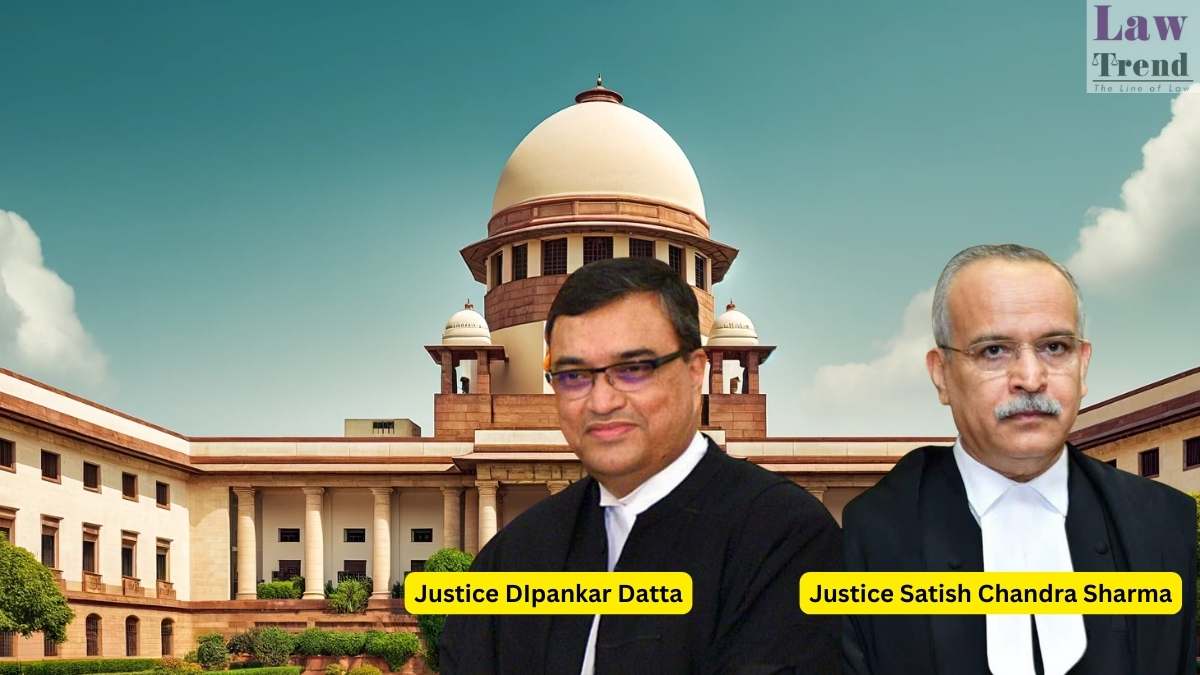

The Supreme Court of India has held that the Indian Railways does not qualify as a “deemed distribution licensee” under the Electricity Act, 2003, and is consequently liable to pay Cross-Subsidy Surcharge (CSS) and Additional Surcharge (AS) for electricity procured through open access. A Bench comprising Justices Dipankar Datta and Satish Chandra Sharma dismissed a batch of statutory appeals filed by the Railways, affirming that the national transporter acts as a “consumer” since it utilises electricity for its own operational needs rather than for sale to third parties.

Background

The dispute arose when Indian Railways sought to procure 100 MW of power from Gujarat Urja Vikas Nigam Limited (GUVNL) via inter-state open access for traction substations in Maharashtra. The Maharashtra State Electricity Transmission Co. Ltd. (MSETCL) refused connectivity, leading the Railways to petition the Central Electricity Regulatory Commission (CERC). In 2015, the CERC declared the Railways a “deemed distribution licensee” (DDL) under the third proviso to Section 14 of the Electricity Act. However, this was challenged by several State Electricity Regulatory Commissions (SERCs) and Distribution Companies (DISCOMs). On February 12, 2024, the Appellate Tribunal for Electricity (APTEL) set aside the CERC order, prompting the Railways to approach the Supreme Court.

Arguments of the Parties

Appellant (Indian Railways): The Railways argued that Section 11 of the Railways Act, 1989, provides it with absolute statutory authority to operate “distribution installations” for railway working, which overrides the Electricity Act due to a non-obstante clause. They further contended that as a department of the Central Government, they constitute the “Appropriate Government” under Section 2(5) of the Electricity Act and should automatically be granted DDL status. They asserted that “conveying” electricity through their internal network to locomotives and stations qualifies as “distribution.”

Respondents (DISCOMs): The DISCOMs countered that a “distribution system” under Section 2(19) of the Electricity Act must connect to the installation of a “consumer.” They argued that since the Railways consumes the electricity for its own traction and signalling, it is an end-user. They emphasised that the “supply” of electricity—defined as the sale to consumers—is a prerequisite for being a distribution licensee. Relying on the Sesa Sterlite precedent, they argued that even a licensee is liable for CSS if it consumes power for its own use.

The Court’s Analysis

The Supreme Court analysed the statutory framework across several key dimensions:

READ ALSO  सुप्रीम कोर्ट ने ख़ाली पड़े न्यायाधिकरणो पर जताई चिंता, कहा अगली तारीख़ नहीं होगा कोई सेवानिवृत्त, कार्य करते रहे- जाने विस्तार से

1. Definition of Distribution System: The Court observed that a distribution system must terminate at the point of connection to a consumer. It noted:

“A distribution installation which merely conveys electricity within the integrated railway system… for its own consumption and use, and does not translate into sale or supply of electricity to a consumer against consideration, cannot be held to be within the meaning and scope of a distribution system under the Electricity Act.”

READ ALSO  केंद्रीय कर्मियों के खिलाफ भ्रष्टाचार मामलों की जांच राज्य पुलिस कर सकती है, CBI की मंजूरी जरूरी नहीं: सुप्रीम कोर्ट

2. Status as “Appropriate Government”: While the Court agreed that the Railways falls within the ambit of “Appropriate Government” due to the Central Government’s pervasive control, it ruled that this status does not automatically confer DDL privileges without performing the actual functions of a distributor. The Court remarked:

“Nominal virtue, however firmly established, cannot substitute for the substantive functions that the statute demands.”

3. Liability for Surcharges (The Functionality Test): Applying the functionality test from Sesa Sterlite Limited v. OERC, the Court held that the Railways is a consumer because it procures power for captive self-consumption. It stated:

“The Appellant cannot escape this conclusion by inverting the argument and contending that as a deemed distribution licensee, it is free from any payment obligations applicable to any consumer.”

4. Impact of Proposed Legislation: The Bench took note of the Draft Electricity (Amendment) Bill, 2025, which seeks to progressively eliminate CSS for the Railways. The Court viewed this as proof that the current law does impose such charges.

“The very fact that such legislative actions to exempt the Appellant from payment of Cross-Subsidy Surcharges have been proposed to be taken, indicate a coherent, consistent, and current legislative intent about the absence of such exemption under the prevailing statute.”

READ ALSO  वैवाहिक विवादों में जमानत के लिए भरण-पोषण भुगतान की शर्त नहीं होनी चाहिए: सुप्रीम कोर्ट

The Decision

The Supreme Court dismissed the appeals and upheld the APTEL judgment. It directed the Respondent DISCOMs to calculate the outstanding CSS and AS amounts owed by the Railways. The Court also vacated its interim order of May 6, 2024, which had temporarily stayed these payments. The Railways has been granted a reasonable opportunity to respond to the calculations before the respective DISCOMs and Regulatory Commissions.

Case Details:

  • Case Title: Indian Railways v. West Bengal State Electricity Distribution Company Limited & Ors.
  • Case No.: Civil Appeal No. 4652 of 2024
  • Bench: Justice Dipankar Datta and Justice Satish Chandra Sharma
  • Date: May 08, 2026

Law Trend
Law Trendhttps://lawtrend.in/
Legal News Website Providing Latest Judgments of Supreme Court and High Court

Related Articles

Latest Articles

