

Mere Presence at Crime Scene Cannot Invoke Section 34 IPC Without Proof of Prior Meeting of Minds: Supreme Court
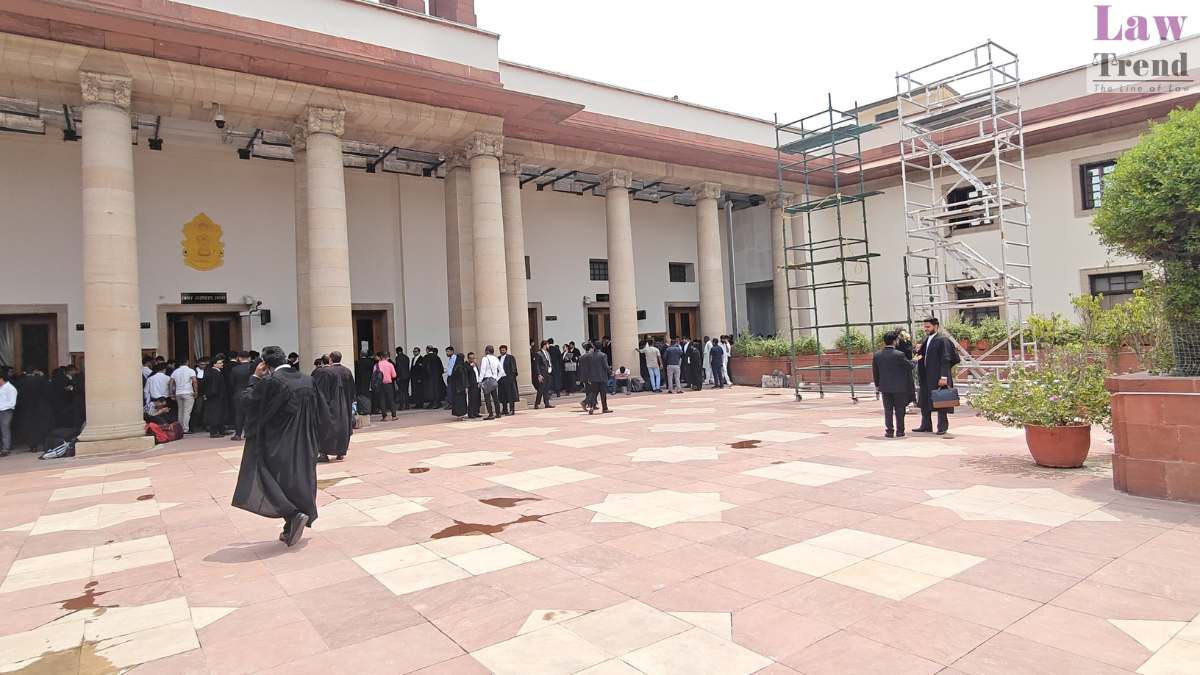

The Supreme Court of India has held that the mere presence of an individual at a crime scene is insufficient to sustain a conviction under Section 34 of the Indian Penal Code (IPC) unless the prosecution proves a “pre-arranged plan” or a “prior meeting of minds.” A Bench of Justice Sanjay Karol and Justice Augustine George Masih made this observation while partly allowing an appeal by Sanjay Singh, who had been convicted of murder with the aid of Section 34 IPC. The Court substituted the murder conviction with Section 307 IPC (Attempt to Murder) and sentenced him to the period already undergone.

Background of the Case

The case involves an incident on May 12, 1999, in village Sarsi, Ratlam, Madhya Pradesh, where Deshpal Singh was assaulted with firearms and subsequently died of his injuries. The prosecution alleged that the appellant, Sanjay Singh, and several others acted in furtherance of a common intention. In 2001, the Trial Court convicted Singh under Section 302 read with Section 34 IPC, a decision later affirmed by the Madhya Pradesh High Court in 2011. The appellant challenged these findings, arguing he was vicariously held liable for a fatal shot he did not fire.

Arguments of the Parties

The senior counsel for the appellant argued that the conviction under Section 302 read with Section 34 IPC was “wholly unsustainable.” The defense emphasized that there was no evidence of a prior meeting of minds and that the appellant arrived at the spot from a different direction after the principal accused had already fired. It was further pointed out that the dying declaration did not attribute the fatal injury to the appellant.

The State supported the lower courts’ judgments, contending that the appellant’s presence at the scene, armed with a firearm, was sufficient to establish that he was acting in furtherance of the common intention of the group.

The Court’s Analysis of Section 34 IPC

The Supreme Court focused on the essential ingredients of joint liability under Section 34 IPC. The Court reiterated that Section 34 “does not create a substantive offence, but embodies a principle of joint liability.”

READ ALSO  निर्माण में की गई अनियमितता के खिलाफ शिकायत रिट याचिका में नहीं उठाई जा सकती, उचित उपाय नगर निगम अधिकारियों और फिर सिविल कोर्ट में जाना है: सुप्रीम कोर्ट

Citing the landmark judgment in Mahbub Shah v. King-Emperor (1945), the Bench noted that common intention requires a pre-arranged plan. Referring to the 1954 case of Pandurang and Others v. State of Hyderabad, the Court quoted:

“Accordingly there must have been a prior meeting of minds… each would be individually liable for whatever injury he caused but none could be vicariously convicted for the act of any of the others; and if the prosecution cannot prove that his separate blow was a fatal one he cannot be convicted of the murder however clearly an intention to kill could be proved in his case.”

READ ALSO  Arya Samaj Organisation/Temple has No Business in Issuing Marriage Certificates, Says Supreme Court

In its analysis of the facts, the Court found that the appellant did not arrive with the principal accused and approached the site from a different direction. Moreover, an injured witness (PW-6) testified that he had intervened and lifted the barrel of the appellant’s gun, directing the shot upwards.

Referencing Constable 907 Surendra Singh and Another v. State of Uttarakhand (2025), the Court emphasized:

“By now it is a settled principle of law that for convicting the accused with the aid of Section 34 IPC the prosecution must establish prior meetings of minds… presence at the scene of offence, without anything more, cannot be a ground to invoke Section 34 IPC.”

Decision of the Court

The Court concluded that the prosecution failed to establish a shared common intention to commit murder. However, the Court noted that the appellant’s presence while armed indicated a “degree of involvement” and knowledge of the likelihood of the consequences.

READ ALSO  Mere Leasing of Residential Unit Does Not Exclude Buyer from 'Consumer' Definition Unless Dominant Purpose is Commercial: Supreme Court

“While the conviction under Section 302 IPC cannot be sustained, the material on record would justify the conviction of the Appellant under Section 307 IPC,” the Bench observed. The Court set aside the murder conviction, substituted it with Section 307 IPC, and, noting that the appellant had already served nearly ten years in prison, limited the sentence to the period already undergone.

Case Details:

  • Case Title: Sanjay Singh v. State of Madhya Pradesh
  • Case No.: Criminal Appeal No. 440 of 2013
  • Bench: Justice Sanjay Karol, Justice Augustine George Masih
  • Date: May 08, 2026

Law Trend
Law Trendhttps://lawtrend.in/
Legal News Website Providing Latest Judgments of Supreme Court and High Court

Related Articles

Latest Articles

