

Contradictions in Medical Evidence, Hostile Witness Testimony and Failure to Prove Motive Fatal to Prosecution: Supreme Court Acquits in Murder, SC/ST Act Case
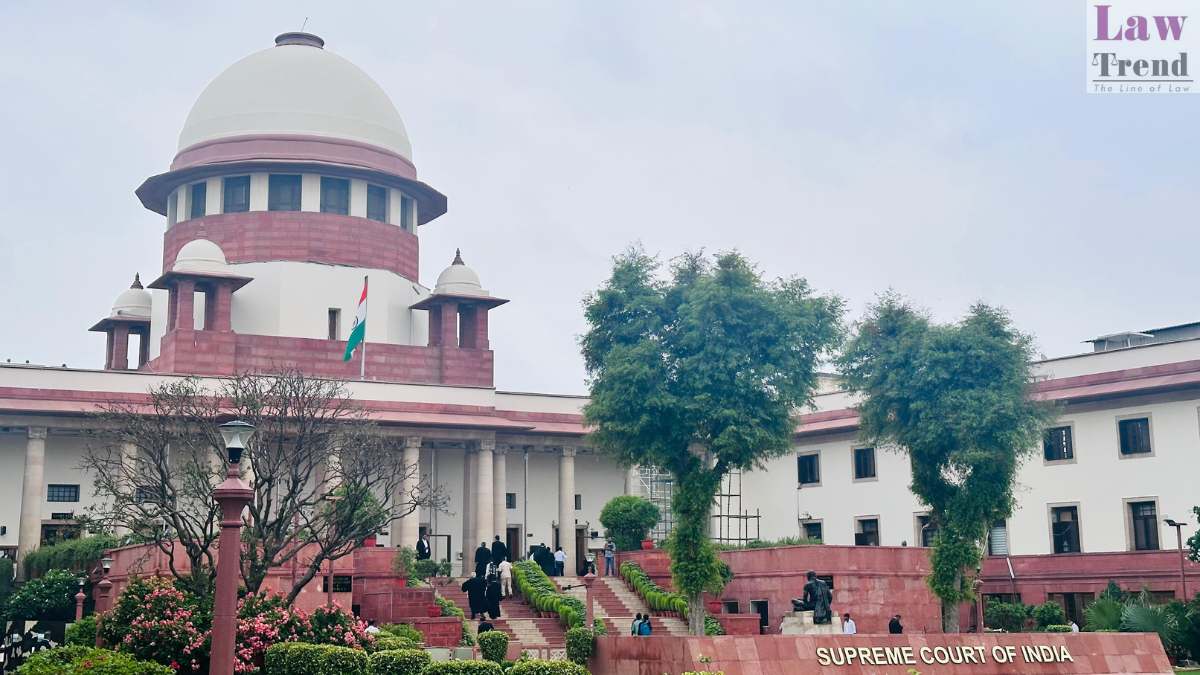

The Supreme Court of India has allowed the appeal of Talari Naresh, setting aside his conviction and life imprisonment for the alleged murder of one Shiva Shankar. A Bench comprising Justice Prashant Kumar Mishra and Justice N.V. Anjaria held that the prosecution failed to prove its case beyond reasonable doubt, noting that the evidence was “weak, contradictory, and crumbling.” The Court found significant flaws in the medical reports and noted that the projected eyewitness accounts were discredited by hostile testimony and a lack of independent witnesses.

Background of the Case

The appellant was accused of killing Shiva Shankar on the morning of May 12, 2013, in Ogipur village, Telangana. The prosecution’s theory was that the deceased had eloped with the appellant’s younger sister in February 2013. Although the two returned the next day, a village Panchayat allegedly ordered the deceased to live outside the village. On the day of the incident, the appellant allegedly confronted the deceased and beat him with a ‘shabad’ stone.

The appellant was originally convicted by the Special Sessions Judge for Trial of Offences under the SC/ST Act-cum-VII Additional District & Sessions Judge, Ranga Reddy District. He was sentenced to life imprisonment under Section 302 IPC and Section 3(2)(v) of the SC/ST Act, along with shorter terms for offenses under Section 323 IPC and Section 3(1)(x) of the SC/ST Act. The High Court for the State of Telangana confirmed this conviction on February 4, 2025.

Arguments and Evidence

The prosecution relied heavily on the testimony of Padmamma (PW-1), the mother of the deceased, and Narendar (PW-3). PW-1 claimed that PW-3 had informed her of the attack and that both rushed to the scene. She further alleged she was injured and abused with casteist slurs while trying to rescue her son.

However, the defense pointed out that Narendar (PW-3) turned hostile during the trial, stating he never went to PW-1’s house and that the deceased had actually asked him to leave before any incident occurred. Furthermore, Tammanna (PW-4) and Narsimha Reddy (PW-5) also turned hostile, denying that any Panchayat had ever been conducted regarding the elopement, thus undermining the prosecution’s motive.

READ ALSO  SC Slams Neeraj Pandey Over Title 'Ghooskhor Pandat'; Seeks Affidavit, Warns Against Denigrating Communities

Court’s Analysis

The Supreme Court conducted a thorough review of the oral and medical evidence. The Bench found the medical evidence to be “diminished to nil” due to glaring discrepancies between the Inquest Report and the Postmortem Report. The Inquest Report (Ex. P-7) indicated the autopsy was finished on May 13, 2013, whereas the Postmortem Report (Ex. P-8) stated it was concluded on May 14, 2013. The Court noted that the medical officer (PW-7) could not satisfactorily explain these inconsistencies.

Citing the legal standing of such reports, the Court referred to Ghulam Hassan Beigh vs. Mohammad Maqbool Magrey (2022):

READ ALSO  Sikkim HC Puts GST Show Cause Notice Against Delta Corp On Hold

“…The post-mortem report of the doctor is his previous statement based on his examination of the dead body. It is not substantive evidence. The doctor’s statement in court is alone the substantive evidence.”

Regarding the testimony of the mother (PW-1), the Bench acknowledged that while relative testimony is not automatically rejected, it must be weighed with caution if it strikes the court as disingenuous. Referring to Bhaskarrao vs. State of Maharashtra (2018), the Court noted that interest in the outcome can lead a witness to “suppress some facts, soften or modify others, and provide favourable colour.”

The Bench also emphasized that the incident allegedly happened on a busy public road near quarries. The failure of the prosecution to examine any independent witnesses from the area was seen as a significant lapse.

The Decision

The Court clarified that the testimony of a hostile witness is not entirely effaced and can be used to either support or discredit a case. In this instance, the hostile testimony of PW-3, PW-4, and PW-5 effectively demolished the “fulcrum of the prosecution case.”

READ ALSO  सुप्रीम कोर्ट ने 1992 के हिरासत में मौत के मामले में पुलिस अधिकारियों को बरी किया, अविश्वसनीय गवाहों की गवाही का हवाला दिया

The Court observed:

“…the testimony of a hostile witness or statement in the deposition of hostile witness could be properly employed to discredit the prosecution case and a conclusion of acquittal could well be supported through it and could be founded therein.”

Finding that the “occurrence of incident itself could not be said to have been proved,” the Supreme Court set aside the judgments of both the Trial Court and the High Court. The appellant was acquitted of all charges and ordered to be released immediately.

Case Details:

  • Case Title: Talari Naresh v. The State of Telangana
  • Case No.: Criminal Appeal No. ___ of 2026 (Arising out of SLP(Crl.) No. 13614 of 2025)
  • Bench: Justice Prashant Kumar Mishra and Justice N.V. Anjaria
  • Date: May 13, 2026

Law Trend
Law Trendhttps://lawtrend.in/
Legal News Website Providing Latest Judgments of Supreme Court and High Court

Related Articles

Latest Articles

