

IBC Cannot Be Used as a Coercive Recovery Tool for Predominantly Contractual Disputes: Supreme Court

The Supreme Court of India has dismissed an appeal filed by Dhanlaxmi Bank Limited, affirming that the Insolvency and Bankruptcy Code (IBC) should not be utilized as a coercive mechanism for debt recovery in cases involving intertwined contractual obligations. The Court upheld an order by the National Company Law Appellate Tribunal (NCLAT) which had set aside the initiation of the Corporate Insolvency Resolution Process (CIRP) against a corporate debtor.

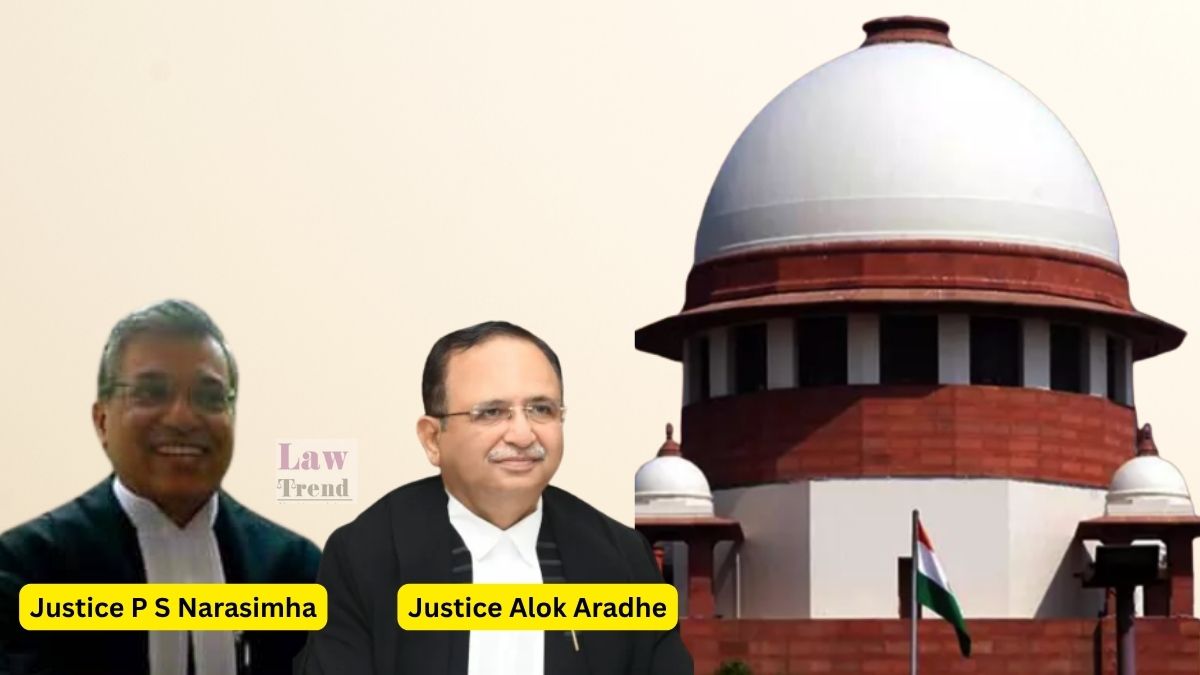
A Bench comprising Justice Pamidighantam Sri Narasimha and Justice Alok Aradhe observed that the IBC is a collective resolution mechanism and not a forum for adjudicating individual contractual claims or compelling payments in cases of genuine financial distress.

Background of the Case

The dispute originated from a loan sanctioned by Dhanlaxmi Bank (the Appellant) in June 2011 to M/s. Emerald Mineral Exim Pvt. Ltd. (the Corporate Debtor/CD) for the purchase of a unit in the “Synthesis Business Park” in Kolkata. A quadripartite agreement was executed between the Bank, the CD, the Builder (Bengal Shrachi Housing Development Ltd.), and West Bengal Housing Infrastructure Development Corporation Limited (WBHIDCL).

Under this agreement, the Bank disbursed ₹1.34 crores directly to the Builder. However, in 2013, the CD executed a nomination agreement to transfer the property to a third party, Jupiter Pharmaceuticals Limited. Following a default in repayments, the Bank classified the CD’s account as a Non-Performing Asset (NPA) in July 2014.

The Bank initially initiated recovery proceedings before the Debt Recovery Tribunal (DRT) in 2016. Simultaneously, it filed a winding-up petition under the Companies Act, 1956, which was later transferred to the National Company Law Tribunal (NCLT) and treated as a Section 7 petition under the IBC. While the NCLT admitted the petition in 2020, the NCLAT reversed this decision in 2022, prompting the Bank to approach the Supreme Court.

READ ALSO  पत्नी शिक्षित है तो भी गरिमापूर्ण जीवन सुनिश्चित करना पति का कर्तव्य: सुप्रीम कोर्ट ने स्थायी गुजारा भत्ता बढ़ाया

Arguments by the Parties

The Senior Counsel for Dhanlaxmi Bank argued that a valid debt existed as the CD was the primary borrower under the facility and quadripartite agreements. It was contended that the CD had acknowledged its liability and paid interest, and the Bank’s recourse to multiple statutory remedies did not constitute “forum shopping.”

Conversely, the Counsel for the Respondents submitted that the loan was disbursed directly to the Builder and that the default was not a “pure insolvency default.” They argued that the dispute was essentially contractual, involving the Builder’s obligations regarding construction and property transfer, rather than a straightforward financial debt.

READ ALSO  CJI Chandrachud Receives Praise During Key Hearing on Property Rights

Court’s Analysis and Observations

The Supreme Court emphasized that the condition precedent for invoking Section 7 of the Code is the existence of a “financial debt” and a “default.” Referring to Innovative Industries Ltd. v. ICICI Bank & Anr. (2018), the Court noted that the resolution process begins when a debt is due and unpaid.

However, the Court highlighted a critical distinction in the present case. Upon perusing the quadripartite agreement, the Bench found that the Bank’s disbursement was “intrinsically linked to performance of Builder’s obligation.”

The Court observed:

“The structure of transaction reveals that Bank’s disbursement was intrinsically linked to performance of Builder’s obligation. In such circumstances, the transaction cannot be viewed in isolation as a simple financial lending arrangement between the Bank and the CD.”

The Bench further noted that the dispute was predominantly contractual, involving competing claims related to the transfer of property. Referencing Pioneer Urban Land and Infrastructure Ltd. & Anr. v. Union of India & Ors. (2019) and Glas Trust Company LLC v. BYJU Raveendran & Ors. (2025), the Court underscored that:

“Where object behind the invocation of Code is to compel payment rather than to address genuine financial distress, such invocation would amount to an abuse of process.”

READ ALSO  Exemption from Personal Appearance Can Aid Trial Efficiency When Not Indispensable: Punjab & Haryana HC

The Decision

The Court concluded that the case did not involve a “straightforward financial debt-default scenario.” Since the matter was already being adjudicated before the DRT, where the Builder had even deposited ₹1.50 crores as security, the Court held that allowing IBC proceedings would be impermissible.

“The facts disclose a dispute which is predominantly contractual in nature… Therefore, permitting invocation of the Code in cases such as the present one, would amount to converting insolvency proceedings into a coercive mechanism for recovery which is impermissible,” the judgment stated.

The appeal was dismissed with no order as to costs.

Case Details

Case Title: Dhanlaxmi Bank Limited v. Mohammed Javed Sultan & Ors.
Case No.: Civil Appeal No. 7184 of 2022
Bench: Justice Pamidighantam Sri Narasimha and Justice Alok Aradhe
Date: May 7, 2026

Law Trend
Law Trendhttps://lawtrend.in/
Legal News Website Providing Latest Judgments of Supreme Court and High Court

Related Articles

Latest Articles

