

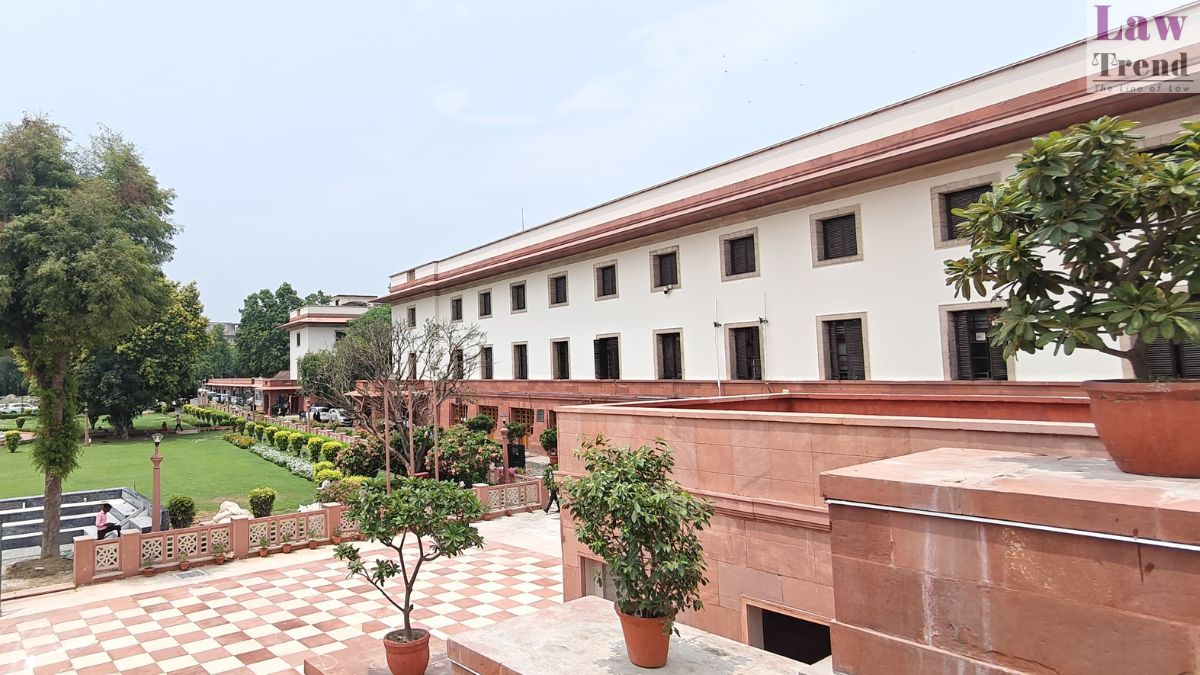
The Supreme Court of India on Tuesday emphasized that the constitutional right to manage religious institutions does not equate to an absence of structure, asserting that “there cannot be anarchy” in the functioning of such entities. A nine-judge Constitution bench, currently examining the scope of religious freedom and discriminatory practices at places of worship, observed that while the right to manage is protected, it must operate within established modalities and constitutional limitations.
The observations were made during a hearing involving multiple petitions related to the entry of women into religious sites, including the Sabarimala Temple in Kerala. The bench, led by Chief Justice Surya Kant, is tasked with defining the ambit of religious freedom practiced by various faiths in India.
During the proceedings, the bench addressed the fundamental question of how religious institutions are governed. Justice Ahsanuddin Amanullah, responding to arguments regarding the management rights of denominations, noted that every institution—be it a temple or a dargah—requires a regulatory framework.
“There cannot be anarchy,” Justice Amanullah remarked. “Take a dargah or a temple. There will be elements associated with the institution, the manner of worship, the sequence in which things are done. Somebody has to regulate that.”
The Court clarified that management cannot be left to individual whims. “It cannot be that everyone says I will do whatever I want, or that the gates remain open at all times without any control,” the Justice added. The bench underscored that while regulation is a necessity, such management “cannot transgress constitutional limitations” or practice discrimination based on broad constitutional parameters.
The discussion arose during submissions by Advocate Nizam Pasha, representing Peerzada Syed Altamash Nizami, a direct descendant of the Chisti Nizami lineage associated with the Hazrat Khwaja Nizamuddin Aulia dargah.
Pasha argued that the Sufi system of belief, specifically the Chishtiya order, constitutes a distinct religious denomination. He highlighted that the Sufi tradition in India places deep reverence on the interred remains of saints and emphasizes adherence to core Islamic practices such as roza (fasting), namaz (prayer), hajj (pilgrimage), zakat (charity), and faith.
“The right to regulate entry in a religious institution is part of management,” Pasha contended, prompting the Court’s observations on the need for formal norms rather than individual determinations.
This nine-judge bench was constituted to address broader questions of law arising from the Sabarimala case. In September 2018, a five-judge Constitution bench, in a 4:1 majority verdict, lifted the centuries-old ban on women aged 10 to 50 entering the Sabarimala Ayyappa temple, declaring the practice illegal and unconstitutional.
The current proceedings seek to bring clarity to the “essential religious practices” test. The Supreme Court has previously noted the extreme difficulty, if not impossibility, for a judicial forum to define the parameters required to declare a specific practice as essential or non-essential to a religious denomination.
The hearing remains underway as the Court continues to deliberate on the intersection of religious autonomy and constitutional rights.




