

Supreme Court Entrusts High-Powered Committee to Monitor Rights and Institutional Safeguards for Prisoners with Disabilities
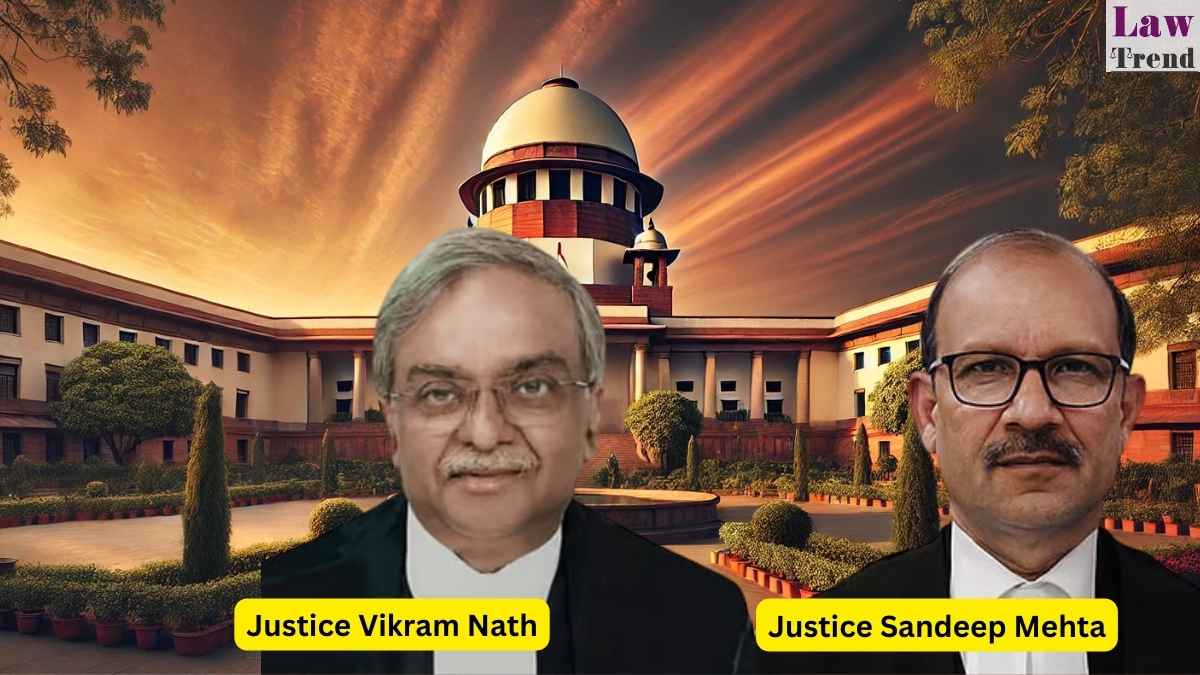
The Supreme Court of India has directed that the issues concerning the rights and conditions of detention for prisoners with disabilities be monitored by the High-Powered Committee (HPC) previously constituted for Open Correctional Institutions. The Court emphasized that the incarceration of persons with disabilities must align with a “humane, rights-based approach” to ensure that constitutional protections under Articles 14 and 21 are not diluted.

Background and Legal Issue

The proceedings in Sathyan Naravoor v. Union of India & Ors. focused on the implementation of the Rights of Persons with Disabilities Act, 2016 (RPwD Act) and constitutional guarantees of dignity and equality within custodial settings. The petitioner raised grievances regarding the lack of institutional safeguards for disabled inmates across the country.

The Court noted that many of these grievances were addressed by its previous decision in L. Muruganantham v. State of Tamil Nadu and Others (2025), which established a framework for identifying disabled prisoners, providing accessible infrastructure, and conducting accessibility audits. However, the Court found it necessary to issue further directions to ensure comprehensive protection across all States and Union Territories.

Previous Directions and Compliance

By an order dated December 2, 2025, the Court had extended the L. Muruganantham directions to all States and Union Territories. These included:

  • Establishing an independent grievance redressal mechanism for disabled prisoners.
  • Ensuring access to inclusive education.
  • Applying Section 89 of the RPwD Act to prison establishments.
  • Providing enhanced visitation rights for prisoners with benchmark disabilities.
READ ALSO  Supreme Court Reprimands Lawyer for Aggressive Tone in Kolkata Doctor Rape and Murder Case

During the hearing on April 8, 2026, the Court observed that only 12 States and Union Territories had filed their compliance affidavits, signaling a need for a more structured monitoring mechanism.

Court’s Analysis and Observations

The Bench, comprising Justice Vikram Nath and Justice Sandeep Mehta, observed that the “present proceedings bring to the fore issues of considerable importance.” The Court noted that a fragmented approach to implementation would be ineffective.

The Bench stated:

“The High-Powered Committee, having already been entrusted with the mandate of overseeing systemic concerns relating to the harmonisation of the Rules framed by the States and Union Territories in respect of Open Correctional Institutions, is suitably equipped to examine the present issues in a holistic manner.”

The Court reasoned that involving the HPC would facilitate a “coordinated and uniform framework” informed by ground-level realities and expert-driven assessments. The Bench highlighted that this mechanism would “strengthen compliance, enhance accountability, and advance the constitutional objectives of dignity, equality, and substantive access to justice.”

READ ALSO  सुप्रीम कोर्ट ने ग्लास ट्रस्ट की याचिका खारिज की, आकाश एजुकेशनल सर्विसेज को ईजीएम आयोजित करने की मिली मंजूरी

Key Directions by the Court

To ensure the effective realization of these rights, the Supreme Court issued the following directions:

  1. HPC Expansion: The Secretary, Department of Empowerment of Persons with Disabilities, Union of India, and the Secretaries of Social Welfare Departments of all States/UTs must join the HPC proceedings.
  2. Compliance Reports: All States and Union Territories are directed to place their compliance affidavits before the HPC within six weeks.
  3. Action Plan for Assistive Devices: The HPC is tasked with formulating a “comprehensive and implementable action plan” for the provision and maintenance of assistive devices and mobility aids, balancing functional requirements with prison security.
  4. Expert Assistance: The HPC is permitted to seek assistance from specialized bodies, civil society organizations, and domain experts. The expenses for this exercise will be borne by the Ministry of Social Justice and Empowerment.
  5. Status Report: The Committee is directed to submit a consolidated status report to the Court within four months.
READ ALSO  सुप्रीम कोर्ट ने कहा कि अदालतों को आम तौर पर उन मामलों में सजा निलंबित कर देनी चाहिए और जमानत दे देनी चाहिए, जहां पूरी सजा पूरी होने से पहले आपराधिक अपील पर सुनवाई होने की संभावना नहीं है

The Court emphasized that the rights of prisoners with disabilities must be effectuated in a manner that accords with constitutional guarantees.

“The rights of prisoners with disabilities must be recognised and effectuated in a manner that accords with a humane, rights-based approach, ensuring that incarceration does not, in any manner, dilute or abridge the fundamental protections enshrined under Articles 14 and 21 of the Constitution.”

The matter is scheduled for further hearing on September 1, 2026, alongside Suhas Chakma v. Union of India & Ors.

Case Details:

  • Case Title: Sathyan Naravoor v. Union of India & Ors.
  • Case No.: Writ Petition (Civil) No. 182 of 2025
  • Bench: Justice Vikram Nath and Justice Sandeep Mehta
  • Date: April 21, 2026

Law Trend
Law Trendhttps://lawtrend.in/
Legal News Website Providing Latest Judgments of Supreme Court and High Court

Related Articles

Latest Articles
