

India Risks Following Autocratic Nations if Election Petitions Remain Pending for Years: Madras HC Flags 6-Year Delay Before Supreme Court
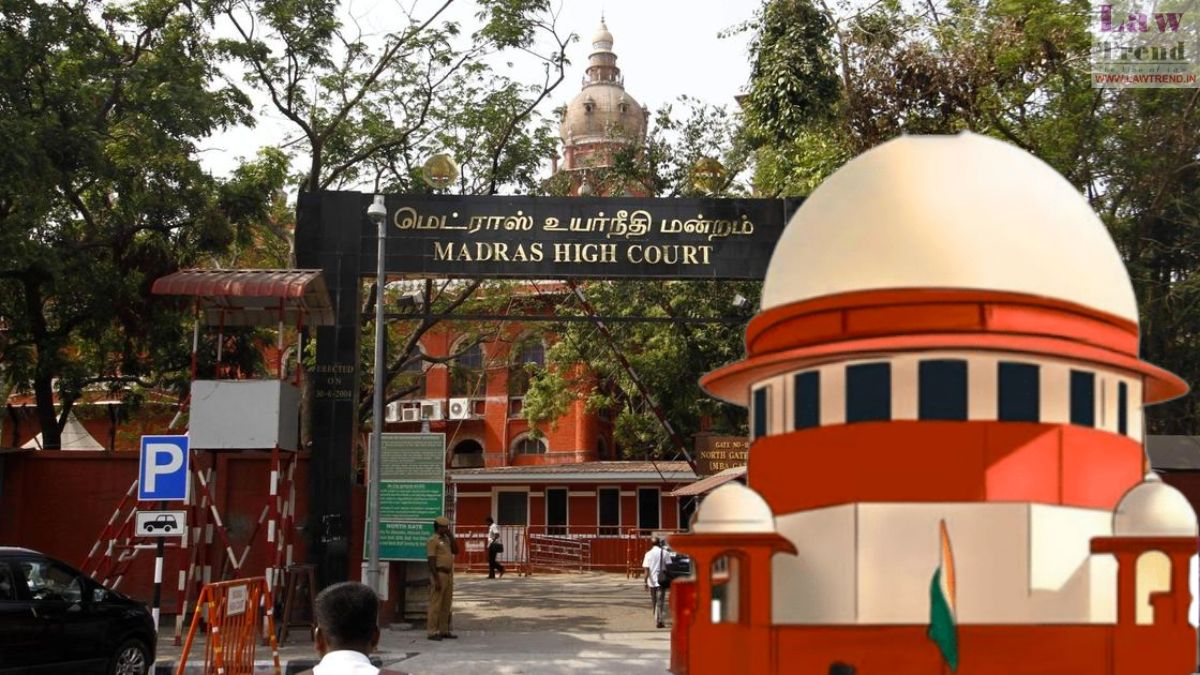
In a significant legal development, the Madras High Court has allowed a decade-old election petition, holding that Middle School Headmasters are Gazetted Officers authorized to attest postal ballots under the relevant government service and election rules. Justice G.Jayachandran declared the 2016 election of the returned candidate, I.S. Inbadurai, from the No. 228 Radhapuram Assembly Constituency as void, subsequently pronouncing the petitioner, M. Appavu, as the duly elected representative of the constituency for the 2016–2021 legislative term.

Background of the Case

The dispute arose during the general assembly elections held on May 16, 2016, for the No. 228 Radhapuram Assembly Constituency in Tamil Nadu. The Returning Officer declared the first respondent, I.S. Inbadurai, as the elected candidate by a narrow margin of 49 votes.

The election petitioner, M. Appavu, challenged this outcome by filing Election Petition No. 2 of 2016 under the Representation of the People Act, 1951, and the Conduct of Elections Rules, 1961. Appavu asserted that after the completion of the 18th round of counting, he was leading by 1,300 votes. He alleged that the election process was manipulated during the 19th, 20th, and 21st rounds of counting and that 203 valid postal ballots cast in his favour were wrongly rejected on the “flimsy reason” that they were attested by Middle School Headmasters, who were claimed not to be Gazetted Officers.

The High Court commenced the trial, examined witnesses, and on October 1, 2019, concluded that the rejection of the 203 postal ballots was improper and that the counting of EVMs in rounds 19, 20, and 21 failed to comply with the rules because Part II of Form 17C had been left blank. The Court ordered a full recount of those rounds and a re-verification of all postal ballots.

The recount commenced under judicial supervision on October 4, 2019. However, on the same day, the Supreme Court stayed the declaration of the results while allowing the counting process to continue. The litigation remained pending across various benches of the Supreme Court for nearly six years, during which two subsequent assembly elections (in 2021 and 2026) took place. On May 21, 2026, the Supreme Court finally disposed of the appeal due to the lapse of time, keeping the legal question regarding the status of Middle School Headmasters open for future cases, and directed the High Court to pass appropriate consequential orders.

READ ALSO  Sub Divisional Magistrate Exercising Adjudicatory Powers Would Be Subject To Control & Supervision Of Board Of Revenue: Allahabad HC

Arguments of the Parties

The petitioner, M. Appavu, represented by Counsel Mr. A.E. Ravichandran, argued that valid votes cast in his favour had been deliberately and wrongly rejected by the Returning Officer to boost the first respondent’s numbers. He contended that the attestation of postal ballots by Middle School Headmasters was fully valid under the state’s rules and that the failure to fill out Part II of Form 17C for the final three rounds of EVM counting was a fatal non-compliance with Rule 56-C(2) of the Conduct of Elections Rules, 1961.

The first respondent, I.S. Inbadurai, represented by Counsel Mr. N.C. Ashok Kumar, opposed the petition, maintaining that the election rules strictly mandated that postal ballots must be attested only by Gazetted Officers. He argued that Middle School Headmasters did not hold Gazetted rank, making the 203 postal ballots invalid. During the appellate proceedings before the Supreme Court, senior counsel Mr. Mukul Rohatgi, appearing for Inbadurai, also argued that the matter had become infructuous since the term of the office had expired and fresh elections had been held, relying on the precedent Lokanth Padhan vs. Birendra Kumar Sahu (1974).

Senior counsel Mr. P. Wilson, representing the respondent-petitioner before the Supreme Court, countered these arguments, urging the court to determine the core dispute.

The Court’s Analysis and Observations

In delivering the final judgment on June 3, 2026, the High Court strongly criticized the decade-long delay in finalizing the election dispute, noting that such delays reduce the judicial process to a mockery. Expressing deep concern over the lapse, Justice G.Jayachandran observed:

“The term ‘unfortunate’ may not be an adequate expression to describe the present case since in view of this Court, a grave mockery of justice, under the guise of dispensing justice been committed to the people of India, particularly the voters of No.228 Radhapuram Assembly Constituency, Tirunelveli District, who were forced to bear a person as their Assembly representative though he is not duly elected.”

Addressing the key legal question of whether Middle School Headmasters are Gazetted Officers, the High Court reaffirmed its prior findings from October 1, 2019. The Court analysed the purpose of attestation under the election rules, stating:

READ ALSO  Employees Cannot Approach Labour Court for Retrenchment Compensation Without Established Employer Liability: Punjab & Haryana High Court

“The intention of getting attestation in the declaration is to ensure the identity of the elector. Unlike, direct voting in the booth, where the personal identity is seen and verified by the polling Officers and Presiding Officers, in case of postal ballots to prevent possibility of impersonations, Officers mentioned in the Rule are empowered to attest the identity of the elector.”

The Court held that because the State Government, via G.O.Ms.No.158 dated November 6, 2009 (amending the Tamil Nadu Government Servants Conduct Rules, 1973), classified these officers in a manner that confers attestation powers, they must be considered Gazetted Officers for the purpose of attesting declarations in Form 13A. Consequently, the en masse rejection of the 203 postal ballots on this ground was held to be improper and contrary to law.

The Court also addressed a crucial factual correction regarding the recount figures. While the Supreme Court’s interim order dated March 16, 2021, had recorded a transposition of names (stating that the report showed 153 votes polled for respondent No. 1 and only one for the petitioner), the High Court’s final order clarified that the actual report filed by the Registrar General of the High Court made a damning disclosure to the contrary. Specifically, out of the 203 rejected postal ballots, the election petitioner, M. Appavu, had actually received 153 valid votes in his favour, whereas the first respondent, I.S. Inbadurai, received only one (1) valid vote (with 44 votes rejected as invalid). This meant that Appavu had won the election by a margin of 103 votes.

Highlighting the Court’s constitutional duty to deliver a final decision regardless of the delay, Justice G.Jayachandran observed:

“This Court has a Constitutional duty and has taken a solemn oath to protect and preserve the Constitution. Therefore, not inclined to abdicate its responsibility for whatever reason.”

The Court highlighted Sub-Section (7) of Section 86 of the Representation of the People Act, 1951, which mandates that election petitions should be tried as expeditiously as possible, with an endeavour to conclude the trial within six months. Referencing the Supreme Court’s decision in Mohd. Akbar vs. Ashok Sahu and others (2015), the Court warned of the dangers of delayed justice in democratic processes:

READ ALSO  Remarriage After Divorce Decree Permissible, but Conditions Apply, Says Madras High Court

“Non-adherence to the mandate contained in Section 86(7) of the Representation of the People Act, 1951, will undermine democracy and the true spirit of adult franchise. If Courts continue to ignore their own observations made in Mohd.Akbar case (cited supra), I fear that this Country may also go in the way of other autocratic Countries which gained Independence around 75 years ago, along with us.”

The Decision

The High Court allowed Election Petition No. 2 of 2016 and issued the following directives:

  1. The election of the returned candidate, I.S. Inbadurai, from No. 228 Radhapuram Assembly Constituency in the election held on May 16, 2016, is declared void.
  2. The election petitioner, M. Appavu, is declared to have been the duly elected Member of the Legislative Assembly from the No. 228 Radhapuram Assembly Constituency for the 2016–2021 term.
  3. The Secretary of the Legislative Assembly, Government of Tamil Nadu, is directed to substitute M. Appavu’s name as the representative of the constituency for the 2016–2021 term in all official records.
  4. Because the improper declaration of results was not attributable to the conduct of the first respondent, I.S. Inbadurai, this decision will not disqualify him in any manner, except that he is barred from claiming any pensionary benefits as an MLA for the 2016–2021 term.

The Court made no order as to costs.

Case Title: M. Appavu Vs. I.S. Inbadurai and Others
Case No.: Election Petition No. 2 of 2016
Bench: Justice Dr. G.Jayachandran
Date: 03.06.2026

Law Trend
Law Trendhttps://lawtrend.in/
Legal News Website Providing Latest Judgments of Supreme Court and High Court

Related Articles

Latest Articles
