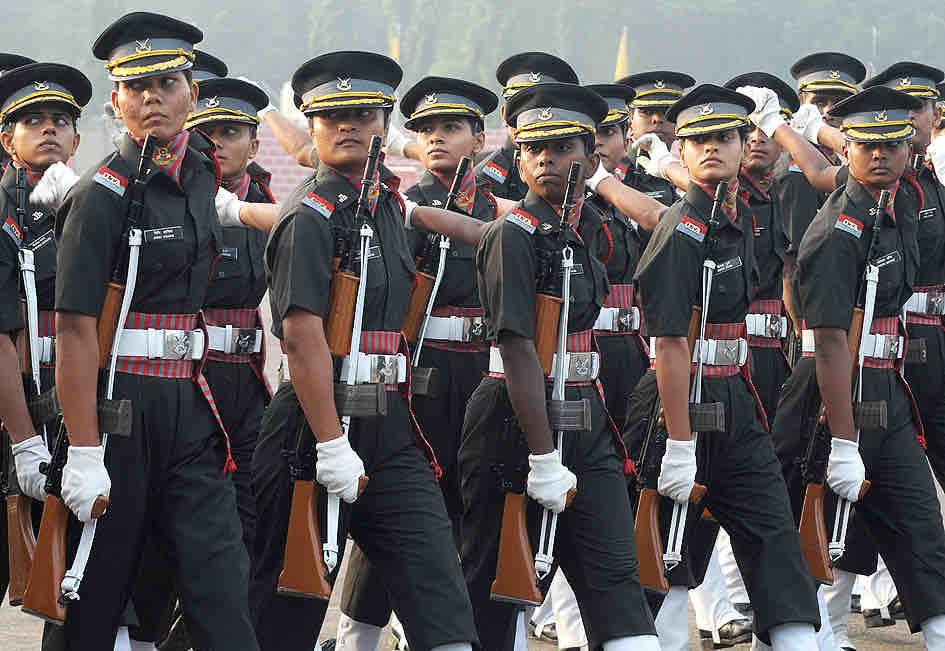
In a significant judgment aimed at ensuring gender parity in the Indian Army, the Supreme Court of India has directed the grant of Permanent Commission (PC) to Short Service Commission Women Officers (SSCWOs) who met the 60% cut-off in Selection Boards held in 2020 and 2021. The Bench, comprising Chief Justice Surya Kant, Justice Ujjal Bhuyan, and Justice Nongmeikapam Kotiswar Singh, observed that women officers had been subjected to a “systemic framework rooted in assumptions that entrenched disadvantages in career progression.”
The Court invoked its extraordinary powers under Article 142 of the Constitution to provide relief, including deemed completion of 20 years of service for pensionary benefits to those released during the litigation.
Background of the Case
The batch of appeals was filed by approximately 73 Short Service Commission Officers (SSCOs), primarily women from commissioning courses spanning 2010 to 2012. They challenged the orders of the Armed Forces Tribunal (AFT), which had dismissed their pleas for PC, citing lower comparative merit and the 250-vacancy annual cap prescribed by a 1991 policy.
The appellants argued that for most of their careers, they were ineligible for PC (except in JAG and AEC cadres). Consequently, their Annual Confidential Reports (ACRs) were graded “casually” by reporting officers who assumed these women had no long-term career prospects. They further contended that they were denied “criteria appointments” and career-enhancing courses—opportunities routinely available to their male counterparts.
The Court noted the unfairness of the joint merit list, remarking that:
“…this formal parity often operated against the backdrop of service records shaped by varying evaluation regimes, much like asking runners, trained for years on different tracks, to compete suddenly on the same finishing stretch.”
Arguments of the Parties
For the Appellants:
- Casual Grading: Counsel argued that the relative grading system (bell-curve) led to 9s (outstanding) being reserved for male officers eligible for PC. Women were given “routine, middling gradings” as their scores were seen as inconsequential for career progression.
- Unequal Playing Field: They were excluded from the Junior Command Course and sensitive “criteria appointments,” which materially influenced the “Value Judgement” component (5 marks) of the selection process.
- Vacancy Cap: The 250-vacancy limit was historically breached and should not be used as a “rigid norm” to deny PC, especially since the cadre strength had increased.
For the Union of India (Respondents):
- Anonymized Evaluation: Additional Solicitor General Aishwarya Bhati argued that the Selection Board process is anonymized, redacting names and identities to ensure fairness.
- Cadre Management: The 250-vacancy cap is a policy decision essential to maintain an ideal 1:1.1 ratio between regular and support cadres and to keep the force’s age profile young.
- Comparative Merit: The respondents maintained that the denial of PC was solely attributable to the officers’ lower comparative merit in a joint pool with male counterparts.
The Court’s Analysis
The Supreme Court identified several structural flaws in the Army’s evaluative regime:
1. Impact of Casual ACR Grading The Court rejected the Union’s defense of anonymization, noting that while the Selection Board might not know identities, the reporting officers who authored the ACRs over ten years certainly did. The Bench observed:
“At this foundational stage… differential treatment takes root between those perceived to have a future in the Army and those regarded as serving only a transient role.”
The Court noted that years of “middling grades” created a structural disadvantage that could not be cured by final-stage anonymization.
2. Disparity in Opportunities The Court found that reduced exposure to courses and exclusion from criteria appointments inevitably influenced the “Value Judgement” marks. It noted that in many cases, officers missed the cut-off by less than 0.5 marks, making even minor distortions in subjective evaluation “determinative of the outcome.”
3. Validity of the Vacancy Cap While declining to interfere with the policy of a vacancy cap itself, the Court held that it cannot be an absolute bar to corrective relief:
“The ceiling of 250 vacancies is neither sacrosanct nor immutable… it is amenable to relaxation where adherence to it would perpetuate constitutional inequality.”
4. Male Officers’ Legitimate Expectation The Court dismissed appeals by male SSCOs who claimed a “legitimate expectation” to compete only against other men. It held that after the 2010 Delhi High Court judgment in Babita Puniya v. Secretary, there was no reasonable basis for such a belief. Furthermore, the Court stated:
“The inclusion of SSCWOs in the zone of consideration for PC is not a matter of discretion, but of constitutional obligation. Any expectation to the contrary is inherently illegitimate.”
The Decision and Directions
The Supreme Court allowed the appeals of the women officers and issued the following directions:
- Grant of PC: All SSCWOs (excluding JAG/AEC) who scored above the 60% cut-off in the 2020 and 2021 Selection Boards and are currently in service shall be granted PC, subject to medical and disciplinary clearance.
- Pensionary Relief: Those released during the pendency of the case shall be deemed to have completed 20 years of qualifying service for pension and consequential benefits (excluding pay arrears). Arrears of pension will be paid from January 1, 2025.
- Future Review: The Court ordered a review of the ACR evaluation method and cut-offs for future batches to address the disproportionate impact on women who became eligible for PC late in their careers.
- Protection of Existing Commissions: The PC already granted to officers by the 2020/2021 Boards or the AFT remains undisturbed.
Case Details:
- Case Title: Lt. Col. Pooja Pal and others v. Union of India and others
- Case No.: Civil Appeal Nos. 9747-9757 / 2024 (and connected matters)
- Bench: Chief Justice Surya Kant, Justice Ujjal Bhuyan, and Justice Nongmeikapam Kotiswar Singh
- Date of Judgment: March 24, 2026