

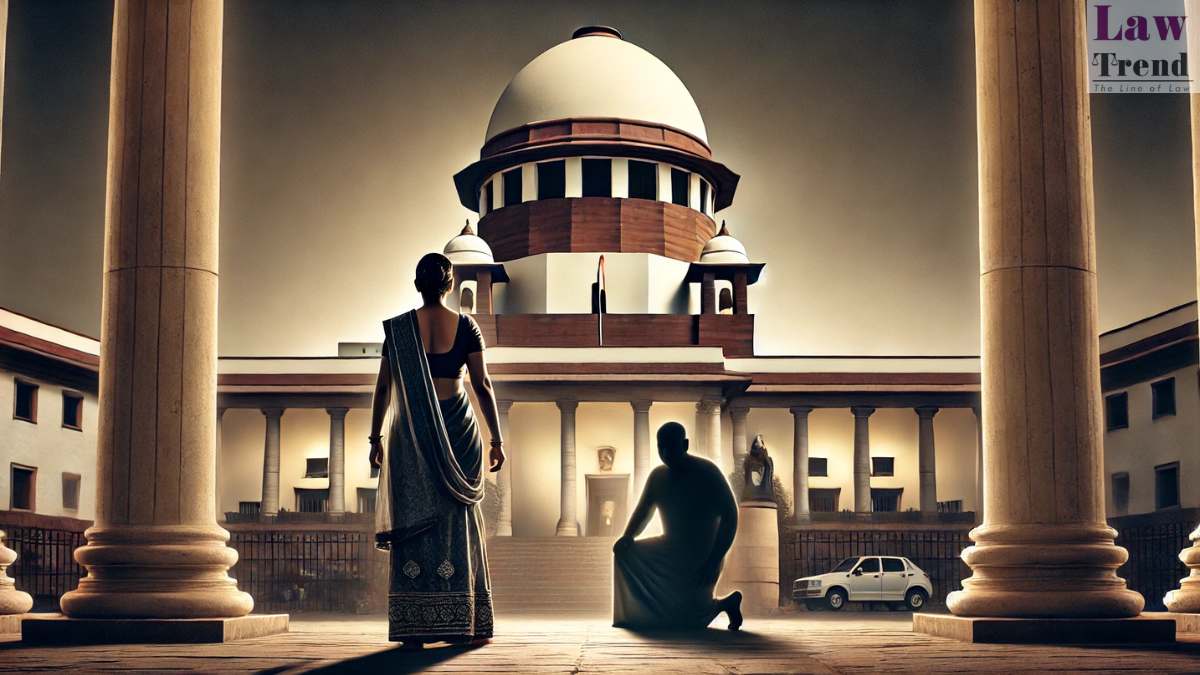
The Supreme Court on Thursday indicated that it would take up petitions challenging the constitutional validity of the marital rape exception for final hearing on December 9 or 10, before the court’s winter break begins on December 21.
A bench comprising Chief Justice of India Surya Kant and Justices Joymalya Bagchi and V Mohana said it would endeavour to hear the matter in December, as the petitions could not be accommodated on Thursday due to an ongoing part-heard case.
The petitions question the legal protection available to husbands against prosecution for rape involving non-consensual sexual intercourse with their adult wives. The exemption, originally contained in Section 375 of the Indian Penal Code (IPC), continues under Section 63 of the Bharatiya Nyaya Sanhita (BNS), 2023.
Court Indicates December Hearing Dates
During the proceedings, senior advocate Indira Jaising informed the bench that another partly heard matter was scheduled for 2 pm and requested that the marital rape petitions be taken up in December.
The Chief Justice initially suggested December 2-3 or December 9-10, explaining that the bench was attempting to conclude the pending hearing.
When another lawyer requested December 9 and 10, the bench indicated that the petitions would be fixed for either of those dates.
The court also expressed its intention to hear the matter before the winter vacation.
Constitutional Challenge to Marital Rape Exception
The central question before the Supreme Court is whether the law can exclude forced sexual intercourse by a husband with his adult wife from the definition of rape.
Exception 2 to Section 63 of the BNS provides that sexual intercourse or sexual acts by a man with his wife do not constitute rape if she is not under 18 years of age.
The provision retains the protection previously available under Section 375 of the IPC.
The constitutional challenge also raises questions about the legal consequences of retaining the exception and whether prosecution can proceed while the exemption remains in force.
During an earlier hearing on September 9, the Centre informed the Supreme Court that its response filed in the principal case could be treated as its reply to the connected petitions.
The bench had indicated that it would examine both the constitutional validity of the exception and the question of prosecution under the existing legal framework.
Conflicting High Court Views
The petitions before the Supreme Court include an appeal arising from the Delhi High Court’s split verdict delivered on May 11, 2022.
In that case, Justice Rajiv Shakdher supported striking down the marital rape exception as unconstitutional. He observed that it would be tragic if a married woman’s demand for justice remained unheard even 162 years after the enactment of the IPC.
Justice C Hari Shankar disagreed, holding that the statutory exception was constitutionally valid and rested on an intelligible distinction.
Following their disagreement, both judges permitted the petitioners to approach the Supreme Court for resolution of the substantial legal questions involved.
One of the women who had challenged the provision before the Delhi High Court subsequently filed an appeal before the Supreme Court.
In another case, the Karnataka High Court had taken the view that exempting husbands from allegations of rape and unnatural sex involving their wives violated Article 14 of the Constitution, which guarantees equality before the law.
Proceedings Before Supreme Court
The Supreme Court initially sought the Centre’s response to petitions challenging the IPC provision on January 16, 2023.
After the enactment of the new criminal laws, the court also issued notice on a separate petition questioning the corresponding provision under the BNS.
The Bharatiya Nyaya Sanhita, Bharatiya Nagarik Suraksha Sanhita and Bharatiya Sakshya Adhiniyam came into force on July 1, 2024, replacing the IPC, Code of Criminal Procedure and Indian Evidence Act, respectively.
The pending petitions now require the Supreme Court to determine whether the marital rape exception can withstand constitutional scrutiny. The bench has indicated that it will attempt to hear the matter on December 9 or 10.