

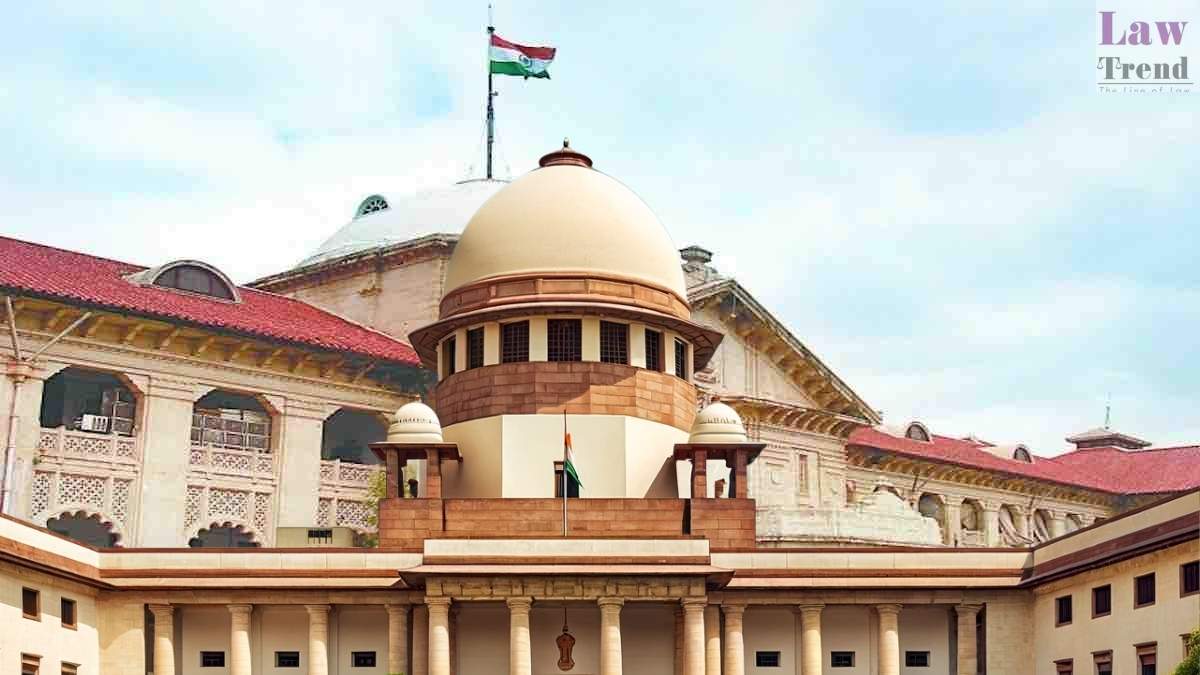
The Supreme Court has declined to interfere with the Allahabad High Court’s 2019 exercise designating 75 advocates as senior advocates, while allowing an unsuccessful applicant to seek designation afresh under the prevailing legal framework, including the principles laid down in Jitender @ Kalla v. State (NCT of Delhi).
A bench of Justice PS Narasimha and Justice Alok Aradhe dismissed the special leave petition filed by Advocate Vishnu Behari Tiwari on November 6, 2026. The petition challenged the Allahabad High Court’s September 2024 judgment rejecting objections to the 2019 designation process.
The Supreme Court clarified that Tiwari could submit a fresh application and that the authorities must consider it in accordance with the law currently governing senior advocate designations.
The bench recorded:
“We are not inclined to interfere with the order passed by the High Court. We make it clear that the petitioner will be entitled to reapply and upon such application it shall be considered in accordance with the law that governs the subject, including the principle laid down in Jitendra Kalla’s case.”
Petitioner Raises Delay in Fresh Designations
Appearing for Tiwari, Advocate Pranav Sachdeva submitted that his client had practised continuously before the Allahabad High Court for 15 years without any blemish but had not been considered for senior advocate designation.
Sachdeva also raised concerns over the absence of subsequent designation exercises. He submitted that the selection committee had not undertaken the process for several years despite the requirement under the Jitender @ Kalla judgment to conduct at least one designation exercise every calendar year.
During the hearing, Justice Narasimha questioned the need to continue litigation over the previous exercise and suggested that the petitioner submit a fresh application instead.
The Court ultimately declined to reopen the earlier designations and disposed of the challenge by preserving Tiwari’s right to apply again.
Earlier Supreme Court Bench Had Questioned Scoring Method
When the special leave petition initially came before the Supreme Court, a bench comprising Justice Abhay S Oka and Justice Ujjal Bhuyan had issued notice and questioned the scoring procedure followed by the Allahabad High Court.
The bench had observed that the Permanent Committee departed from the framework established in Indira Jaising v. Supreme Court of India by reducing the maximum assessment marks from 100 to 75.
Subsequently, a Supreme Court bench led by Justice Oka reconsidered the Indira Jaising framework in Jitender @ Kalla. That judgment discontinued the point-based assessment system and interviews before the Permanent Committee.
Following Justice Oka’s retirement, the pending petition was placed before the bench of Justice Narasimha and Justice Aradhe.
Allahabad High Court Had Upheld 2019 Selection Process
The dispute arose from the procedure adopted by the Allahabad High Court’s Permanent Committee, headed by its then Chief Justice, for senior advocate designations in 2019.
The committee decided that advocates securing at least 45 out of 75 marks would qualify for consideration. It forwarded 78 names to the Full Court, which approved 75 advocates for designation.
In September 2024, the Allahabad High Court rejected the challenge to that exercise.
The High Court held that the Permanent Committee’s decision to forward only selected applicants to the Full Court was consistent with the Supreme Court’s 2017 judgment in Indira Jaising.
Addressing objections concerning the absence of interviews, the High Court accepted that designations should not have been made without interviewing shortlisted applicants. However, it held that the 2023 Indira Jaising judgment had preserved the suo motu power of designation and that the interview requirement was discretionary.
The High Court further held that only shortlisted applicants could challenge the absence of interviews. Since the petitioners had failed to meet the prescribed cut-off, they could not question the process on that ground.
The High Court also recorded that no senior advocate designations had taken place after the 2019 exercise.
With the Supreme Court refusing to interfere, the 75 designations made in 2019 remain undisturbed. Tiwari retains the liberty to seek designation through a fresh application, which must be considered under the applicable legal framework.


