

Supreme Court Closes Suo Motu Proceedings on Andhra Pradesh HC Incident; Calls for Grievance Redressal Committees
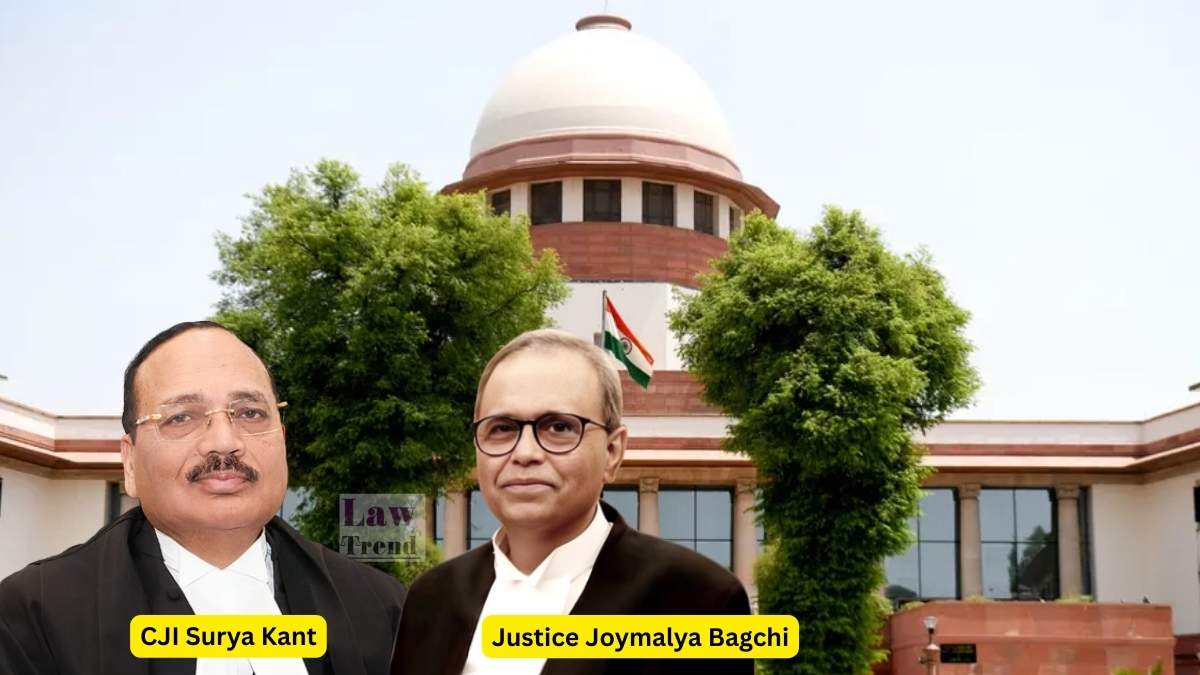

The Supreme Court of India has disposed of writ petitions filed by the Bar Council of India (BCI) and the Supreme Court Bar Association (SCBA) regarding an incident involving a High Court Judge and a young advocate in the Andhra Pradesh High Court. A Bench comprising Chief Justice Surya Kant and Justice Joymalya Bagchi observed that while the incident had been amicably resolved, it highlighted the need for an institutional mechanism to manage Bar-Bench relations and the professional development of young lawyers.

Background of the Case

The petitions were initiated following an incident on May 6, 2026, at the Andhra Pradesh High Court. A video recording of the proceedings was widely circulated on social media, showing an exchange between a learned Judge and a young member of the Bar. Allegations surfaced that the Judge, expressing displeasure over a perceived lack of diligence, dictated an order directing the young counsel to be taken into judicial custody for twenty-four hours. It was further alleged that police personnel were summoned to escort the advocate to the Registrar (Judicial).

The Supreme Court entertained the matter based on communications from the SCBA and the BCI seeking appropriate action.

Reports and Amicable Settlement

The Chief Justice of India sought a report from the Chief Justice of the Andhra Pradesh High Court. The report, dated May 6, 2026, revealed that the disagreement originated over a judicial precedent. The situation escalated when the Judge formed an impression that the counsel had deliberately struck his files against the podium, while the counsel maintained the file had inadvertently slipped.

The report clarified that:

  • The circulated video was “truncated and largely bereft of context.”
  • The issue was resolved between the parties before the clip went viral.
  • The young counsel affirmed that the misunderstanding was “amicably resolved” and he harbored “no apprehension or fear in continuing his professional duties.”
  • No formal judicial order for custody was actually incorporated or executed.
READ ALSO  If a Woman Dies in Motor Accident, Can Her Daughter (Already Married) Seek Motor Accident Compensation? Supreme Court Answers

In response to the incident, the Chief Justice of the AP High Court constituted a five-judge committee to maintain cordial relations and a separate Grievance Redressal Committee including the Advocate General and Bar representatives.

Court’s Analysis and Observations

The Supreme Court noted the divergence between media reports and the official report from the High Court. The Bench found that the file falling was “not attended by any deliberate intent” and the “strong oral observations” made by the Judge were not part of any judicial order.

READ ALSO  Enforcement of "Non-Existent" Awards Against Public Policy: Calcutta High Court Sets Aside Purported Arbitral Rulings

The Court emphasized the shared responsibility of the Bench and the Bar in nurturing the legal profession:

“The Bench is equally entrusted with the obligation of nurturing a robust and ethical legal profession, one that fosters competence, integrity and a sense of duty, so that every young lawyer is guided to first recognise their role as an officer of the Court, and thereafter as representative of a cause.”

The Court also addressed the role of the media and social media, stating:

“The dissemination of decontextualised video clips, without presenting the full background in which certain expressions may have been made, has the potential to cause unwarranted prejudice to institutions as well as to the administration of justice.”

READ ALSO  सुप्रीम कोर्ट में याचिका में "सनातन धर्म" टिप्पणी पर उदयनिधि स्टालिन, ए राजा के खिलाफ एफआईआर की मांग की गई है

Final Decision and Directives

Viewing the incident as resolved, the Supreme Court held that no further action was warranted. However, it issued the following directives and expectations:

  1. Grievance Redressal Committees: The Court impressed upon all High Courts to constitute Grievance Redressal Committees comprising representatives of the Bar Associations and Bar Councils. Similar committees are to be established at the District and Taluka levels.
  2. Orientation Programmes: The BCI and State Bar Councils are expected to undertake structured orientation programmes on a pan-India basis for new entrants.
  3. Judicial Temperament: The Court observed that the Judiciary must exhibit “patience, compassion and a spirit of encouragement” toward young entrants.

The petitions were disposed of accordingly.

Case Details

Case Title: Bar Council of India Versus High Court of Andhra Pradesh (With W.P. (C) No. 604/2026)

Case No.: Writ Petition (Civil) No. 602/2026

Bench: Chief Justice Surya Kant and Justice Joymalya Bagchi

Date: May 11, 2026

Law Trend
Law Trendhttps://lawtrend.in/
Legal News Website Providing Latest Judgments of Supreme Court and High Court

Related Articles

Latest Articles

