

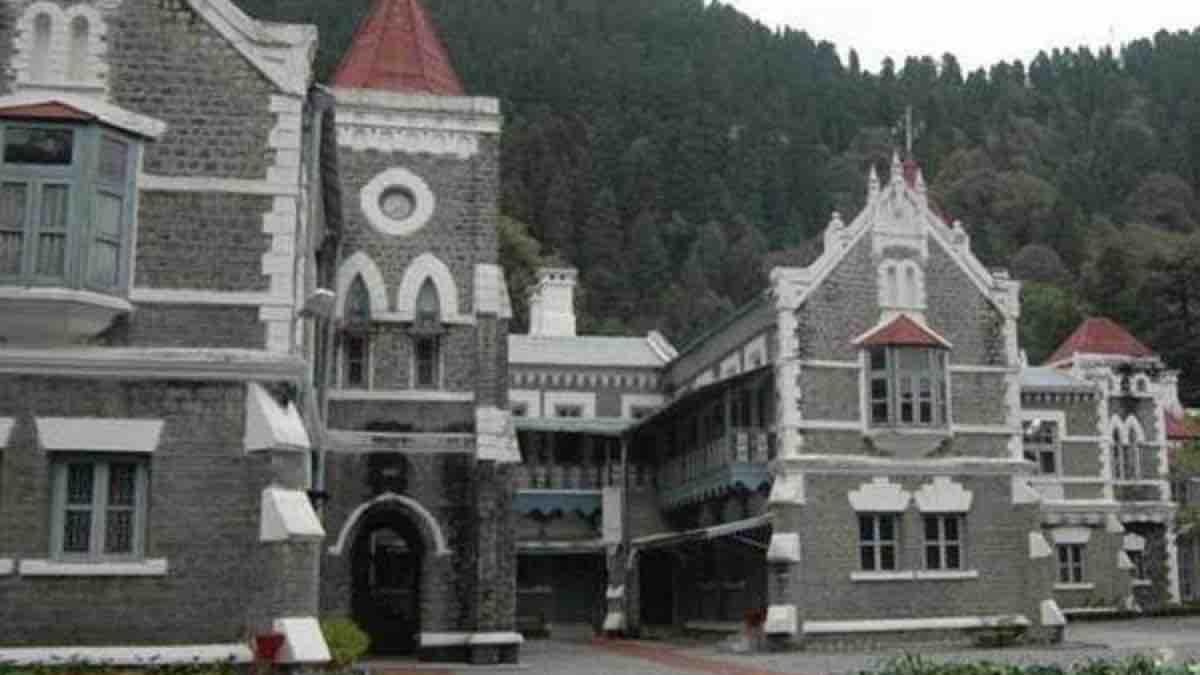
The High Court has demanded a response within 24 hours regarding the government’s failure to appoint a Lokayukta, noting that crores are being spent on an idle institution while corruption cases remain unaddressed by an independent body.
The Uttarakhand High Court on Wednesday expressed strong displeasure over the state government’s persistent failure to convene a search committee meeting for the appointment of a Lokayukta. A division bench comprising Chief Justice Manoj Kumar Gupta and Justice Subhash Upadhyay has granted the state a final 24-hour window to file a response, warning that the concerned Secretary must appear personally before the court on May 15 at 11 am if the directive is not met.
The directions were issued during the hearing of a Public Interest Litigation (PIL) filed in 2021. The petitioner has sought the immediate filling of the vacant Lokayukta post to establish an impartial investigative mechanism in the state. Despite the post being vacant, the PIL highlights a significant financial burden on the state exchequer, claiming that approximately ₹2 crore to ₹3 crore is spent annually on the Lokayukta institution.
The petitioner argued that the absence of a Lokayukta leaves the state without an independent body to register corruption cases against gazetted officers. Currently, investigative agencies in Uttarakhand function under government control, requiring prior government sanction to proceed against such officers—a hurdle the petitioner claims hinders justice, especially as several scams have recently surfaced in the state.
During the proceedings, the state government once again requested additional time to complete the appointment process. However, the bench noted a pattern of non-compliance with previous timelines. While the government had earlier sought six months to finish the process, the court had only granted three months.
The court had specifically directed the government to file an affidavit detailing the outcomes of a search committee meeting scheduled for April 3. The government informed the bench that this meeting could not take place due to a lack of quorum. Following this failure, the court had adjourned the matter for four weeks, yet the orders remained unfulfilled by the time of the current hearing.
The High Court’s ultimatum places significant pressure on the state administration to expedite the search committee’s work. By demanding a response within 24 hours and threatening the personal appearance of the Secretary, the court has signaled that it will no longer tolerate procedural delays in establishing a functional anti-corruption ombudsman.
The matter is set for further hearing on May 15, where the government’s reply—or the presence of the Secretary—will determine the next course of action in this long-standing legal battle for administrative transparency.




