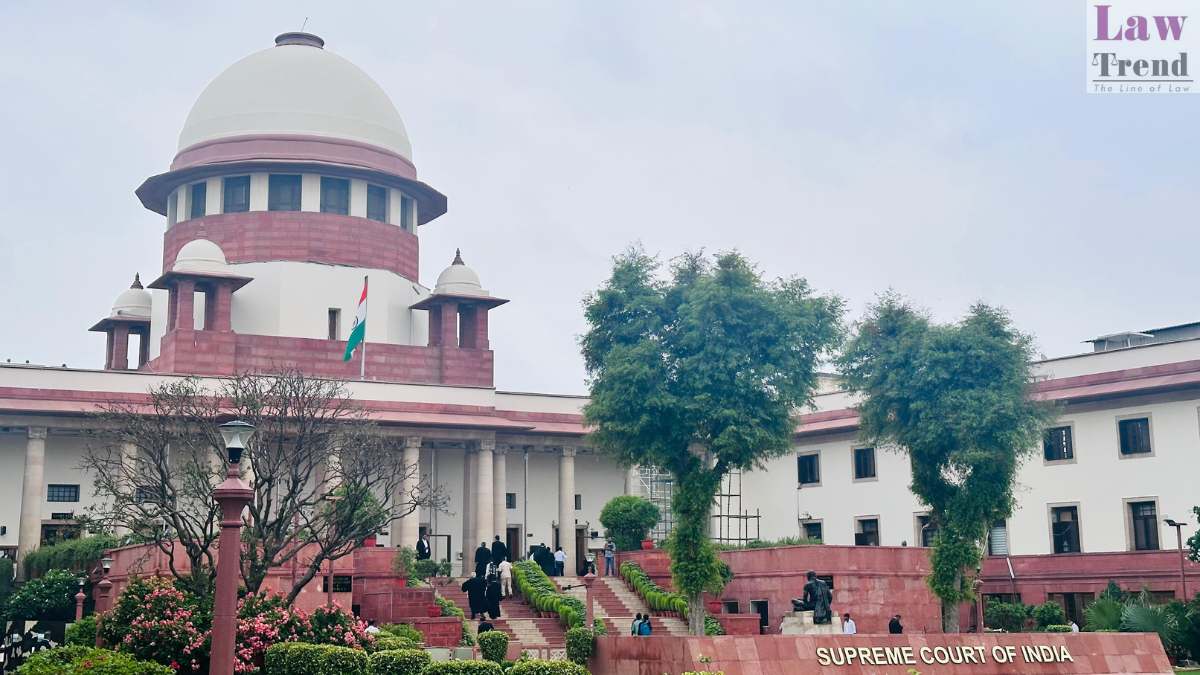
The Supreme Court of India has ruled that a Successful Resolution Applicant (SRA) is prohibited from negotiating further or withdrawing from a resolution plan once it has been approved by the Committee of Creditors (CoC). Justice K.V. Viswanathan and Justice Vipul M. Pancholi held that an SRA cannot use alleged conditionalities in a Letter of Intent (LoI) as a subterfuge to renege from its obligations. Dismissing the appeals filed by a promoter applicant against the National Company Law Appellate Tribunal’s (NCLAT) order, the apex court affirmed the forfeiture of the applicant’s Earnest Money Deposit (EMD) and upheld the CoC’s commercial decision to initiate the liquidation process of the Corporate Debtor.
Background of the Case
The matter arose from the Corporate Insolvency Resolution Process (CIRP) of the Corporate Debtor, M/s. Oracle Home Textiles Limited, an enterprise holding an MSME certificate, which commenced on August 9, 2018. Following a Request For Resolution Plan (RFRP) issued by the Resolution Professional (RP) on February 6, 2019, the appellant, Sanjay Dave—who was the Promoter/Director of the Corporate Debtor—submitted a Resolution Plan. On May 10, 2021, the appellant was informed that his plan had been approved by the CoC with a 99.90% voting majority.
Parallelly, applications filed by prospective resolution applicants (PRAs) seeking permission to submit plans were pending before the National Company Law Tribunal (NCLT). On May 23, 2021, the RP issued an LoI to the appellant, which included a clause stating that the e-voting results approving the plan were subject to the order reserved by the NCLT on January 21, 2021, regarding the PRAs’ applications.
Characterizing this as a “conditional LoI,” the appellant filed IA No. 1205 of 2021 before the NCLT seeking the re-issuance of an unconditional LoI. Due to non-acceptance, the RP issued a second LoI on June 23, 2021, which additionally stipulated that any litigation risks from staff, employees, or workers would be borne solely by the SRA. When acceptance was still not provided, a third LoI was issued on July 23, 2021, mandating the submission of an unconditional performance guarantee within seven days in accordance with the RFRP.
Upon the appellant’s failure to comply, the RP on August 2, 2021, forfeited the appellant’s EMD of Rs. 1,00,00,000 (Rupees one crore). The appellant then moved IA No. 2029 of 2021 for the restoration of the EMD. Since no valid resolution plan was executed and the CIRP period expired, the CoC on June 5, 2023, voted with a 99.61% majority to liquidate the Corporate Debtor, leading the RP to file a liquidation application (IA No. 3914 of 2023). On April 30, 2024, the NCLT dismissed the appellant’s applications and allowed the liquidation. The NCLAT subsequently dismissed the appellant’s appeals on October 29, 2024, prompting the appeal to the Supreme Court under Section 62 of the Insolvency and Bankruptcy Code, 2016 (IBC).
Arguments of the Parties
The learned counsel for the appellant argued that all the LoIs issued by the RP were conditional and fundamentally contradicted the IBC as well as the plan submitted by the appellant. It was contended that subjecting the plan’s approval to pending third-party PRA applications and requiring the appellant to underwrite potential litigation liabilities of staff and workers made the LoIs conditional. Furthermore, the appellant argued that reducing the timeframe to submit the performance guarantee from forty-five days (as discussed in a previous CoC meeting) to seven days in the final LoI violated the CoC’s own resolutions.
Conversely, the learned senior counsel for the lead bank (Union Bank) and the counsel for the Liquidator defended the concurrent findings of the NCLT and NCLAT. They highlighted that the appellant was fully aware of the ongoing PRA litigations, having attended the CoC meetings where they were discussed. It was further submitted that the forty-five-day extension originally granted for the performance guarantee was a temporary relaxation due to the COVID-19 pandemic, which had long expired by July 2021, and that the appellant had expressly agreed to the seven-day timeline in a subsequent CoC meeting.
Court’s Analysis and Reasoning
The Supreme Court rejected the appellant’s contentions, finding them entirely devoid of merit. The Court observed that incorporating a clause making the LoI subject to a judicial body’s final decision did not render it conditional, as a judicial order would naturally prevail regardless of its explicit mention.
Reviewing the minutes of the 28th and 29th CoC meetings, the Bench noted that the appellant had actively participated and requested the formal LoI knowing its terms. On the issue of worker liabilities, the Court highlighted that the minutes of the 27th CoC meeting clearly recorded the appellant agreeing to bear such calculated risks. Regarding the performance guarantee timeline, the Court noted that the appellant had expressly agreed in the CoC meeting dated July 23, 2021, to submit the guarantee within seven days as prescribed in the RFRP.
Invoking the doctrines of acquiescence and estoppel, the Court emphasized that a party cannot be allowed to approbate and reprobate. The Bench observed:
“The device adopted by the appellant was an indirect attempt to renege from the plan. It was a clear subterfuge. Knowing fully well that one cannot withdraw directly from the plan approved by the CoC, an attempt was made in an indirect manner by harping on about certain stipulations as conditionalities to shift the blame on the CoC for the appellant’s unwillingness to take the plan forward. This clever ploy has rightly been scotched by the fora below. If such artifices are allowed to succeed, the entire architecture of the IBC would crumble and the laudable objects sought to be achieved by the said Code would become a far cry.”
The Court cited its landmark precedent in Ebix Singapore Private Limited v. Committee of Creditors of Educomp Solutions Limited, reinforcing that a submitted resolution plan is binding and irrevocable between the CoC and the SRA, leaving no room for subsequent modifications or withdrawals at the SRA’s behest.
On the issue of EMD forfeiture, the Bench found no illegality in the RP’s actions, holding that Clause 1.9.4 of the RFRP explicitly permitted forfeiture upon a successful applicant’s failure to submit the performance guarantee within the stipulated timeframe.
Addressing the final challenge against the liquidation order, the Court referenced Section 33(2) of the Code and its Explanation, alongside the judgment in Manish Kumar v. Union of India, clarifying that the CoC is statutorily empowered to liquidate a corporate debtor at any time before the confirmation of a resolution plan. Reaffirming the paramount status of the CoC’s commercial wisdom as established in K. Sashidhar v. Indian Overseas Bank, the Court held that the decision to liquidate—passed with a 99.61% voting share—was a non-justiciable business decision.
Decision of the Court
The Supreme Court found no merit in the appeals and dismissed them, vacating all interim orders. The Court directed the Liquidator to proceed with the remaining liquidation process of M/s. Oracle Home Textiles Limited in accordance with the Code, with no orders as to costs.
Case Details
- Case Title: Sanjay Dave Vs. Andhra Bank Ltd. & Ors.
- Case No.: Civil Appeal Nos. 12264-12266 of 2024
- Bench: Justice K.V. Viswanathan, Justice Vipul M. Pancholi
- Date: May 27, 2026