

Schools Bound to Admit RTE Students Without Delay; Disagreement with Govt Selection No Ground to Deny Entry: Supreme Court
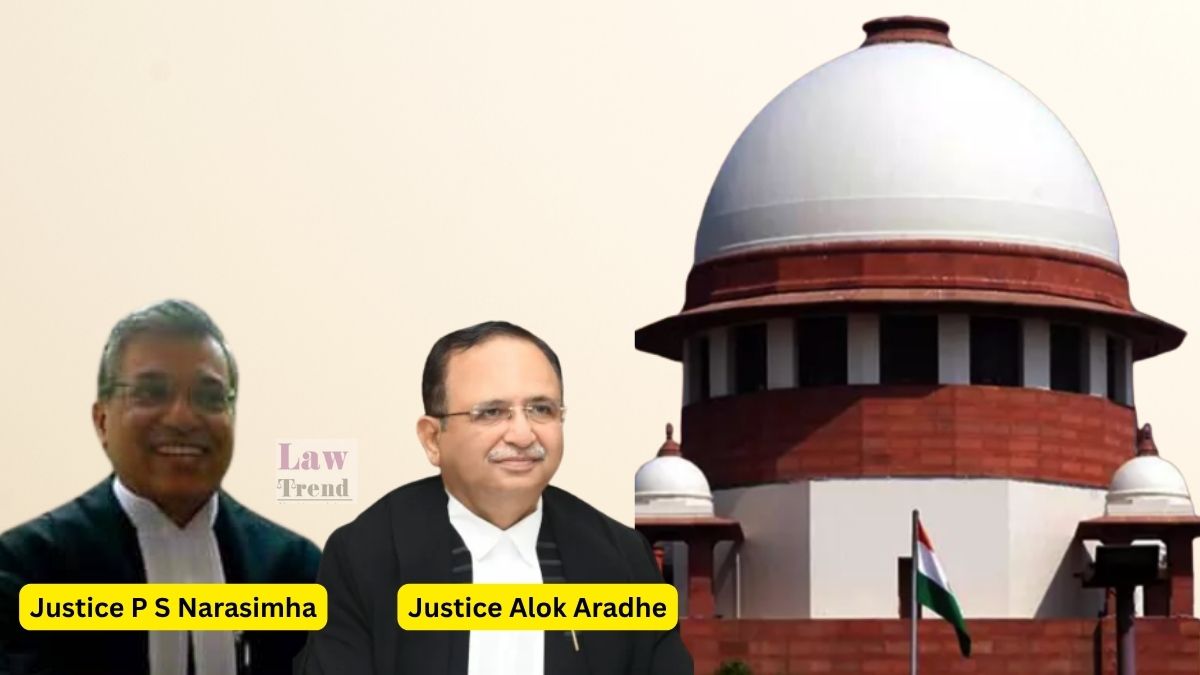

The Supreme Court of India has reiterated the mandatory constitutional and statutory obligation of “neighbourhood schools” to grant immediate admission to students forwarded by the State Government under the Right to Education (RTE) framework. A Bench comprising Justice Pamidighantam Sri Narasimha and Justice Alok Aradhe emphasized that schools cannot delay admissions even if they have disagreements regarding a student’s eligibility or the government’s selection process.

Background of the Case

The matter arose from a Special Leave Petition (SLP) filed by Lucknow Public School, Eldico, challenging an order of the High Court. The case involved Respondent No. 5 (the student), who had applied to the Basic Education Department, Uttar Pradesh, for admission into a pre-primary class for the academic year 2024-25.

The student was selected according to the procedure prescribed under the U.P. Right of Children to Free and Compulsory Education Rules, 2011 (UP RTE Rules, 2011). Although her name was included in the published list forwarded to the petitioner school, she was denied admission and barred from attending classes on the grounds of “uncertainty about the student’s eligibility.”

The High Court had previously allowed the student’s writ petition, ruling that schools cannot “sit in appeal” over decisions taken by the State Government.

The Court’s Analysis

The Supreme Court analyzed the regulatory framework under Article 21A of the Constitution, Section 12 of the RTE Act, 2009, and Rule 8 of the UP RTE Rules, 2011.

READ ALSO  Section 437 CrPC Not Applicable Where Bail is Sought U/Sec 439 CrPc filed before HC and Sessions Court: Allahabad HC

Binding Nature of Government Lists

The Court observed that under Rule 8 of the UP RTE Rules, 2011, the admission process must be transparent, and it is “binding for the school to follow the process of admission prescribed by the State Government from time to time.”

The Bench noted:

“The limited window for the school to reconsider the government’s decision is a conscious choice of the State to avoid delays in securing the children’s right to education.”

The Neighbourhood School Concept

The judgment highlighted that the “neighbourhood school” concept is a deliberate statutory strategy to operationalize equality and social integration. The Court remarked:

“By mandating that schools admit children from weaker and disadvantaged sections to the extent of at least twenty-five percent of class strength, the law seeks to transform the social structure of our society. This model envisages the school as a common civic space that breaks down entrenched barriers of caste, class, and gender…”

Identification of Duty Bearers

Citing its previous decision in Dinesh Biwaji Ashtikar v. State of Maharashtra & Ors. (2026 INSC 56), the Court identified five primary “duty bearers” responsible for implementing the right to elementary education:

  1. The appropriate Government
  2. The local authority
  3. The neighbourhood schools
  4. The parents/guardians
  5. The primary school teachers
READ ALSO  सीआरपीसी की धारा 439 के तहत जमानत के लिए आवेदन के संबंध में भी पीएमएल अधिनियम की धारा 45 में उल्लिखित शर्तों का पालन करना होगा: सुप्रीम कोर्ट

The Court underscored that the constitutional promise under Article 21A must be realized through “common local schools rather than segregated or parallel systems.”

The Decision

The Supreme Court held that while a school may have a disagreement with a selection made by the Government, such a disagreement does not permit them to withhold admission.

The Court clarified the protocol for schools:

“For schools like the petitioner that may have some disagreement with the selection by the Government, can make representation to the concerned authority, but they ought not wait for the outcome of such a representation and are mandated to grant admission to the student whose name finds mention in list forwarded to the school in the interregnum.”

Finding no merit in the petitioner’s arguments, the Bench dismissed the Special Leave Petition, affirming the High Court’s direction to grant the student admission without any delay. No orders were made as to costs.

Case Details

  • Case Title: Lucknow Public School, Eldico and Anr. v. The State of Uttar Pradesh & Ors.
  • Case No.: Special Leave Petition (C) No. ___ of 2026 (@ Diary No. 60657 of 2024)
  • Bench: Justice Pamidighantam Sri Narasimha and Justice Alok Aradhe
  • Date: April 28, 2026

READ ALSO  Wife Cannot Be Forced to Live with In-Laws If Threatened: Chhattisgarh High Court
Ad 20- WhatsApp Banner

Law Trend
Law Trendhttps://lawtrend.in/
Legal News Website Providing Latest Judgments of Supreme Court and High Court

Related Articles

Latest Articles

