

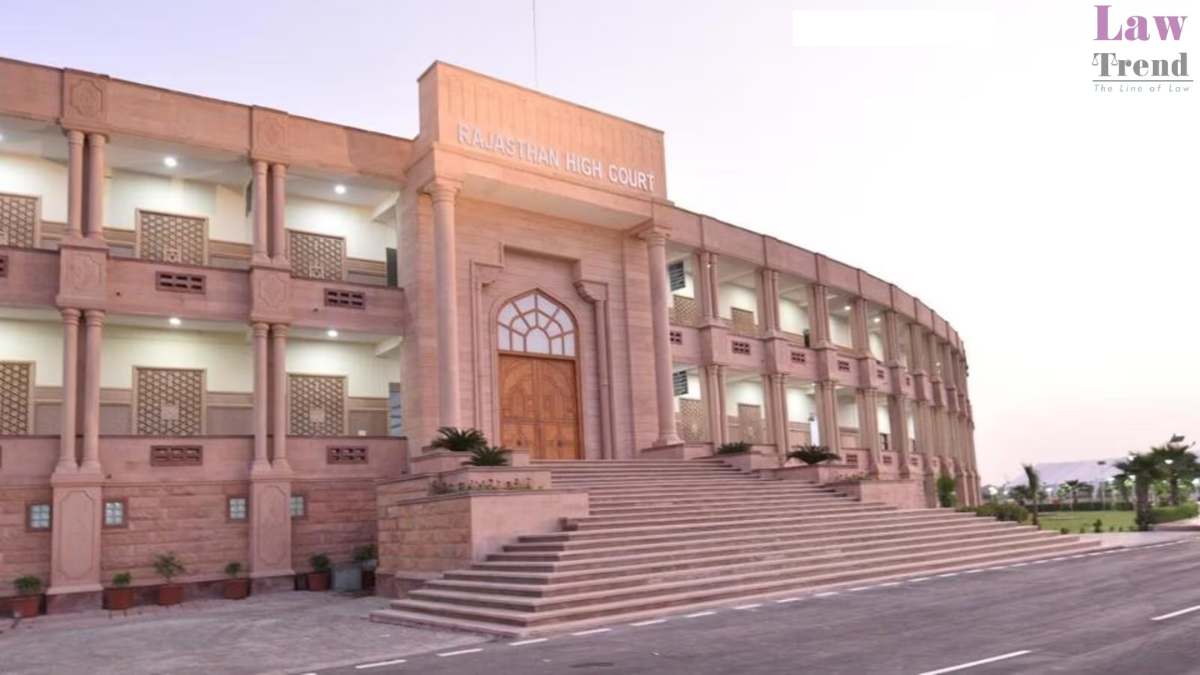
In a significant judgment regarding the implementation of reservation policies in specialized education, the Rajasthan High Court has held that candidates from other states cannot claim reserved category benefits for postgraduate medical admissions within Rajasthan. The court clarified that the identification of reserved categories is inherently state-specific, rooted in local socio-economic conditions, and extending these benefits to non-domicile candidates would contradict the constitutional framework.
The ruling was delivered by Justice Sanjeet Purohit following a writ petition filed by the Federation of Private Medical and Dental Colleges of Rajasthan. The petitioner challenged a resolution passed on February 18, 2026, by the NEET-PG counselling board.
The federation sought directions from the court to allow non-domicile candidates belonging to Scheduled Castes (SC), Scheduled Tribes (ST), and Other Backward Classes (OBC) to avail themselves of reservation benefits. Specifically, the petitioner wanted these candidates to be eligible for reduced qualifying percentiles and to participate in the counselling process against seats reserved for these categories in Rajasthan.
The petitioner argued that excluding out-of-state reserved category candidates frustrated the primary objective of lowering NEET-PG qualifying percentiles, which was to ensure that a large number of vacant seats were filled. It was further contended that the board’s decision amounted to an “indirect enforcement of a complete domicile-based reservation” and that the rules of the game were being altered midway through the counselling process.
Conversely, the State of Rajasthan defended the counselling board’s resolution. The state maintained that reservation policies are notified based on state-specific criteria and apply only to those recognized under Rajasthan’s specific notified categories. The state clarified that non-domicile candidates were not being barred from participation; rather, they were being correctly categorized as “unreserved” candidates in accordance with established counselling guidelines.
Dismissing the challenge, Justice Sanjeet Purohit observed that the constitutional scheme for reservations is designed to address the specific socio-economic disparities found within individual states.
“The constitutional scheme clearly envisages identification of reserved categories on a state-wise basis, rooted in local socio-economic conditions,” the court noted. The judgment further stated that extending such benefits across state boundaries would run contrary to this structural framework.
The court rejected the petitioner’s claim that the policy created a 100 per cent domicile reservation. It clarified that the policy merely restricts specific reservation benefits to eligible candidates from the state, while non-domicile candidates remain free to compete for seats in the general/unreserved pool.
Crucially, the court also addressed the issue of merit in specialized education. It ruled that candidates cannot seek admission to unreserved seats by relying on the relaxed qualifying standards (such as lower percentiles) that are specifically intended for reserved category candidates.
Regarding the petitioner’s argument about filling vacant seats, the court underscored that administrative goals cannot supersede legal standards. “Although filling vacant postgraduate seats is important, it cannot override statutory norms or compromise merit standards, particularly in specialised medical education,” the court held.
Finding no illegality or discrimination in the state’s policy, the High Court concluded that the counselling board’s decision aligned with the constitutional framework governing reservations. Consequently, the court dismissed the writ petition and all pending applications, affirming that out-of-state candidates must be considered under the unreserved category for NEET-PG admissions in Rajasthan.




