

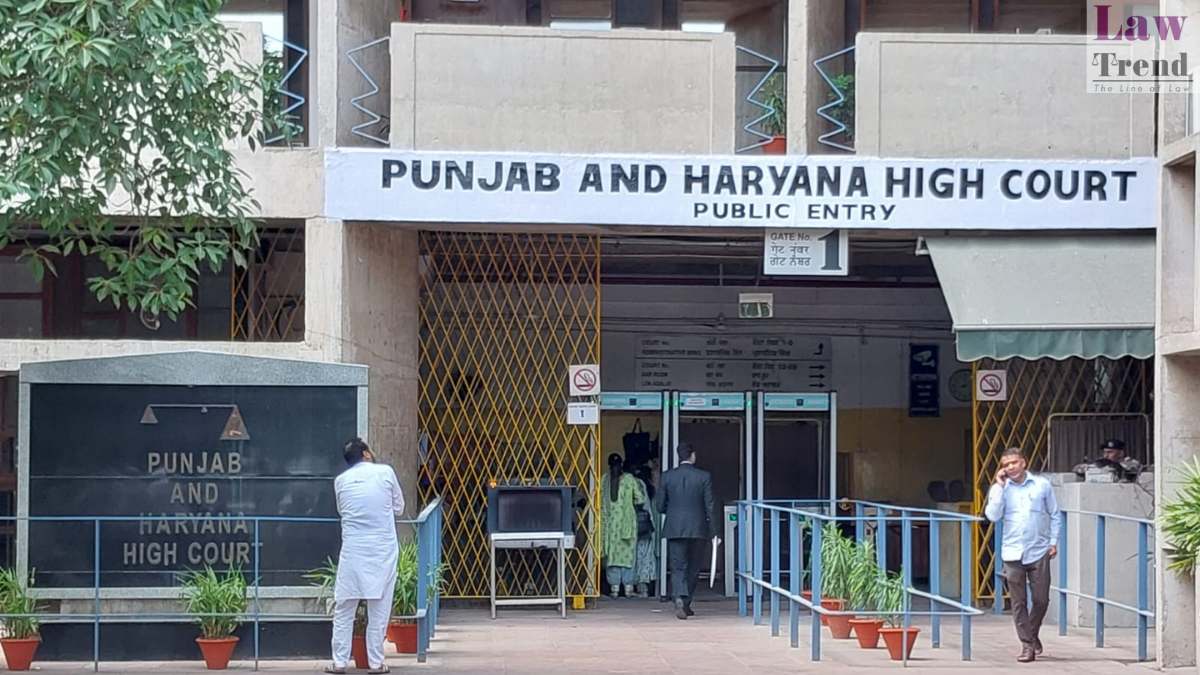
In a major development ahead of the upcoming local body elections in Punjab, the Punjab and Haryana High Court on Friday declined to interfere with the Punjab State Election Commission’s decision to conduct the polls using traditional paper ballots. Dismissing a batch of Public Interest Litigations (PILs) that sought a directive to mandate Electronic Voting Machines (EVMs), the court ruled that the petitioners had approached the court too late in the transitional window of the election cycle.
The decision firmly paves the way for the use of paper ballots in the polling scheduled for May 26, covering 104 municipal bodies, including eight major municipal corporations across Punjab. The counting of votes is scheduled to take place on May 29.
The Legal Challenge: Demands for EVM Integration
The controversy reached the High Court through three separate PILs challenging the Punjab State Election Commission’s (SEC) decision to conduct the municipal corporation, municipal council, and nagar panchayat elections via traditional ballot papers. The petitioners argued that the election should transition to electronic voting to align with modern electoral standards.
However, a Division Bench comprising Chief Justice Sheel Nagu and Justice Sanjeev Berry observed that the election machinery was already in its final stages of preparation. The court highlighted the rapid timeline of the election process:
- May 13: Publication of the election programme and official notification.
- May 18 & 19: Filing of the PILs.
- May 19: Last date for the withdrawal of candidatures.
- May 21: Conclusion of arguments in the High Court.
- May 22 (Friday): Delivery of the court’s order.
- May 26: Scheduled polling day.
“It is now too late in the day for it to pass any order or issue any writ since the election programme was published as early as on May 13 and these petitions came to be filed as late as on May 18 and May 19,” the Bench observed.
The Statutory Framework: Why Paper Ballots Remain Legal
A key focus of the court’s analysis was the statutory validity of paper ballots under the state’s electoral rules. The petitioners had contended that the introduction of EVMs rendered the old paper ballot system obsolete.
The High Court rejected this interpretation, explaining that while the legislature introduced EVMs into the municipal elections framework in 2006 by adding Section 48-A to the 1994 Rules, it intentionally chose not to delete the existing provisions governing paper ballots and ballot boxes.
The Bench pointed to several active regulations—including Rules 52, 53, 54, 55, 58, 65, 67, 70, and 71 of the 1994 Rules—which explicitly detail the logistics and legal processes of handling paper ballots.
Explaining the rationale behind retaining both systems, the Court noted:
“In our society, where illiteracy, poverty and ignorance continue to plague a large section of society, the Rule making authority intentionally retained the provision of ballot papers and ballot boxes and did not omit the same, while introducing the concept of EVMs in municipal elections.”
The Bench added that both the Election Commission of India and State Election Commissions must retain the administrative flexibility to revert to traditional ballot systems under certain circumstances, justifying the co-existence of both provisions in the rulebook.
Logistical Impossibility: EVMs in Transit
The state administration and the Election Commission also presented critical logistical hurdles that made a last-minute switch to EVMs practically impossible.
Punjab’s Additional Advocate General, Ferry Sofat, informed reporters that the State Election Commission maintained that even if the required EVMs arrived in the state, the complete administrative preparation—which includes testing, allocation, and final setup for poll day—demands a minimum of 15 days.
Additionally, counsel for the State Election Commission informed the Bench that although the Election Commission (EC) had dispatched the requested EVMs from Rajasthan on Thursday morning, the machines had not yet arrived in Chandigarh. This delay eliminated any realistic possibility of deploying and calibrating the electronic units before the May 26 voting date.
Court’s Conclusion and Alternative Remedy
While acknowledging the Supreme Court’s general view that moving backward to orthodox voting systems is generally undesirable, the High Court emphasized that procedural delays by the petitioners tied its hands.
“We may be persuaded by the decision of the apex court that going back to the orthodox method of ballot papers and ballot boxes may not be appropriate, but since the petitioners have approached this court very late in the day, we decline interference in these petitions,” the Court held.
To ensure the petitioners were not left without legal recourse, the Bench granted them the liberty to challenge the final election process through an election petition once the voting process concludes.
With the High Court stepping aside, the Punjab State Election Commission is fully authorized to conduct the local body elections on May 26 using the prepared ballot boxes and paper sheets.




