

Prior Approval of DoE Not Required for Fee Hike by Private Un-aided Schools at Academic Session’s Start: Delhi High Court
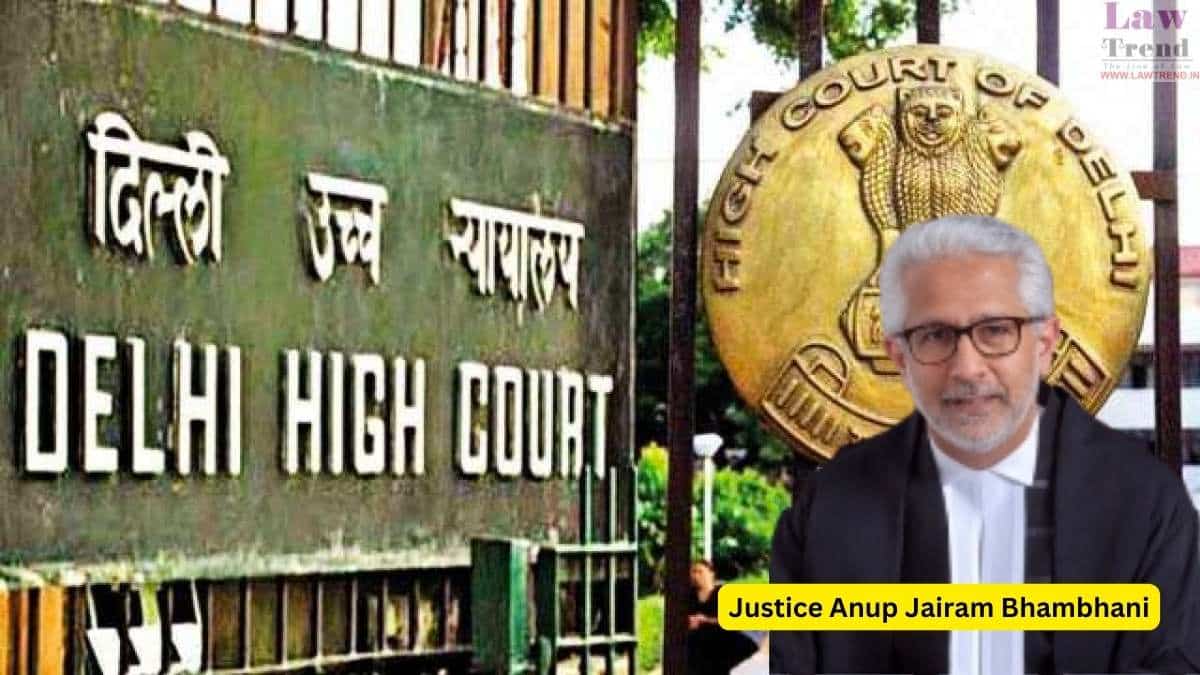

In a landmark judgment, the High Court of Delhi has ruled that private, un-aided, recognised schools in the national capital do not require the prior permission or sanction of the Directorate of Education (DoE) to increase their fee at the commencement of an academic session. The court reaffirmed that the only statutory obligation on such schools is to file a full statement of the proposed fee with the DoE before the session begins.

The Single-Judge Bench of Justice Anup Jairam Bhambhani quashed several orders issued by the DoE that had rejected the fee-hike proposals of various schools. Noting the DoE’s persistence in acting contrary to established legal principles, the court observed:

“The present batch of cases illustrates with uncomfortable clarity, how a public authority can persist in a course of action that betrays studied indifference to both the letter of the law and binding precedent.”

The court further clarified that a contractual “land-clause” (requiring prior approval before a fee increase) cannot override or supplant the statutory provisions of the Delhi School Education Act, 1973 (DSE Act), and that the DoE cannot dictate a parallel accounting system contrary to the accrual-based accounting system prescribed by the Institute of Chartered Accountants of India (ICAI) and the Income-tax Act, 1961.

To balance the financial impact on parents with the precarious financial conditions of the schools caused by years of delayed decisions, the High Court directed that the last proposed fee increase shall only apply prospectively from the academic session beginning April 2027, strictly prohibiting schools from recovering any retrospective arrears.

Background of the Case

The litigation involved a massive batch of 137 writ petitions filed by private, un-aided, recognised schools, including Delhi Public School Vasant Kunj, N.K. Bagrodia Public School, and Tagore International School, among others. The schools challenged various orders and circulars of the DoE that had arbitrarily rejected their proposals for increasing fees for academic sessions ranging from 2016-17 to 2022-23.

During the pendency of the judgment, the Legislative Assembly of the National Capital Territory of Delhi enacted the Delhi School Education (Transparency in Fixation and Regulation of Fees) Act, 2025. Upon re-hearing the parties on this development, the court noted that the new law applies prospectively. Furthermore, the DoE had represented to the Supreme Court of India in separate proceedings (SLP (C) No. 2602/2026) that the new law would not be implemented at this stage for the Academic Year 2025-2026.

Arguments of the Parties

Submissions on behalf of the Petitioner Schools:

  1. Fundamental Right to Autonomy: The schools argued that they possess a fundamental right under Article 19(1)(g) of the Constitution of India to run their institutions with significant administrative and financial autonomy, including the freedom to set up a reasonable fee structure.
  2. Statutory Interpretation of Section 17(3): It was argued that under Section 17(3) of the DSE Act, prior approval of the DoE is only required if a school seeks to charge fees in excess of the statement filed before the commencement of the academic session (i.e., mid-session fee hikes).
  3. Flawed Account Scrutiny: The schools contended that the DoE arbitrarily computed “funds available” by illegally treating earmarked, statutory, and non-revenue reserves (such as Contingency Reserve Funds, Development Funds, Depreciation Reserve Funds, and Gratuity/Leave Encashment funds) as liquid monies available to meet current operational/revenue expenditures.
  4. Natural Justice Violations: The schools submitted that the DoE rejected their fee proposals without issuing show-cause notices, without granting personal hearings before the Director of Education, and without sharing the recommendations of the chartered accountants appointed by the DoE.
  5. Inefficacy of the Land-Clause: They argued that a land-clause is a contractual covenant with a third-party land-owning agency and cannot augment the statutory regulatory powers of the DoE.
READ ALSO  Academic Distinction Between ‘Murder’ and ‘Culpable Homicide Not Amounting to Murder’ Has Always Vexed Courts: Chhattisgarh HC

Submissions on behalf of the DoE & Parents’ Associations:

  1. Strict Regulatory Oversight: The DoE, supported by various parents’ associations, argued that its regulatory oversight is essential to prevent the “commercialisation of education” and “profiteering,” as mandate by the Supreme Court in Modern School vs. Union of India.
  2. Prior Permission Mandatory: Relying on the Division Bench judgment of the Delhi High Court in Justice for All vs. Govt. of NCT of Delhi, the DoE argued that schools situated on land allotted by government agencies (like the DDA) with a contractual land-clause must obtain prior approval before implementing any fee-hike.
  3. Multi-layered Review Process: The DoE defended its procedure, stating that proposals were mecticulously analyzed by empaneled chartered accountants, reviewed by a Project Management Unit (PMU) managed by M/s. Ernst & Young LLP, and further assessed by an internal departmental committee.
  4. Compliance with Accounting Norms: The DoE contended that schools had sufficient surplus funds to meet operational costs and that generating excessive reserves under multiple heads amounted to profiteering and the indirect charging of capitation fees.

Court’s Analysis and Observations

The High Court systematically addressed the key points of determination, relying on statutory provisions and extensive judicial precedents.

1. Scope of DoE’s Regulatory Power under Section 17(3)

Analyzing Section 17(3) of the DSE Act, the court held that a school is only required to submit its fee statement before the commencement of an academic session. No prior approval is required at that stage. The court remarked:

READ ALSO  Benefits Under MSMED Act 2006 Can’t be Claimed If Seller is Not Registered Under the Act: Calcutta HC

“The DoE cannot block a fee increase declared by a school in the statement of fees filed before the commencement of an academic session until such time that it finds that the increase amounts to profiteering or commercialisation.”

The court noted that the stage for conducting an audit arises subsequently under Section 18(5) of the DSE Act, based on returns filed under Rule 180 of the DSE Rules. A finding of profiteering can only be returned after conducting such a statutory audit.

2. Autonomy and “Reasonable Surplus”

Relying on the landmark Supreme Court judgments in T.M.A. Pai Foundation, Islamic Academy of Education, P.A. Inamdar, and Modern Dental College, the court held that private un-aided schools have the right to generate a “reasonable surplus” for the growth, development, and expansion of the institution.

The court clarified that the mere presence of surplus funds does not equate to “profiteering,” which is defined as “taking advantage of unusual or exceptional circumstances to make excessive profits.”

3. The Land-Clause versus Statutory Law

Addressing the distinction between “land-clause” schools and “non-land-clause” schools, the court ruled that both categories are governed by the same statutory regime of the DSE Act. The court held that contractual terms in lease deeds cannot overwrite a statute:

“Now, if there is dissonance between the wording of the land-clause, which is only a contractual term… and section 17(3) of the DSE Act, which is a statutory provision, clearly the statutory provision must prevail.”

The court clarified that the DoE’s duty is only to “ascertain” compliance and report any infractions to the land-owning agency (like the DDA) for contractual action, rather than overstepping its statutory powers to enforce lease clauses itself.

4. Maintaining Accounts on Accrual Basis

The court held that under the Income-tax Act and the ICAI Guidance Note dated 21.07.2005, private schools are legally mandated to maintain accounts on an accrual basis. The DoE cannot insist on a parallel, cash-based system of accounting to artificially calculate “available funds.”

5. Double-Counting of Reserves and Specific Funds

The court strictly reprimanded the DoE for treating various specific reserves as general funds available to meet current revenue expenditures:

  • Contingency Reserve Fund: Mandated under Rule 177(2)(e) of the DSE Rules, this fund cannot be added to the current available funds.
  • Development Fund & Depreciation Reserve Fund: These are capital accounts meant for specific purposes, such as the replacement of fixed assets. Under Section 18(4)(b) and Rule 176, they cannot be diverted to pay salaries.
  • Gratuity and Leave Encashment Reserves: These are statutory liabilities. The court held that treating funds retained for statutory retiral benefits as available revenue funds is “anathematic to basic fiscal prudence.”
  • Remuneration to Administrators: The court rejected the DoE’s argument that private schools cannot pay salaries to Chairpersons, Directors, or Managers because such roles are “honorary” in government schools. The court observed:
READ ALSO  दिल्ली हाईकोर्ट ने पीएफआई नेता ए.एस. इस्माईल को अंतरिम जमानत देने से इनकार किया, कहा- मेडिकल हालत गंभीर नहीं

“The DoE’s stand in this behalf is wholly untenable for the reason that any institution requires an administrative setup if it is to be run professionally and efficiently… Now, for the DoE to expect that the persons manning the executive and administrative positions in a school must do so gratis, can only be envisaged in la-la-land.”

6. Violation of the Principles of Natural Justice

The court noted that the DoE rejected fee-hike proposals without providing the audit recommendations of its chartered accountants to the schools and without granting them a hearing before the Director of Education. Relying on the Constitution Bench judgment in Gullapalli Nageswara Rao, Justice Bhambhani observed:

“If one person hears and another decides, then personal hearing becomes an empty formality.”

The Decision of the Court

The High Court concluded that the DoE’s exercise of forcing schools to seek prior approval at the beginning of academic sessions and the subsequent rejection of their fee proposals were wholly misconceived and untenable in law.

  1. Quashing of Orders: All impugned orders passed by the DoE rejecting the schools’ fee-hike proposals were quashed and set aside. All pending fee-hike proposals of a similar nature were closed.
  2. Equitable Prospective Fee Implementation: To prevent parents and students from being crushed under retrospective arrears dating back to 2016-17, the court fashioned an equitable relief:

“In the circumstances… the equitable option would be to direct that the fee increase last proposed by various schools in their respective statements of fee filed with the DoE would apply but only from the next academic session beginning April 2027; and no school shall demand or recover from any parent or student any arrears of fee or other charges retrospectively for the past academic sessions.”

With these directions, the High Court disposed of the entire batch of writ petitions.

Case Details

  • Case Title: Delhi Public School Vasant Kunj and Anr v. Govt of NCT of Delhi and Anr (and connected matters)
  • Case No.: W.P.(C) 7481/2017 & connected matters (including CM APPL. 30818/2017, CM APPL. 29247/2025)
  • Bench: Justice Anup Jairam Bhambhani
  • Date: May 22, 2026

Law Trend
Law Trendhttps://lawtrend.in/
Legal News Website Providing Latest Judgments of Supreme Court and High Court

Related Articles

Latest Articles

