

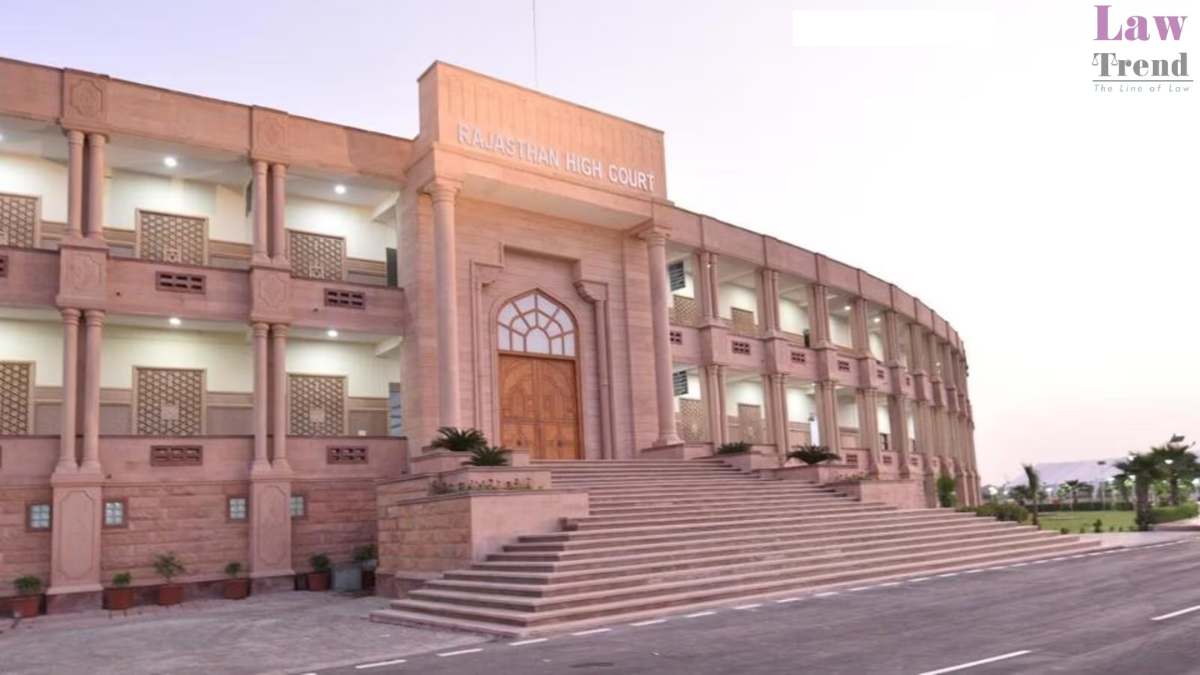
The Rajasthan High Court has directed the release of an impoverished prisoner on parole without insisting on financial sureties, ruling that release conditions must match an inmate’s economic standing and avoid becoming oppressive barriers to liberty.
A division bench comprising Justice Sanjay K Agrawal and Justice Vinit Kumar Mathur granted 30 days of temporary release to 53-year-old Munia, who is serving a criminal sentence at the Open Air Camp in Mandor, Jodhpur. The court ordered his release solely upon the execution of a personal bond of Rs 1 lakh along with the submission of identity verification documents, dispensing with the earlier requirement of two monetary sureties.
Munia had approached the high court after remaining incarcerated despite receiving parole approval on April 23. Competent authorities had conditioned his release on providing two sureties of Rs 50,000 each alongside a Rs 1 lakh personal bond. In his petition, Munia stated that severe poverty and a total absence of income left him unable to arrange the required sureties, effectively stalling his sanctioned release.
Under personal bond terms, an individual provides a formal written undertaking to abide by all release stipulations, incurring financial liability to the court only if those terms are breached.
Financial Realities Central to Bail Terms
In its September 15 order, the bench emphasized that when sanctioning parole, authorities must fix bond amounts that are commensurate with an inmate’s socio-economic status. Financial requirements, the judges observed, should never be set at levels that are exorbitant, prohibitive, or oppressive.
The court noted that the question before it was not Munia’s eligibility for parole, which authorities had already sanctioned months earlier, but whether an inability to furnish cash-backed sureties due to poverty should bar a prisoner from taking advantage of that release.
Institutional Framework for Indigent Inmates
To resolve the petition, the bench drew upon its earlier judgment of January 6, which established binding guidelines for parole authorities across Rajasthan. Those directives were designed to bring uniformity to administrative decisions, curb unnecessary litigation, eliminate delays, and spare prisoners undue hardship after their release has received approval.
Under those established norms, authorities may routinely ask for surety bonds when granting first-time periodical parole. However, if an inquiry confirms that an inmate lacks the financial means to furnish them, parole committees possess the discretion to waive sureties at the initial stage itself.
The guidelines also empower committees to waive previously imposed surety requirements upon an indigent inmate’s formal request. Furthermore, prisoners who have completed a parole term without sureties are generally exempt from providing them during subsequent periodic leaves, provided their financial standing remains unchanged.
The high court’s protocol also requires authorities to notify the member secretary of the Rajasthan State Legal Services Authority whenever an inmate receives a surety waiver. The state government and legal services authorities are then mandated to coordinate legal aid for all future parole applications filed by that prisoner. The same standards apply, with necessary modifications, to humanitarian parole requests handled under the Rajasthan Prisoners Release on Parole Rules, 2021.
Applying these benchmarks to Munia’s circumstances, the high court held that he was entitled to his 30-day parole tenure, calculated from the actual day of his release from custody, and formally disposed of the writ petition.




