

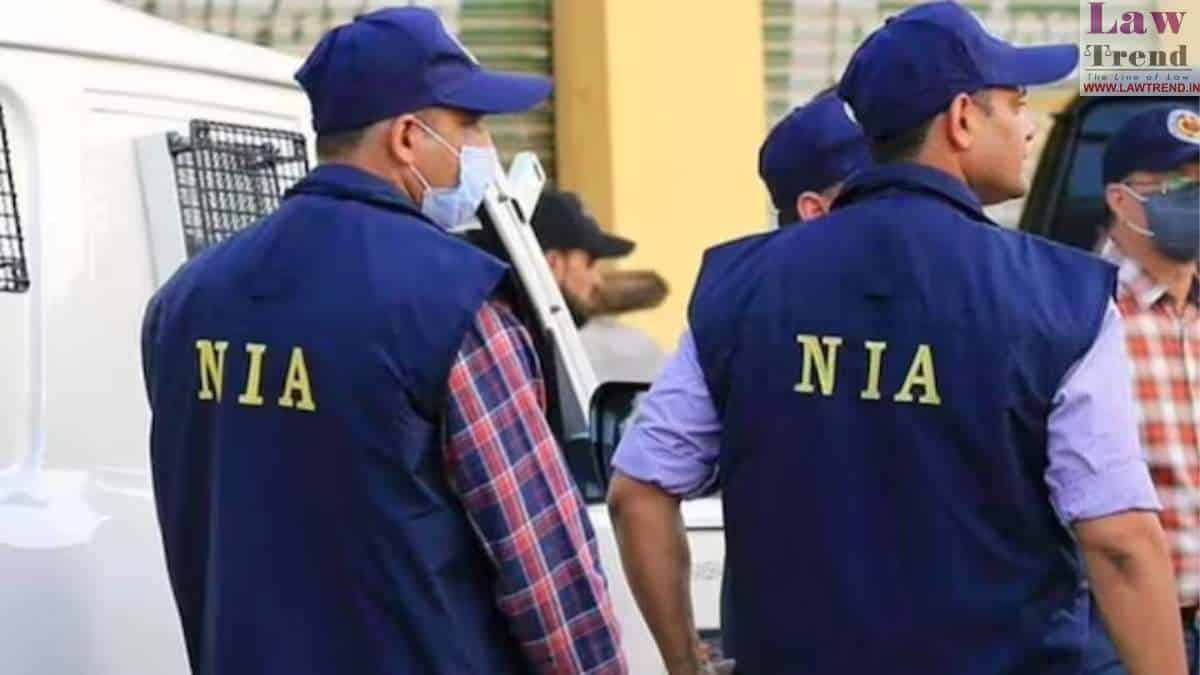
A special NIA court has rejected separatist leader Shabir Ahmad Shah’s bail plea in a case linked to violence, stone-pelting and firing on police personnel during a funeral procession in Srinagar in 1996, citing concerns over protected witnesses, the pending framing of charges and the possibility of activities affecting national security and public order.
Special Judge Prem Sagar, while dismissing the application, held that the plea did not warrant consideration at the present stage. The court said there was a well-founded apprehension that Shah, if released, could continue activities detrimental to national security and public order.
The court also noted that four persons had already been declared protected witnesses and that charges were yet to be framed against the accused.
Court Flags Risk to Protected Witnesses
In its 23-page order, the court acknowledged that the only provision of the Unlawful Activities (Prevention) Act invoked against Shah was Section 13, which falls under Chapter III of the law. It noted that the statutory restriction on bail under Section 43-D(5) applies only to offences punishable under Chapters IV and VI.
However, the judge said cases under the UAPA still required examination of factors such as the nature of allegations, the accused’s role, the presence of protected witnesses, the possibility of intimidation and the risk of reactivation of networks.
The court held that releasing Shah on bail at the present stage could prejudice the fair conduct of the trial and adversely affect the security and confidence of protected witnesses.
It also rejected Shah’s plea for parity with co-accused who had already been granted bail. The court found that those accused had been released after the investigation concerning them had concluded and their custody was no longer required by the investigating officer.
NIA Alleges Active Role in Procession
The NIA opposed Shah’s bail plea, alleging that he was a principal leader of the procession connected with the case. According to the prosecution, he had an active role in allegedly raising provocative slogans and making inflammatory speeches before the violence broke out.
The agency also relied on the existence of protected witnesses and raised concerns over possible intimidation if Shah was released.
Shah, 73, was arrested by the NIA in April in connection with the nearly three-decade-old case. His arrest came shortly after he was released on bail following almost seven years of imprisonment in other NIA cases, including a terror-funding case.
The NIA took over investigation of the 1996 FIR in April on the directions of the Ministry of Home Affairs. It filed a charge sheet before the NIA Special Court in Jammu on July 10.
Shah, along with separatist leaders Shakeel Ahmad Bakshi and Javid Ahmad Mir, has been named as an accused in the charge sheet. Syed Ali Shah Geelani, Abdul Gani Lone and Mohammad Yaqoob Wakeel were also named as accused, but proceedings against them ended following their deaths.
Defence Cites Completion of Investigation
Shah’s counsel argued that the reason for rejection of his earlier bail plea as premature no longer survived because the NIA had since filed its charge sheet and the investigation concerning him had concluded.
The defence submitted that the earlier bail application had not been rejected on merits and that the filing of the charge sheet removed any obstacle to consideration of the fresh plea.
It also questioned the prosecution’s allegations, pointing out that Shah was not accused of carrying or using any weapon or firing a shot. The firing, according to the defence, had been attributed to unidentified armed persons.
The defence further relied on Shah’s prolonged incarceration, his age and the Supreme Court’s March order granting him bail in another NIA case. It argued that continued detention would violate his right to a speedy trial under Article 21 of the Constitution.




