

Mere Personal Convenience Or Employment Not Ground To Transfer Matrimonial Dispute Under Section 24 CPC: Allahabad High Court
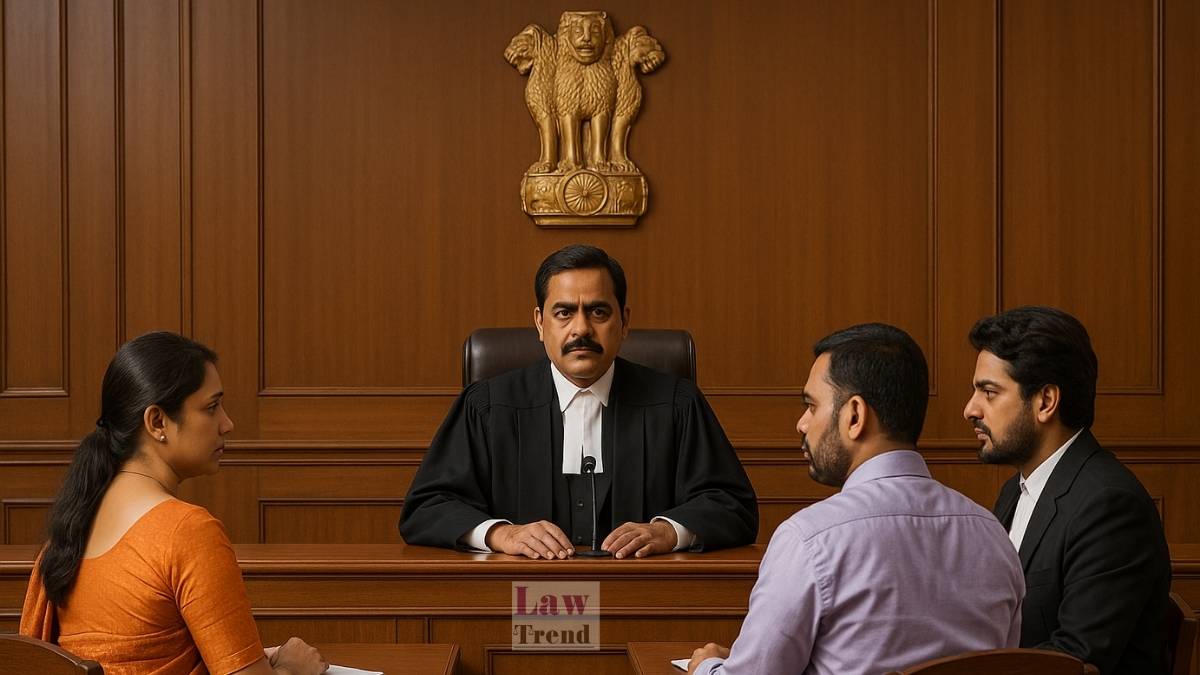

The Allahabad High Court, presided over by Justice Dr. Yogendra Kumar Srivastava, has held that personal inconvenience or employment of a party at a different location does not automatically confer a right to transfer a matrimonial proceeding under Section 24 of the Code of Civil Procedure, 1908 (CPC). The Court dismissed a transfer application filed by a wife seeking the transfer of a divorce proceeding instituted by her husband from the Family Court in Ballia to Varanasi, observing that the threshold for exercising discretionary power under Section 24 CPC requires a demonstration of genuine and substantial hardship rather than mere comparative convenience.

Background of the Case

The applicant, Sadhna Singh, entered into marriage with the opposite party, Mrityunjay Singh, on December 13, 2023, according to Hindu rites and rituals. The applicant alleged that despite substantial dowry provided by her family at the time of solemnisation, additional demands were made by the husband and his family members. She further alleged that her failure to fulfill these demands resulted in harassment and physical assault.

During the subsistence of the matrimonial relationship, the husband instituted Case No. 669 of 2024 (Mrityunjay Singh Vs. Sadhna Singh) under Section 13(A) of the Hindu Marriage Act, 1955, seeking dissolution of the marriage before the Additional Principal Judge, Family Court, Ballia. The applicant stated that she initially lacked knowledge of the proceeding but subsequently entered an appearance and filed her objections on September 4, 2025.

Arguments of the Parties

In her transfer application under Section 24 CPC, the applicant requested the transfer of the divorce proceedings from Ballia to a court of competent jurisdiction at Varanasi. She submitted that pursuant to an offer letter dated March 7, 2024, issued by the Special Programme Management Unit, National Health Mission, Uttar Pradesh, she was appointed as a Contract Staff Nurse and posted at the Community Health Centre, Sarnath, District Varanasi, where she currently resides and performs her professional duties.

The applicant further pointed out that the matrimonial dispute had led to several other proceedings currently pending in Varanasi, including:

  • A proceeding under Section 144 of the Bharatiya Nagarik Suraksha Sanhita, 2023 (Case No. 1672 of 2025) before the Principal Judge, Family Court, Varanasi;
  • A proceeding under Section 12 of the Protection of Women from Domestic Violence Act, 2005 (Case No. 4809 of 2025) before the Civil Judge (Junior Division), Varanasi; and
  • A criminal case registered as Case Crime No. 33 of 2026 at Police Station Sarnath under Sections 85, 115(2), 352, 74, and 351(3) of the Bharatiya Nyaya Sanhita, 2023, along with Sections 3 and 4 of the Dowry Prohibition Act.
READ ALSO  If the Dying Declaration Has Been Recorded in Presence of the Executive Magistrate After the Doctor Holding the Patient to Be Fit for Giving the Statement, Reliance Can Be Placed upon the Same: CG HC

The applicant contended that attending court at Ballia while fulfilling her duties as a contractual nurse and living separately without any family member to accompany or assist her during travel would cause her severe difficulty and hardship.

Court’s Analysis

Analyzing the principles governing Section 24 CPC, the High Court observed that the power to transfer proceedings is discretionary and must be exercised judicially rather than on rigid formulas. The Court emphasized:

The power of transfer conferred under the said provision is discretionary in nature and is required to be exercised judicially, having regard to the facts and circumstances of each case. The provision does not confer an absolute right upon either party to seek transfer of a proceeding merely by establishing personal inconvenience.

The Court further noted that a balanced assessment requires weighing the convenience and legitimate interests of both parties alongside the nature and stage of the proceedings. Addressing the consideration given to wives in matrimonial litigations, the Court stated:

READ ALSO  दूसरे कोर्ट में बहस और अपनी कोर्ट में 'बीमारी की पर्ची'; इलाहाबाद हाईकोर्ट ने वकील पर लगाया 20 हजार का जुर्माना

The convenience of the wife is an important consideration, but it has to be weighed along with the other relevant circumstances and the corresponding inconvenience, if any, to the opposite party.

To guide the exercise of jurisdiction under Section 24 CPC in matrimonial matters, the High Court outlined an illustrative list of factors, including:

  1. Economic condition and earning capacity of the parties;
  2. Social circumstances and standing of the wife, as well as her dependency on family;
  3. Custody, care, education, and welfare of minor children;
  4. Physical well-being and condition of the parties;
  5. Nature and number of pending litigations between the parties;
  6. Place of residence of the wife and its accessibility to the court; and
  7. Availability of convenient modes of transportation.

Applying these parameters, the Court held that routine travel or general inconvenience cannot automatically displace an existing forum:

It is equally well settled that mere inconvenience, or the necessity of travelling from one place to another, cannot by itself constitute a sufficient ground for transfer. Some degree of inconvenience is inherent in litigation and cannot invariably be equated with denial of justice.

The Court observed that while the applicant’s employment at Varanasi was relevant, she had not placed any material on record to show that her job prevented her from attending proceedings at Ballia, that duty adjustments or leave could not be obtained, or that her employment would be adversely impacted. Additionally, no material established an unavoidable conflict of dates between the Varanasi cases and the Ballia suit, nor was there evidence of financial incapacity or a credible threat to her safety while travelling to Ballia.

Decision of the Court

The High Court concluded that the applicant had established, at best, a case of comparative convenience rather than genuine and substantial hardship. Reaffirming the standard required for transfer, the Court held:

READ ALSO  सरकारी कर्मचारी की दूसरी पत्नी सेवानिवृत्ति लाभ की अधिकारी नहीं : हाईकोर्ट

The power under Section 24 CPC is, therefore, not to be exercised merely because one party finds another forum more convenient.

Holding that the threshold under Section 24 CPC was not satisfied, the High Court dismissed the transfer application without any order as to costs.

However, to address any potential procedural difficulties, the Court extended accommodation to the applicant, observing:

The dismissal of the present transfer application shall not preclude the applicant from moving an appropriate application before the learned Family Court, Ballia seeking exemption from personal appearance or such other procedural accommodation as may be permissible in law, particularly having regard to her employment at Varanasi and the pendency of connected proceedings.

The Court directed the Family Court at Ballia to consider any such application on its own merits and clarified that no opinion was expressed on the underlying merits of the matrimonial dispute.

Case Details:

Case Title: Sadhna Singh vs. Mrityunjay Singh
Case No.: Transfer Application (Civil) No. 499 of 2026
Bench: Justice Dr. Yogendra Kumar Srivastava
Date: August 18, 2026

Law Trend
Law Trendhttps://lawtrend.in/
Legal News Website Providing Latest Judgments of Supreme Court and High Court

Related Articles

Latest Articles

