

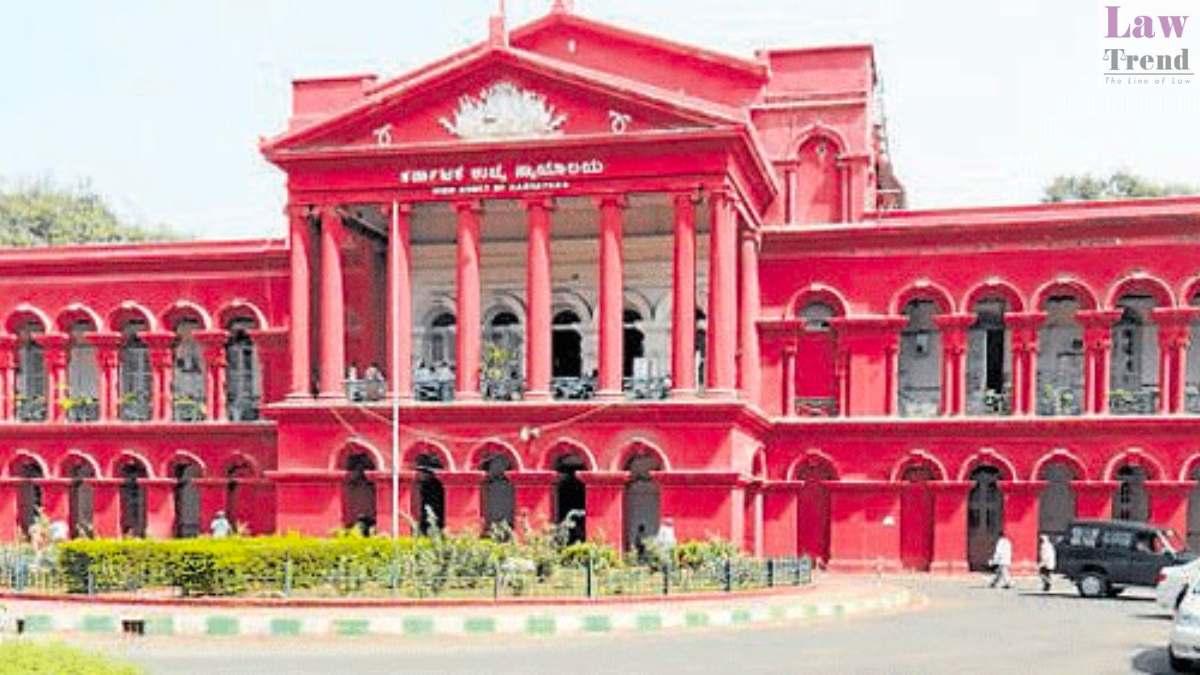
The Karnataka High Court has rejected a petition filed by a former Bengaluru Metropolitan Transport Corporation conductor contesting his termination over nearly four months of unauthorised absence, ruling that employees do not possess an absolute right to take leave.
Upholding an earlier labour court determination, Justice Jyoti M stated that employees are required to attend work during designated operational hours unless they have legitimate grounds for absence. The court affirmed that failing to report for duty without prior approval constitutes workplace misconduct that justifies disciplinary proceedings.
The petitioner had entered service with the public transport corporation as a conductor in 1992. Authorities initiated disciplinary action against him after he failed to report for work between September 1 and December 24, 2014. Because he did not submit a reply to the official chargesheet, the corporation conducted an ex parte departmental inquiry and formally dismissed him on May 6, 2015.
Prior Infractions and Admission of Absence
The conductor initiated an industrial dispute over his termination in 2018. In an award delivered on December 22, 2018, the labour court found that the corporation’s departmental inquiry had not been fair and proper, but it nevertheless dismissed his plea for relief. The conductor subsequently petitioned the High Court against that decision.
During the High Court proceedings, corporation counsel H R Renuka pointed out that the employee had never submitted a formal leave application for the period in question.
Reviewing the record, the High Court observed that the conductor had accumulated 17 previous instances of unauthorised absence during his career, establishing a consistent pattern of non-attendance. The court further noted that the worker had conceded during cross-examination that he had remained absent starting September 1, 2014, and had offered no evidence in response to the disciplinary charges to establish his innocence. Concluding that the employee was not entitled to sympathetic consideration given his track record, the High Court affirmed the labour court’s findings as fair and appropriate.
Delhi High Court Rejects Challenge to Decades-Old DTC Sacking
The verdict aligns with similar decisions across other High Courts addressing unauthorised absenteeism in public utilities and government departments.
In a separate matter, the Delhi High Court dismissed an appeal concerning a former Delhi Transport Corporation driver who was removed from service following nearly seven months of absence in 1988. Following the driver’s death while litigation was underway, his legal representatives pursued the challenge against his dismissal.
A division bench comprising Justice V Kameswar Rao and Justice Manmeet Pritam Singh Arora held in a July 3 order that conducting a departmental inquiry within a single day does not automatically render the process unfair, provided the worker received a sufficient opportunity to put forward a defence and did not request additional time to present evidence or witnesses. The bench noted that unsanctioned absenteeism cannot be overlooked on sympathetic grounds and emphasized that claims involving medical leave require formal evidentiary backing.
Leave Remains at Employer Discretion, Rules Rajasthan High Court
In another ruling on public sector attendance, the Rajasthan High Court dismissed a plea from a government school teacher who faced disciplinary measures after absenting herself from duty in anticipation of receiving child care leave.
Justice Munnuri Laxman stated in an April 29 order that personnel cannot unilaterally stay away from work on the assumption that leave will be sanctioned. The court reiterated that leave is not an enforceable right but an administrative benefit granted at the discretion of the employer, noting that child care leave remains subject to statutory prerequisites and is capped at a maximum duration of two years.


