

Foreign Judgment Passed in Summary Proceedings Without Full Trial Not Enforceable in India: Supreme Court
The Supreme Court of India has held that a foreign summary judgment passed without allowing a defendant to establish their case through a full trial is unenforceable in India under Section 13 of the Code of Civil Procedure (CPC), 1908.

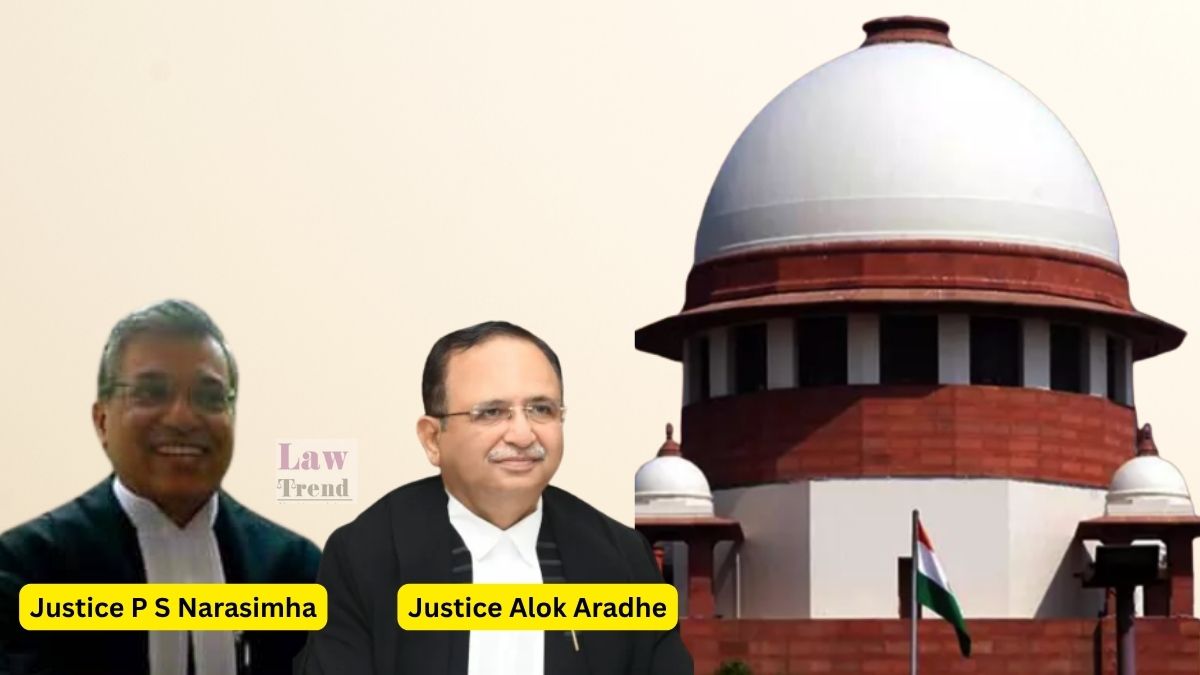
The Bench comprising Justice Pamidighantam Sri Narasimha and Justice Alok Aradhe dismissed an appeal filed by Messer Griesheim GmbH (now Air Liquide Deutschland GmbH), affirming a Delhi High Court Division Bench decision that refused to execute a decree from the High Court of Justice, Queens Bench Division (English Court).

Background of the Dispute

The dispute arose from a 1995 Share Purchase and Co-operation Agreement (SPCA) between the appellant (a German company) and the respondent (an Indian company) for a joint venture. In 1997, the respondent obtained an External Commercial Borrowing (ECB) facility of USD 7 million from Citibank UK, which the appellant guaranteed.

The Reserve Bank of India (RBI) approved the guarantee on September 3, 1997, subject to the condition that: “In case of invocation of guarantee, no liability whatsoever will extend to the Indian Company.”

When the respondent defaulted in 2001, the appellant paid the lender USD 4.78 million and sought reimbursement through subrogation. The respondent refused, claiming the payment was a set-off for losses caused by the appellant’s alleged breaches of the SPCA.

The Foreign Judgment and Execution

In 2003, the appellant obtained a ‘default judgment’ from the English Court. Realizing it might be unenforceable in India, the appellant applied to set it aside and sought a ‘summary judgment.’ Despite the respondent raising three oral agreements as a defense, the English Court dismissed the respondent’s application for leave to defend and passed a summary judgment in 2006.

The appellant then filed an execution petition in India under Section 44A of the CPC. While a Single Judge of the Delhi High Court initially allowed execution, the Division Bench later set it aside, prompting the appeal to the Supreme Court.

READ ALSO  [BREAKING] Supreme Court Collegium Approves 11 Names for Elevation as HC Judge

Arguments of the Parties

On behalf of the Appellant: Senior Advocate Dr. A.M. Singhvi argued that the English judgment was on merits, rendered after considering pleadings. He contended that the summary procedure did not violate natural justice as the respondent had an opportunity to contest. Regarding RBI conditions, he argued they were regulatory and could be complied with at the stage of remittance.

On behalf of the Respondent: Senior Advocate Mr. P. Chidambaram argued that the judgment was unenforceable under Section 13(b) and (d) of the CPC. He emphasized that the English Court ignored triable issues regarding oral settlements and failed to consider the RBI’s express condition that no liability would extend to the Indian company. He asserted that the absence of a trial and cross-examination violated principles of natural justice.

READ ALSO  Allahabad HC Mandates Rehabilitation and Resettlement Awards for Land Acquisitions under National Highways Act

Court’s Analysis

The Supreme Court focused on whether a summary judgment, passed after refusing leave to defend, qualifies as a judgment “on the merits” under Section 13(b) of the CPC.

1. On Natural Justice and Merits: The Court observed that the respondent had disclosed “triable issues” supported by contemporaneous documents, such as Balance Sheets signed by the appellant’s nominee director, which recorded that no liability remained due.

The Court stated:

“The adjudication by way of summary judgment in the presence of bona fide triable issues renders the judgment one not delivered on merits within the meaning of Section 13(b). … the foreign judgment, falls foul of the requirement of Section 13(b) CPC.”

The Bench further noted that shifting from a default judgment to a summary jurisdiction and proceeding to decree the suit after dismissing the application for leave to defend denied a fair trial.

2. On Section 47 of FERA and RBI Permissions: While the Court found the judgment unenforceable on procedural grounds, it clarified the law regarding RBI permissions under the now-repealed Foreign Exchange Regulation Act (FERA). It held that Section 47(3) of FERA distinguishes between initiating legal proceedings and enforcing a judgment.

The Court held:

“While there is no prohibition for initiating legal proceedings, but before taking necessary steps for enforcement of the decree, permission of the Central Government/RBI is necessary. … without RBI approval, it is not possible to take steps for enforcement of a decree.”

The Court rejected the respondent’s argument that the RBI’s 1997 condition created an “absolute and total bar” to enforcement, stating that the regulatory authority could still grant approval at the execution stage.

Conclusion

The Court concluded that the foreign judgment suffered from fundamental infirmities under clauses (b), (c), (d), and (f) of Section 13 of the CPC. Specifically, it held that the enforcement of liability contrary to binding statutory conditions (RBI’s letter) brought the decree within the prohibition of Section 13(f).

READ ALSO  Justice Chandrachud Offers Seat to Senior Lawyer, Breaking Supreme Court Tradition

“For the reasons stated above… we are of opinion that the judgment of English Court is not enforceable in terms of Section 44A of CPC since it falls foul of exceptions enumerated in Section 13 of CPC.”

The Civil Appeal was dismissed with no order as to costs.

Case Details

Case Title: Messer Griesheim GMBH (Now called Air Liquide Deutschland GMBH) v. Goyal MG Gases Private Limited

Case No.: Civil Appeal No. ___ of 2026 (Arising out of SLP (C) No. 4774 of 2023)

Bench: Justice Pamidighantam Sri Narasimha and Justice Alok Aradhe

Date: April 21, 2026

Law Trend
Law Trendhttps://lawtrend.in/
Legal News Website Providing Latest Judgments of Supreme Court and High Court

Related Articles

Latest Articles
