

Constitution Does Not Mandate Rotation of SC/ST Reserved Assembly Seats; Allahabad HC Upholds Section 9(1)(c) of Delimitation Act
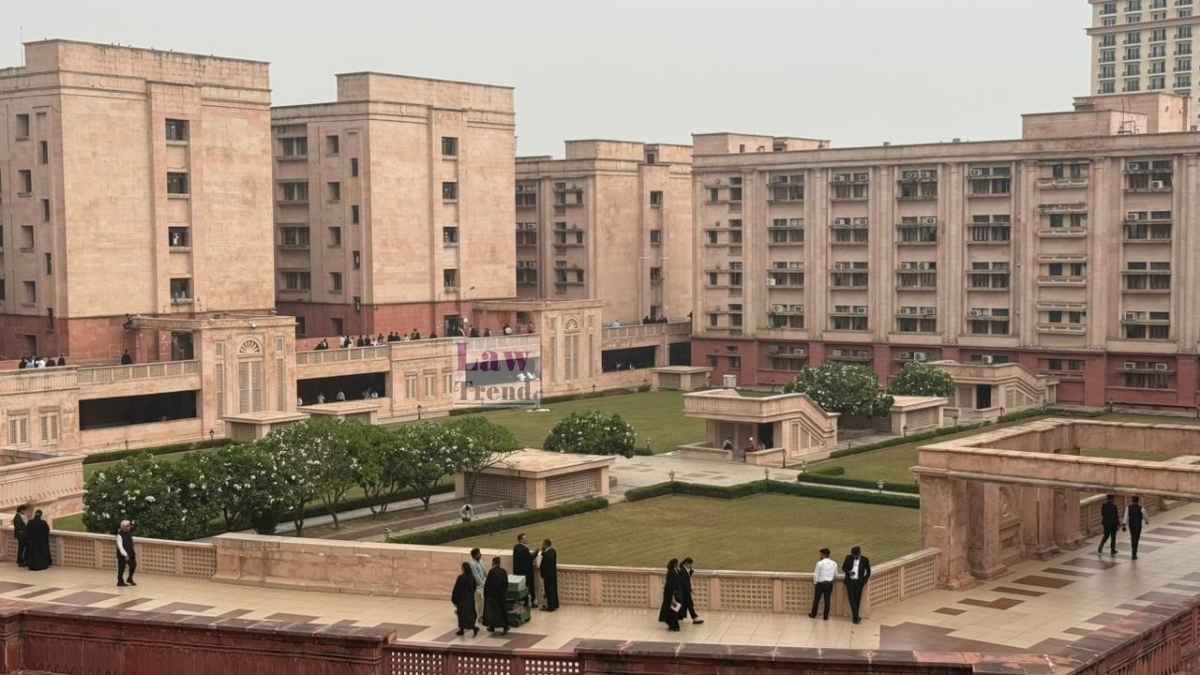

The Lucknow Bench of the Allahabad High Court, comprising Justice Alok Mathur and Justice Amitabh Kumar Rai, has dismissed a writ petition challenging the constitutional validity of Section 9(1)(c) of the Delimitation Act, 2002. The petitioner had contested the continuous reservation of the Kadipur Assembly Constituency for Scheduled Castes (SC) for nearly six decades, seeking instead a rotational reservation system similar to local body elections. Refusing to interfere, the High Court held that the statutory provision directing the reservation of seats where the SC/ST population is comparatively large is constitutionally valid. The court further ruled that the judiciary cannot direct the legislature to enact a law providing for a rotational roster system.

Background of the Case

The petitioner, Jagdish Singh, a resident of Village Gajendrapur in Tehsil Kadipur, District Sultanpur, is an elector of the 191 Kadipur Assembly Constituency. Singh, a politically active social worker, filed the petition because the Kadipur constituency has remained reserved for the Scheduled Caste category for almost sixty years. He contended that this persistent reservation prevents him from voting for a general category candidate of his choice due to the embargo under Section 5(a) of the Representation of the People Act, 1951. The petitioner argued that this forces electors in the constituency to cast a caste-bonded vote for generations, which violates the fundamental right to equality under Articles 14 and 15 of the Constitution of India. Consequently, he sought to quash the notification dated December 18, 2006, which reserved the Kadipur constituency, and challenged Section 9(1)(c) of the Delimitation Act, 2002.

Arguments of the Parties

Appearing for the petitioner, advocate Ajay Pratap Singh argued that while Article 332 of the Constitution mandates reservation of seats for SCs and STs in State Legislative Assemblies, it does not state that constituencies with comparatively larger SC/ST populations must always remain reserved. He submitted that under Section 7 of the Representation of the People Act, 1950, Uttar Pradesh has 85 of its 403 seats reserved for Scheduled Castes based on the 2001 census. He argued that the lack of a rotational principle—which is followed in Panchayat and Municipal elections under Parts IX and IX-A of the Constitution—leads to stagnation. He asserted that Section 9(1)(c) of the Delimitation Act, 2002, which directs the reservation of seats in areas where the SC/ST population is comparatively large, is unconstitutional, discriminatory, and infringes on the right to a free vote under Article 19. The petitioner also referenced the Constituent Assembly debates, noting that a proposal (Amendment No. 22) to restrict reserved seats to areas where SCs/STs were most numerous was originally rejected, and pointed to recommendations of the National Commission for Review of the Working of the Constitution for rotating reserved seats.

On behalf of the respondents, Senior Advocate O.P. Srivastava representing the Election Commission of India raised preliminary objections regarding the maintainability of the petition. He cited Article 329(a) of the Constitution, which prohibits challenges to the validity of delimitation laws or seat allotments. Relying on the Supreme Court’s decision in Meghraj Kothari v. Delimitation Commission, he argued that delimitation orders published in the Gazette of India have the force of law and cannot be questioned. He further submitted that the rotational principle is a policy matter and the Constitution itself does not provide for rotation in the allotment of seats for Legislative Assemblies.

The Court’s Analysis

The High Court first rejected the preliminary objection regarding maintainability. The bench, in the judgment delivered by Justice Amitabh Kumar Rai, held that the petition was maintainable since it challenged the constitutional validity of Section 9(1)(c) of the Delimitation Act, 2002. The court relied on the Supreme Court’s three-judge bench decision in Kishorchandra Chhanganlal Rathod v. Union of India (2024), which held that Article 329 does not completely debar judicial review under Article 226 when a case of manifest arbitrariness or arbitrary exercise of power is made out, or when constitutional interpretation is required to facilitate elections.

READ ALSO  FIR Errors Like Missing Date and Time Cannot Be Fixed During Investigation Stage: Allahabad High Court 

Addressing the merits, the court examined Articles 330 and 332 of the Constitution. The bench observed that while these articles mandate the reservation of seats in proportion to population, they do not provide any methodology for identifying which seats are to be reserved. Unlike Articles 243D and 243T, which expressly mandate a rotational basis for local bodies, the Constitution does not prescribe a rotational system for parliamentary or assembly elections. The legislature, acting under its exclusive domain under Article 327 and Entry 72 of List I of the Seventh Schedule, filled this gap by enacting the Delimitation Act, 2002, specifying that reserved seats be located where the target population is comparatively large.

Regarding the petitioner’s claim that his right to vote was violated, the court remarked: “The right to vote does not imply that a voter can dictate the terms of allotment of a constituency or insist that a constituency be allotted to candidates of a particular category.” The court referenced the Supreme Court judgment in Rajbala v. State of Haryana (2016), which held that the constitutional rights to elect and be elected must be harmonized with the constitutional mandate of reservation under Articles 330 and 332.

On the challenge of arbitrariness under Article 14, the court noted that a statute cannot be struck down merely because it is perceived as arbitrary. Citing Rajbala and K.S. Puttaswamy v. Union of India (2019), the bench reiterated that an Act of Parliament can only be declared unconstitutional on two grounds: lack of legislative competence or violation of fundamental rights or other constitutional provisions. On Section 9(1)(c), the court observed: “We do not find that providing reservation under Section 9(1)(c) of the Act, 2002 for Scheduled Castes and Scheduled Tribes in those areas where comparatively the population of Scheduled Castes and Scheduled Tribes is large suffers from manifest arbitrariness or can be said to be unreasonable

The Court further emphasized the principle of separation of powers, citing Union of India v. Deoki Nandan Aggarwal (1992), where the Supreme Court held: “The court cannot rewrite, recast or reframe the legislation for the very good reason that it has no power to legislate. The power to legislate has not been conferred on the courts.” Other decisions such as Vemareddy Kumaraswamy Reddy v. State of A.P., Suresh Seth v. Indore Municipal Corporation, Supreme Court Employees’ Welfare Association v. Union of India, Manoj Sharma v. State, and State of U.P. v. Mahindra and Mahindra Ltd. were also cited to establish that the judiciary must not encroach upon the legislative domain.

READ ALSO  Supreme Court Directs States to Evolve Policy for Police Media Briefing; Accepts Amicus Curiae’s Manual

The Decision

The High Court concluded that introducing a rotational system for parliamentary and assembly seats is purely a legislative function. It observed: “it is not within the domain of this court to issue directions for legislating the Act, 2002 in a manner so as to provide for rotation of reserved seats for Assembly/Parliamentary constituencies as provided under Article 243(D) and 243(T) for Panchayats and Municipalities etc. and it is the Parliament which has to take call on the subjects.” The bench remarked that while rotation of seats might enable SC/ST candidates to be elected from areas where their population is low, thereby reflecting the goals of social and political justice, it is entirely up to Parliament to ponder and legislate on this issue. Finding no constitutional infirmity in the impugned provision, the High Court dismissed the writ petition. No order was made as to costs.

Case Title: Jagdish Singh Versus Election Commission of India Through Chief Election Commissioner
Case No.: WRIT-C No. 6153 of 2011
Bench: Justice Alok Mathur and Justice Amitabh Kumar Rai
Date: June 22, 2026

READ ALSO  Applicability of Section 24 of the Land Acquisition Act depends upon the date on which the award is made and not on the date on which possession was taken over by the authorities: Allahabad HC
Ad 20- WhatsApp Banner

Law Trend
Law Trendhttps://lawtrend.in/
Legal News Website Providing Latest Judgments of Supreme Court and High Court

Related Articles

Latest Articles

