

Complainant in Cheque Bounce Case Is a ‘Victim’ Entitled to Appeal Against Acquittal Before Sessions Court: Gujarat High Court
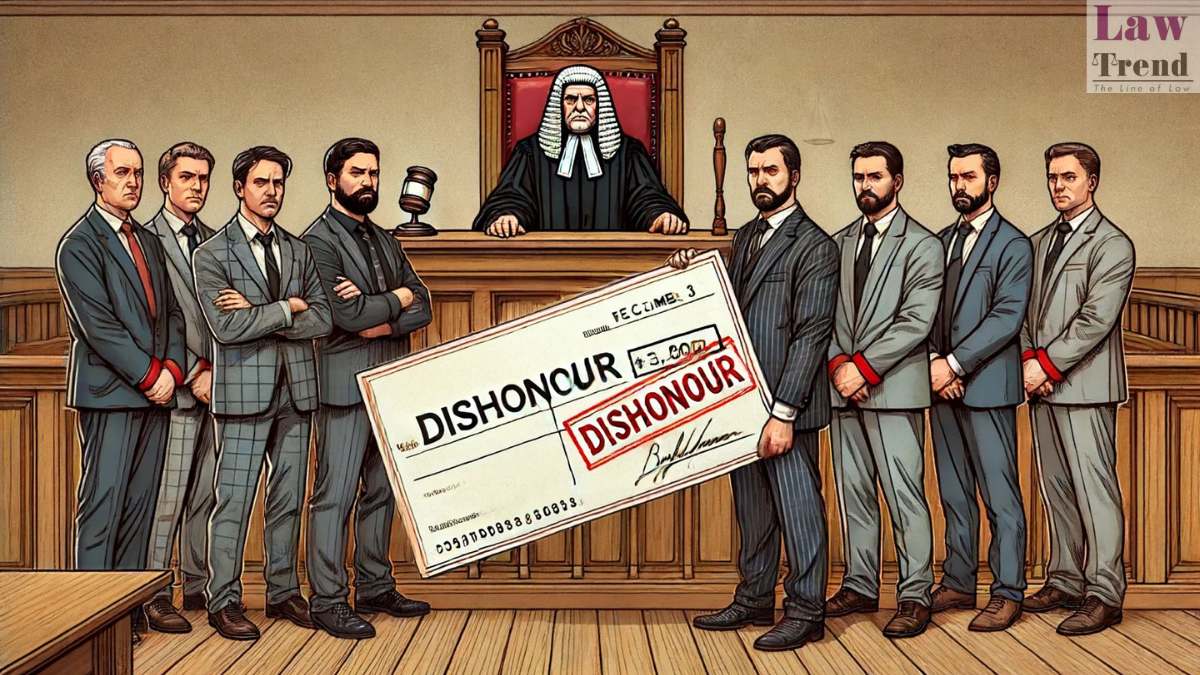

In a significant procedural ruling, the Gujarat High Court has clarified that a complainant in a cheque bounce case under Section 138 of the Negotiable Instruments Act, 1881, is to be treated as a “victim” who holds an absolute right to appeal an acquittal before the Sessions Court. Delivering the judgment on June 19, 2026, Justice Hemant M. Prachchhak ordered the transfer of a pending acquittal appeal from the High Court’s registry directly to the trial court’s immediate superior Sessions Court for an expeditious hearing.

The case originated from a judgment and order dated March 16, 2018, passed by the learned 2nd Additional Chief Judicial Magistrate, Surat. The trial court had acquitted the respondents in a criminal complaint filed under Section 138 of the Negotiable Instruments Act, 1881, by the appellant, Ashokbhai Ramjibhai Maniya, acting as the proprietor and authorized person of Zeel Constructions. Seeking to challenge the acquittal, the appellant initially filed Criminal Appeal No. 2027 of 2018 before the High Court of Gujarat under Section 378 of the Code of Criminal Procedure, 1973 (CrPC) and Section 419 of the Bharatiya Nagrik Suraksha Sanhita, 2023 (BNSS).

During the hearing, the Court evaluated the proper appellate forum for such matters. Mr. Y. V. Vaghela appeared representing the appellant, while Ms. Jyoti Bhatt, Additional Public Prosecutor, represented the State of Gujarat. Ms. Bhatt brought to the Court’s attention that the legal issue concerning the victim’s status in cheque bounce cases is currently pending before a larger Bench of the Supreme Court in Special Leave to Appeal (Crl.) No. 12350/2024. The apex court had noted that an authoritative pronouncement on this matter is desirable due to its far-reaching consequences. Consequently, Ms. Bhatt submitted that the present case must be decided subject to the final outcome of that pending reference.

In determining the jurisdictional pathway, Justice Hemant M. Prachchhak relied on the Supreme Court’s ruling in Celestium Financial Vs. A. Gnanasekaran Etc. (2025) and the High Court’s own decisions in Shivsinh Ganpatsinh Solanki Vs. State of Gujarat (2019) and Thakar Hariprasad Dalsukhram Vs. State of Gujarat and another (2026).

The High Court observed that a complainant under Section 138 of the Act is legally synonymous with a victim. Quoting the Supreme Court’s findings in Celestium Financial, the Court noted:

READ ALSO  What is the Degree of Satisfaction Required for Invoking the Power U/s 319 CrPC? Allahabad HC Summaries Law

“In the case of an offence alleged against an accused under Section 138 of the Act, we are of the view that the complainant is indeed the victim owing to the alleged dishonour of a cheque. In the circumstances, the complainant can proceed as per the proviso to Section 372 of the CrPC and he may exercise such an option and he need not then elect to proceed under Section 378 of the CrPC.”

The Court further highlighted the Supreme Court’s determination that the right of a victim under Section 138 must be placed on equal footing with the rights of victims under other penal provisions:

READ ALSO  2019 Amendment to Section 29A of the A&C Act is procedural and would apply to all Pending arbitrations: Delhi HC

“Symmetrical to a victim of an offence, a victim of a deemed offence under Section 138 of the Act also has the right to prefer an appeal against any order passed by the court acquitting the accused or convicting for a lesser offence or imposing an inadequate compensation.”

Addressing the nature of private complaints under the Act, the Supreme Court’s excerpted analysis clarified:

“Merely because the proceeding under Section 138 of the Act commences with the filing of a complaint under Section 200 of the CrPC by a complainant, he does not cease to be a victim inasmuch as it is only a victim of a dishonour of cheque who can file a complaint. Thus, under Section 138 of the Act both the complainant as well as the victim are one and the same person.”

Furthermore, the judgment noted that requiring a complainant to seek leave to appeal under Section 378 of the CrPC would run contrary to legislative intent. The Supreme Court observed:

“…the insistence on seeking special leave to appeal from the High Court under Section 378(4) of the CrPC would be contrary to what has been intended by the Parliament by insertion of the proviso to Section 372 of the CrPC.”

It conclusively held that:

“Therefore, the complainant, who is the victim of a dishonour of cheque must be construed to be victim in terms of the proviso to Section 372 read with the definition of victim under Section 2(wa) of the CrPC.”

Based on these legal principles, the High Court disposed of the appeal and directed its Registry to transfer the entire case record, including the certified copies of the impugned order and related proceedings, to the concerned Sessions Court immediately. The High Court specified that the Sessions Court must treat the transferred case as an appeal under the proviso to Section 372 of the CrPC or Section 413 of the BNSS, register it accordingly, and issue notice to the parties.

READ ALSO  Gujarat HC Slams Commission for Insisting Woman Travel 300 km for Job Interview Two Days After Delivery

Noting that the appeal had been pending for a considerable length of time, the High Court directed the lower Appellate Court to make every endeavor to dispose of the matter as expeditiously as possible. The Court clarified that it has not entered into the merits of the case at this stage, and that the transfer remains subject to the final outcome of the reference pending before the larger Bench of the Supreme Court.

Case Details:

Case Title: Ashokbhai Ramjibhai Maniya Proprietor/Authorized Person of Zeel Constructions Versus State of Gujarat & Ors.
Case No.: R/Criminal Appeal (Against Acquittal) No. 2027 of 2018
Bench: Justice Hemant M. Prachchhak
Date: 19/06/2026

Law Trend
Law Trendhttps://lawtrend.in/
Legal News Website Providing Latest Judgments of Supreme Court and High Court

Related Articles

Latest Articles

