

Complete and Accurate Maintenance of Form F Records Is Mandatory Under PCPNDT Act, Not a Mere Technical Requirement: Supreme Court
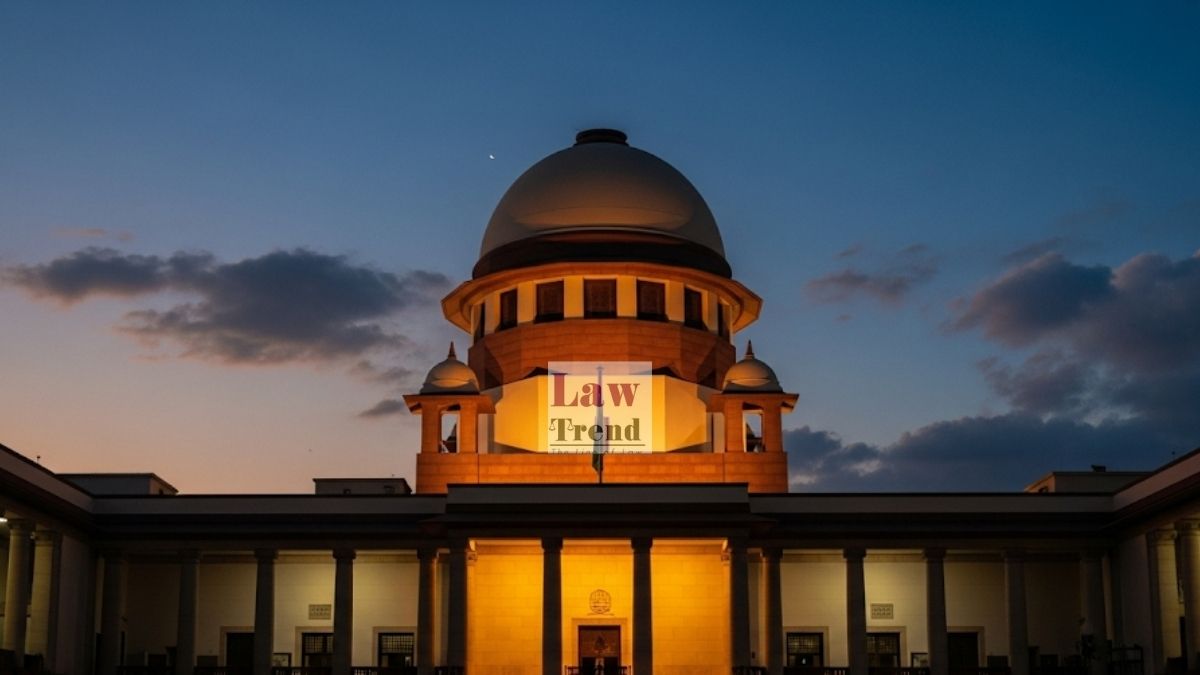

The Supreme Court of India has ruled that the complete and accurate maintenance of Form ‘F’ under the Pre-Conception and Pre-Natal Diagnostic Techniques (Prohibition of Sex Selection) Act, 1994 (PCPNDT Act) is statutory and mandatory, making any deficiency or inaccuracy an offence rather than a minor clerical error. A division bench of the Court, comprising Justice Sanjay Karol and Justice Prashant Kumar Mishra, dismissed an appeal filed by a medical practitioner challenging his criminal prosecution for discrepancies in maintaining these records during patient ultrasonography. The Court emphasized that strict enforcement of record-keeping regulations is crucial to preventing the “springboard” for female foeticide and ensuring the survival of the girl child.

Background of the Case

The case originated from a search and seizure operation conducted by authorities at a sonography center run by the appellant, Dr. Ramesh. Following the inspection, the authorities issued a notice under Section 20(1) of the PCPNDT Act, calling upon the appellant for an explanation. Dr. Ramesh subsequently appeared before the statutory Advisory Committee, which concluded that prima facie material existed indicating violations under the Act.

On March 23, 2016, the authorities ordered the suspension of the sonography center and the seizure of the ultrasound machine. Criminal proceedings were initiated before the Judicial Magistrate First Class, Ardhapur, which on June 9, 2016, took cognizance of the case. The magistrate directed the issuance of process under Section 204 of the Code of Criminal Procedure for offences punishable under Section 23 of the PCPNDT Act, arising from the alleged violations of Sections 4(3), 5, 6, and 29 of the Act, alongside Rules 9, 8(5), and 18(9).

Dr. Ramesh challenged this process through a criminal revision petition in the Sessions Court, which was dismissed on August 21, 2017. He subsequently approached the High Court of Judicature at Bombay, Aurangabad Bench, which also rejected his petition, leading to the present appeal before the Supreme Court.

Arguments of the Parties

The appellant raised a two-fold challenge against his prosecution. First, he argued that the District Civil Surgeon was not the “Appropriate Authority” designated under the Act, and therefore, the Magistrate had no legal basis to take cognizance of the complaint. Second, the appellant contended that any omissions, blanks, or errors in the statutory Form ‘F’ were minor, technical, and inadvertent lapses made without criminal intent. He further maintained that updating and keeping records was the administrative responsibility of the hospital staff, not the operating doctor.

READ ALSO  ‘Scripted Enquiries Lead to Innocent Being Crucified’: Supreme Court Acquits 16 in 2008 Assam Murder Case

Conversely, the prosecution relied on a state notification dated May 15, 2015, which explicitly designated the District Civil Surgeon as the “Appropriate Authority” under the PCPNDT Act for the district. The State argued that the maintenance of records is a key statutory objective designed to curb sex selection, and therefore, inaccuracies in Form ‘F’ cannot be minimized as mere technical or clerical oversights.

The Court’s Analysis

Delivering the judgment, Justice Sanjay Karol observed that the keeping of records is essential to the Act and its avowed purpose of enabling women to feel the beautiful joy of motherhood without discrimination. The Court referred to the poetic work ‘Balika ka parichay’ by Subhadra Kumari Chauhan and ancient scriptures to highlight the societal value of daughters and women.

The Court rejected the appellant’s defense that discrepancies in Form ‘F’ were trivial. Drawing upon the precedent in Voluntary Health Assn. of Punjab v. Union of India (2013), the bench highlighted the gravity of sex selection practices:

“Female foeticide has its roots in the social thinking which is fundamentally based on certain erroneous notions, egocentric traditions, perverted perception of societal norms and obsession with ideas which are totally individualistic sans the collective good. All involved in female foeticide deliberately forget to realise that when the foetus of a girl child is destroyed, a woman of the future is crucified.”

The Court closely analyzed Section 4(3) of the Act, which mandates that anyone conducting ultrasonography on a pregnant woman must maintain complete records, noting that any deficiency is legally presumed to be a contravention of Sections 5 or 6 unless the contrary is proven by the practitioner.

To address the mandatory nature of Form ‘F’, the bench cited the landmark decision in Federation of Obstetrics & Gynaecological Societies of India v. Union of India (2019), which settled the legal position:

“Non-maintenance of record is springboard for commission of offence of foeticide, not just a clerical error.”

The Supreme Court reiterated the primary holding of the 2019 precedent, noting that:

READ ALSO  Government Cannot Disbelieve Apostille Documents Issued by Countries Signatory to the Apostille Convention: Allahabad HC

“dilution of the provisions of the Act or the Rules would only defeat the purpose of the Act to prevent female foeticide, and relegate the right to life of the girl child under Article 21 of the Constitution, to a mere formality.”

The Court emphasized that the “Complete contents of Form F are held to be mandatory.” It also observed that this stance had been consistently echoed by various High Courts, including the Gujarat High Court in Suo Motu v. State of Gujarat (2008) and the Bombay High Court in Sai v. State of Maharashtra (2016).

READ ALSO  सुप्रीम कोर्ट ने पटना हाईकोर्ट का अग्रिम जमानत आदेश रद्द किया, कहा– व्यक्तिगत स्वतंत्रता के साथ पीड़ितों की पीड़ा पर भी हो ध्यान

Furthermore, the Court reviewed demographic data, including reports from the National Family Health Survey (NFHS-5) and the Civil Registration System (2023), observing that while some improvement has been made in the child sex ratio, several states continue to record figures below expected biological averages due to deep-seated patriarchal preferences. Highlighting various central and state-level welfare programs designed to protect and support daughters—such as Beti Bachao Beti Padhao, Janani Suraksha Yojana, and the Chief Minister Kanya Utthan Yojana—the Court observed:

“the progress made is incomplete and uneven. Consequently, the integrity and strict enforcement of welfare-oriented legislation such as the PCPNDT Act remain essential along with efforts continued and earnest…”

Decision of the Court

The Supreme Court dismissed the appeal, finding it entirely bereft of merit. The Court affirmed that the District Civil Surgeon was legally authorized as the Appropriate Authority under the May 15, 2015 notification. It concluded that the integrity of record maintenance under the PCPNDT Act must be strictly preserved, and the exact nature and extent of the lapses in Form ‘F’ must be decided through the process of a trial.

Case Details:

Case Title: Dr. Ramesh v. State of Maharashtra & Anr.
Case No.: Criminal Appeal No. of 2026 (Arising out of Special Leave Petition (Criminal) No. 9574 of 2018)
Bench: Justice Sanjay Karol and Justice Prashant Kumar Mishra
Date: June 11, 2026

Law Trend
Law Trendhttps://lawtrend.in/
Legal News Website Providing Latest Judgments of Supreme Court and High Court

Related Articles

Latest Articles

