

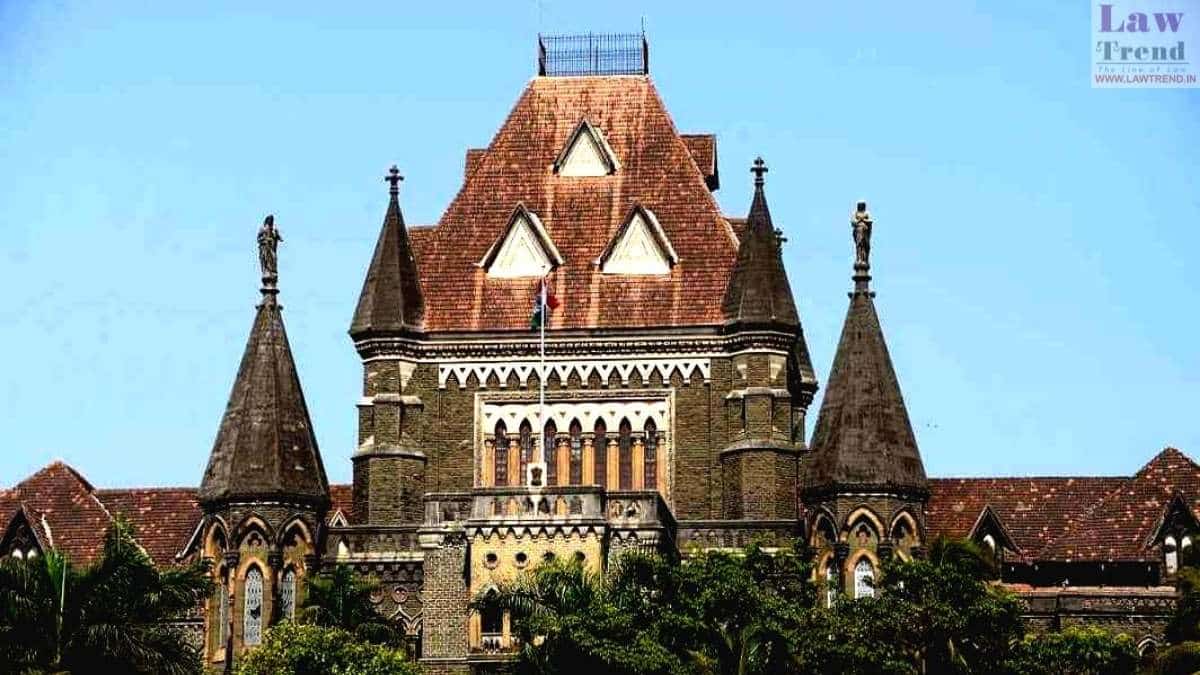
The Bombay High Court has dismissed a petition seeking a reduction in the minimum qualifying marks for the National Eligibility cum Entrance Test-Under Graduate (NEET-UG) re-examination, ruling that the determination of eligibility criteria falls squarely within administrative discretion rather than judicial review.
A division bench comprising Justice Anil S. Kilor and Justice Rajnish R. Vyas ruled that courts cannot interfere with or evaluate the merits of discretionary powers conferred by the legislature on statutory authorities. In an order dated September 21, the bench held that maintaining a writ petition requires the petitioner to demonstrate an existing legal right and a corresponding legal duty that the authority failed or neglected to discharge, neither of which was established in this case.
Uniform Standards For Medical Education
The petitioners had argued that failing to meet the qualifying threshold barred them from pursuing undergraduate medical education both in India and abroad. Addressing this concern, the court stated that the requirement under Regulation 9—which mandates identical minimum qualifying scores regardless of where a student enrolls—is designed to ensure uniform standards in medical training.
The bench observed that when candidates who complete their medical degrees abroad return to India to practice, the quality of healthcare must remain consistent, emphasizing that there cannot be differing standards for medical practitioners. The regulatory framework requiring overseas medical aspirants to clear NEET-UG was introduced in 2018 to ensure that foreign-trained graduates satisfy domestic healthcare benchmarks.
Petitioners Cite Spike In Re-Exam Absenteeism
The re-examination was scheduled after the initial NEET-UG 2026 was cancelled following allegations of a question paper leak. The students, represented by Senior Advocate Devadatt Kamat and Advocate M. D. Raut, sought a recalculation of the minimum eligible score based on the candidate turnout from the original examination.
Counsel for the petitioners submitted that absenteeism rose sharply from 3.27 percent during the initial examination to 12.27 percent during the June 21 re-test. The qualifying threshold was set at 213 marks for unreserved seats and 117 marks for reserved categories.
The students argued that they were not responsible for the cancellation or the subsequent absenteeism, contending that the authorities’ August 20 decision rejecting their request for mark relaxation was arbitrary and disproportionate. They further submitted that the refusal infringed upon their right to pursue higher education as part of the right to life and personal liberty guaranteed under Article 21 of the Constitution.
Limits Of Judicial Review In Discretionary Powers
Appearing for the authorities, Deputy Solicitor General of India K. N. Shukul and Advocate Gaurav Khatwani contended that the petition was not maintainable. They argued that the authority had exercised its discretion judiciously and pointed out that relaxing qualifying marks is permissible only when an inadequate number of candidates within a specific category manage to secure the baseline score.
Affirming the government’s position, the high court affirmed that discretionary powers granted by law must remain with the relevant authority. Finding no legal right in favor of the petitioners or any dereliction of statutory duty by the respondents, the bench dismissed the petition.




