

Staring at Woman’s Chest at Workplace Not Voyeurism Under Section 354-C IPC: Bombay High Court
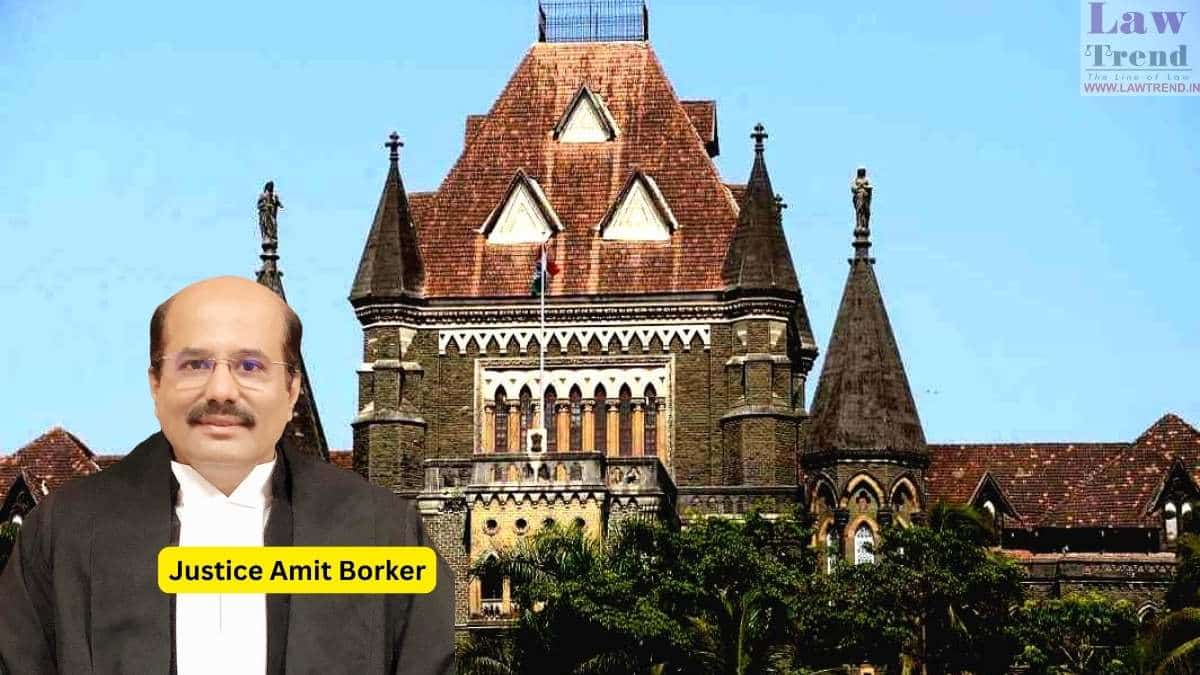
The Bombay High Court has quashed a First Information Report (FIR) registered against a man for the offence of voyeurism under Section 354-C of the Indian Penal Code (IPC). The Court held that the specific legal ingredients of the section—watching or capturing images of a woman engaged in a “private act”—were not met by allegations of unwanted staring in an office environment.

Background

The applicant sought the quashing of FIR No. 177 of 2015, registered at Borivali Police Station, Mumbai. The complainant, a colleague of the applicant, alleged that during the course of their employment, the applicant insulted her, avoided eye contact, and instead “allegedly stared at her chest and made inappropriate comments.”

Specific incidents were cited, including a meeting on 14 November 2014, where the complainant observed the applicant staring at her chest. Following her complaints to the department head and Human Resources, and a subsequent meeting on 21 November 2014, the complainant alleged the applicant publicly insulted her and found faults with her work. The applicant further noted that an Internal Complaints Committee (ICC) constituted by the employer, Max Life Insurance Co. Limited, had previously conducted an inquiry and exonerated him of the allegations.

Arguments of the Parties

Applicant’s Submissions: Counsel for the applicant argued that a plain reading of the FIR did not disclose a prima facie offence under Section 354-C. It was contended that the allegations, even if taken at face value, did not satisfy the essential ingredients of voyeurism. The applicant also relied on the ICC report, which was conducted in accordance with the Vishaka guidelines and the Sexual Harassment of Women at Workplace (Prevention, Prohibition and Redressal) Act, 2013, which had cleared him.

Prosecution’s Submissions: The Additional Public Prosecutor and the advocate for the complainant opposed the application. They argued that witness statements in the charge-sheet indicated the applicant “deliberately insulted the complainant, stared at her chest in a manner intended to outrage her modesty, and made objectionable remarks.” They maintained that such conduct constituted an offence affecting the modesty of a woman and attracted Section 354-C.

READ ALSO  Centre Notifies Appointment of 4 Additional Judges of Bombay HC as Permanent Judges

Court’s Analysis: The Definition of Section 354-C IPC

In adjudicating the issue, Justice Amit Borkar reproduced the statutory language of Section 354-C of the Indian Penal Code in Paragraph 7 of the judgment. The provision defines the offence as:

“Any man who watches, or captures the image of a woman engaging in a private act in circumstances where she would usually have the expectation of not being observed either by the perpetrator or by any other person at the behest of the perpetrator or disseminates such image shall be punished…”

The Court highlighted the legislative “Explanation” provided within the same paragraph, which strictly defines the scope of a “private act”:

“For the purpose of this section, ‘private act’ includes an act of watching carried out in a place which, in the circumstances, would reasonably be expected to provide privacy and where the victim’s genitals, posterior or breasts are exposed or covered only in underwear; or the victim is using a lavatory; or the victim is doing a sexual act that is not of a kind ordinarily done in public.”

Key Observations on the Statute: The Court observed that Section 354-C is not a general provision for every form of offensive gaze. It requires specific factual elements to be present: the act of watching or capturing images must occur while the victim is engaged in a “private act” as defined by the statute.

Applying this to the facts, the Court found the prosecution’s case lacked the necessary foundation.

READ ALSO  बॉम्बे हाई कोर्ट ने युवक को यातायात उल्लंघन के आरोपों से मुक्त किया; सामुदायिक सेवा का काम सौंपा

“The allegation is only that he stared at her chest during office meetings. Unwanted staring, even if accepted as true, is not the same thing as voyeurism within the meaning of Section 354-C. The statute cannot be stretched beyond its plain words.”

The Court further clarified that while the conduct might be offensive, Section 354-C has a “much narrower description.”

“Mere offensive conduct in an office environment, even if morally wrong, cannot be brought inside this provision unless the statutory conditions are shown.”

Regarding the workplace context, the Court remarked:

READ ALSO  Motor Accident Claim: Delay in Recording Eyewitness Statement is No Reason to Doubt his Version, Rules Chhattisgarh HC

“Criminal law is not meant to be used to convert every workplace grievance into an offence of voyeurism… The workplace atmosphere may indeed have become unpleasant. Yet criminal prosecution under Section 354-C cannot survive only on the basis of such allegations, unless there is watching or recording of a woman during a private act or dissemination of such image.”

Decision

The Court concluded that the continuation of the criminal proceedings would amount to an abuse of the process of law. It held that the FIR could not be sustained on “suspicion, general allegation, or moral disapproval” in the absence of clear statutory ingredients as laid out in the IPC.

The Court allowed the application, quashing FIR No. 177 of 2015 and all subsequent proceedings, including the charge-sheet.

Case Details

Case Title: Abhijit Baswant Nigudkar vs The State of Maharashtra & Ors.

Case No.: Criminal Application No. 774 of 2015

Bench: Justice Amit Borkar 

Date: April 8, 2026

Law Trend
Law Trendhttps://lawtrend.in/
Legal News Website Providing Latest Judgments of Supreme Court and High Court

Related Articles

Latest Articles


