

15% Electricity Concession Under HP Industrial Policy Only For New Enterprises; Supreme Court Rejects Double Benefits for Expanding Units
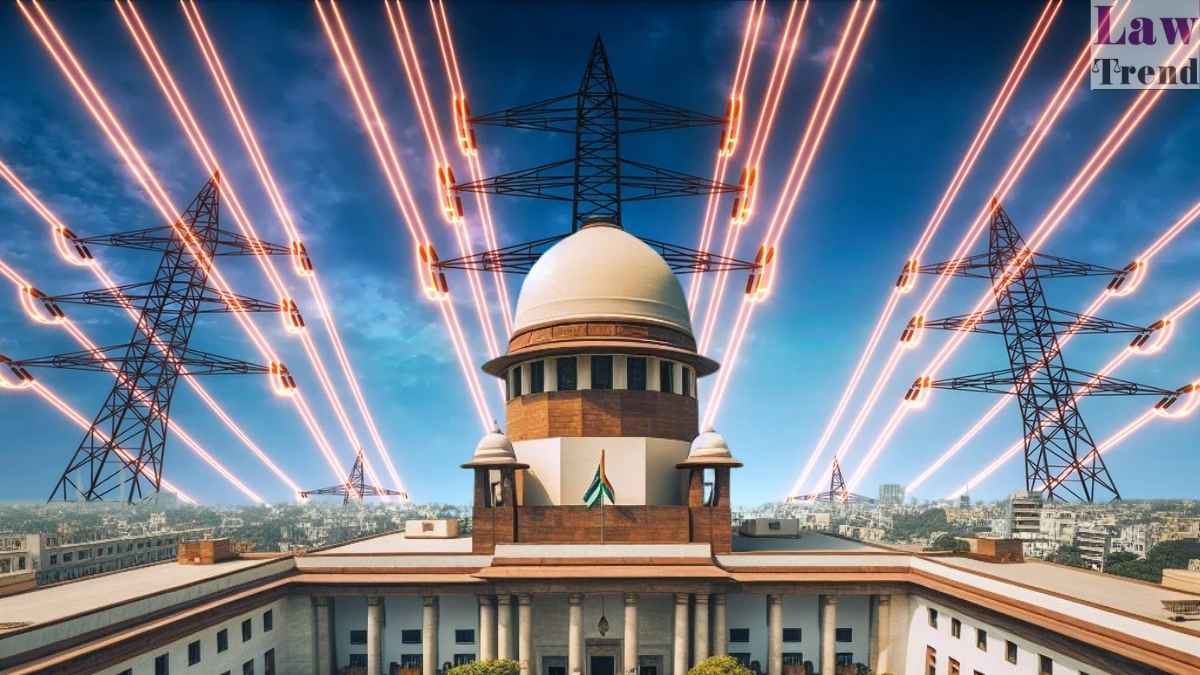

The Supreme Court of India has held that the 15% concessional electricity tariff incentive under Clause 16(a) of the Himachal Pradesh Industrial Policy, 2019, was always intended exclusively for “new industrial enterprises” and cannot be claimed by existing industrial units undergoing substantial expansion.

A Bench of Justices J.B. Pardiwala and K.V. Viswanathan set aside a judgment of the High Court of Himachal Pradesh, which had directed the State to extend the tariff concession to an existing unit under expansion. The Supreme Court ruled that expanding enterprises are only entitled to the consumption-linked electricity rebate provided under Clause 16(b) of the Policy, and allowing them to claim both benefits would result in an impermissible dual benefit contrary to the scheme’s intent and fiscal discipline.

Background of the Dispute

On August 16, 2019, the Government of Himachal Pradesh notified the Industrial Policy of 2019 along with the corollary “Rules regarding grant of incentives, concessions, facilities for investment promotion in Himachal Pradesh, 2019” (2019 Rules). The objective of the policy was to create a congenial investment climate, boost local employment, and offset geographical disadvantages by providing low-cost power and tax concessions.

Under Clause 5(A) of the Policy, both “New Industrial Enterprises” and “Existing Industrial Enterprises undertaking Substantial Expansion” were eligible for incentives, subject to certain conditions such as employing a minimum of 80% bonafide Himachalis.

The controversy centred on Clause 16 of the Policy and Rule 16(i) of the 2019 Rules, which provided for a “Concessional rate of electricity charges”:

  • Clause 16(a) / Rule 16(i)(a): Stated that “Eligible enterprises” would be charged energy charges 15% lower than the approved charges for a period of 3 years.
  • Clause 16(b) / Rule 16(i)(b): Provided that “Existing industrial consumers” would receive a rebate of 15% on energy charges for additional power consumption beyond the level of the preceding financial year.

The respondent, M/s Kundlas Loh Udyog, an existing industrial metal processing unit established in 2006, undertook a substantial expansion of its plant and machinery by over 88% in 2020. The State Single Window Clearance & Monitoring Authority approved the expansion, and on February 12, 2021, the State issued a Commencement of Commercial Production Certificate (COP Certificate) confirming the substantial expansion.

The respondent filed a writ petition in the High Court of Himachal Pradesh, seeking the 15% concessional energy rate under Clause 16(a) as an “eligible enterprise”. While the writ petition was pending, the State issued an amendment notification on April 29, 2022, substituting the word “eligible” with “new” in Clause 16(a) and Rule 16(i)(a), and explicitly adding “substantial expansion” to the rebate provisions of Clause 16(b).

READ ALSO  No Life Imprisonment If Kidnapper Took Good Care of the Child or Didn’t Threaten: Supreme Court

The High Court allowed the writ petition, setting aside Clause 5B of the Industrial Policy and Rules 4(B) and 4(F) of the 2019 Rules to the extent of their inconsistency. It directed the State to issue enabling notifications to grant the Clause 16(a) tariff concession to the respondent from its date of commercial production after expansion. The State appealed this decision before the Supreme Court.

Submissions of the Parties

For the Appellants (State of Himachal Pradesh & Ors.)

Represented by Senior Counsel Mr. P. Chidambaram, Mr. Kapil Sibal, and Mr. Anup Rattan, along with Additional Advocate General Mr. Vaibhav Srivastava, the appellants argued:

  1. The use of the word “eligible” instead of “new” in the unamended Clause 16(a) and Rule 16(i)(a) was a drafting error, which was subsequently corrected by the amendment notification dated April 29, 2022.
  2. The amendment was merely clarificatory in nature and, therefore, must apply retrospectively.
  3. The respondent is admittedly an existing industry (established in 2006) and has already been given the 15% rebate incentive for additional power consumption under Clause 16(b). Allowing it to also claim the tariff concession under Clause 16(a) would amount to a “double benefit” which was never intended.

For the Respondent (M/s Kundlas Loh Udyog)

Represented by Senior Counsel Mr. Navin Pahwa, the respondent argued:

  1. The State was bound by the doctrine of promissory estoppel as the respondent had altered its position by making substantial investments (amounting to an 88.69% increase in plant and machinery) relying on the unamended Policy.
  2. The respondent’s rights had fully crystallised on February 12, 2021, when the COP Certificate was issued, which was prior to the 2022 amendment.
  3. The amendment notification dated April 29, 2022, could only have prospective operation because Clause 4 of the notification expressly stipulated that the amended provisions would come into force with “immediate effect.”

The Court’s Analysis

The Supreme Court framed two primary issues for determination:

  1. Whether the Clause 16(a) tariff concession was ever intended to apply to existing enterprises undergoing substantial expansion, and the legal effect of the 2022 amendment.
  2. Whether the doctrine of promissory estoppel applies in favor of the respondent.

I. Interpretation of Clause 16 and the 2022 Amendment

Justice J.B. Pardiwala, writing the judgment for the Bench, analyzed the unamended structure of the 2019 Policy alongside the contemporaneous tariff orders issued by the HP State Electricity Board. The Court noted that since 2018, tariff orders had consistently maintained a dual structure: a general tariff concession for new industries and a consumption-linked rebate on additional power for existing expanding units.

The Court observed:

“If the contention of the respondent were to be accepted, namely, that the expression ‘eligible industrial enterprises’ occurring in Clause 16(a) included not only new industrial enterprises but also existing industrial enterprises undergoing substantial expansion, then such expanding units would become entitled to claim both the concessional energy charges under Clause 16(a) as well as the rebate on additional consumption under Clause 16(b)… In our considered view, neither the scheme of the Industrial Policy of 2019 nor the contemporaneous tariff orders indicates that the State ever intended to confer such double benefits upon the same category of enterprises.”

The Court explained that the policy consciously categorized benefits to avoid an “unintended fiscal burden upon the State.” It noted that new enterprises require concessions to set up operations, whereas existing enterprises are encouraged to expand through incremental rebates.

READ ALSO  सुप्रीम कोर्ट ने सभी राज्यों और केंद्र शासित प्रदेशों को सेक्स वर्कर्स को वोटर कार्ड, राशन कार्ड और आधार जारी करने का निर्देश दिया

Regarding the 2022 amendment, the Court held that substituting “eligible” with “new” in Clause 16(a) did not create or extinguish any substantive rights but was merely “clarificatory in nature.” Consequently, it relates back to the inception of the original policy:

“The substitution of the word ‘eligible’ with the word ‘new’ in Clause 16(a) and Rule 16(i)(a)… did not introduce any new class of beneficiaries, nor did it create or extinguish any substantive right. Rather, the amendment merely clarified what was always intended by the appellants… Being clarificatory in character, the amendment would necessarily relate back to and operate as part of the original policy.”

However, the Court clarified that one specific amendment—the introduction of a three-year limitation on the Clause 16(b) rebate—was substantive and would operate prospectively.

II. Applicability of Promissory Estoppel

The respondent argued that the State was estopped from denying the concession due to the representations in the 2019 Policy and the subsequent issuance of the COP Certificate.

To address this, the Court reviewed key precedents on the doctrine of promissory estoppel, specifically discussing:

  • Shree Sidhbali Steels Ltd. v. State of U.P. (2011) 3 SCC 193
  • State of Rajasthan v. J.K. Udaipur Udyog Ltd. (2004) 7 SCC 673
  • Arvind Industries v. State of Gujarat (1995) 6 SCC 53
  • IFGL Refractories Ltd. v. Orissa State Financial Corporation 2026 SCC OnLine SC 28 (which reviewed several authorities, including Motilal Padampat Sugar Mills, Pawan Alloys, Lotus Hotels, Tata Metals, Camma Textile Industries, and State of Jharkhand v. Brahmputra Metallics Ltd.)

Summarizing the legal position, the Court noted that while the Government is competent to modify or withdraw fiscal benefits in the public interest, it can be precluded from resiling if a clear, unequivocal promise was made and the promisee altered their position.

READ ALSO  SC notice on plea against police encounters in Assam

Applying these principles to the present facts, the Court found that the respondent had failed to establish an entitlement to the tariff concession:

  1. No Specific Sanction: The mere issuance of the COP Certificate on February 12, 2021, did not amount to a grant of the Clause 16(a) concession. Under Rule 27 of the 2019 Rules, concessions must be formally sanctioned and disbursed by the Director of Industries. No such sanction was ever granted to the respondent.
  2. Promissory Estoppel Cannot Create Unintended Entitlements: The Court emphasized that equity cannot be used to force the State to grant benefits contrary to the true scope of its policy:

“The doctrine of promissory estoppel cannot be invoked to compel the State to grant a benefit which was never intended for the class of industry to which the respondent belonged. Once it is held that Clause 16(a) was never meant to extend the concessional tariff benefit to existing industrial enterprises undergoing substantial expansion, the very foundation of the respondent’s plea substantially falls.”

  1. No Inequity Survives: Because the respondent had already received the appropriate 15% rebate under Clause 16(b) for its expansion, the Court found no inequity or manifest injustice that would warrant the application of promissory estoppel.

The Decision

The Supreme Court allowed the appeal and set aside the High Court’s judgment. It concluded that:

  • Clause 16(a) and Rule 16(i)(a) were always intended to apply only to “new industrial enterprises.”
  • The April 29, 2022 amendment clarifying this distinction was retrospective in operation.
  • The respondent, as an expanding unit, was only entitled to the Clause 16(b) rebate, which it had already received.
  • The doctrine of promissory estoppel has no application in this case since no vested right was created, and enforcing the respondent’s claim would result in an unintended double benefit.

Case Details

  • Case Title: State of Himachal Pradesh & Ors. v. M/s Kundlas Loh Udyog
  • Case No.: Civil Appeal No. ____ of 2026 (Arising out of Special Leave Petition No. 26731 of 2025)
  • Bench: Justice J.B. Pardiwala and Justice K.V. Viswanathan
  • Date: May 25, 2026

Law Trend
Law Trendhttps://lawtrend.in/
Legal News Website Providing Latest Judgments of Supreme Court and High Court

Related Articles

Latest Articles

