

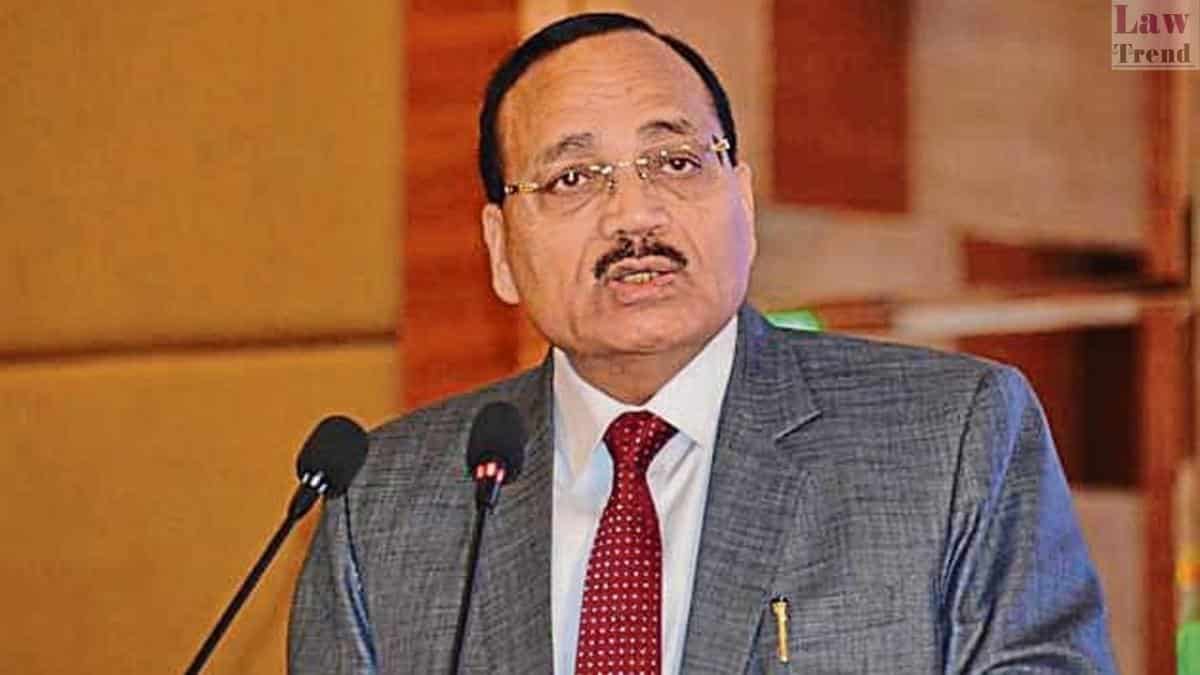
Chief Justice of India Justice Surya Kant has underlined that artificial intelligence should be integrated into the judicial system only as a supportive tool, cautioning that it must not replace the core function of judges in delivering judgments. Speaking at a seminar in Bengaluru, he stressed that while AI can improve efficiency, the final decision-making authority must remain with humans.
Addressing a one-day seminar on “Artificial Intelligence – Prevention and Resolution of Disputes” at the Karnataka Judicial Academy on Saturday, CJI Justice Surya Kant highlighted the growing role of technology in modern courts. He said AI can play a significant role in managing large volumes of data, identifying patterns, and reducing procedural delays.
At the same time, he drew a clear line on its limits.
“AI should assist in handling large volumes of data and records, identifying patterns, and reducing procedural delays,” he said, adding that it must not intrude into the judicial function of deciding cases.
The Chief Justice warned that allowing AI tools to dominate decision-making could affect transparency and accountability within the justice system. He emphasised that the final stage of adjudication must remain exclusively human.
“The final stage of the judicial process, pronouncement of judgments, must remain firmly in human hands,” he stated, stressing that judges must rely on their reasoning, experience, and analytical skills while delivering verdicts.
Reinforcing the idea of technology as an aid rather than a substitute, he said, “AI should function only as a tool or pathway, while the direction must always be determined by human intellect.”
The seminar was organised in collaboration with the UIA India Chapter, the Bar Association of India, and the National Law School of India University.
Karnataka High Court Chief Justice Vibhu Bakhru, who also spoke at the event, raised concerns about the evolving role of AI in courts. He questioned whether AI would remain an aid to judicial decision-making or gradually replace human judgment, potentially diminishing the role of judges.
He pointed out that AI offers both opportunities and risks. On one hand, it can enable predictive analysis of disputes and improve efficiency. On the other, it raises concerns that need careful handling. He noted that AI-driven online dispute resolution platforms could help in faster and more cost-effective case disposal.
Highlighting the need for safeguards, Justice Bakhru said judicial independence, transparency, and legality must remain paramount, and the use of AI must be governed by clearly defined principles.
Bar Association of India President Prashant Kumar also spoke about the practical benefits of AI. He said the technology has already enabled rapid translation of court judgments into local languages, improving access to justice in rural areas and helping lawyers communicate more effectively with their clients.
The discussions at the seminar reflected a broad consensus that while AI can transform judicial processes, its role must remain carefully regulated to preserve the integrity of the justice delivery system.




