

The Supreme Court has held that trade exhibitions where visitors are admitted on payment of an entry fee fall within the definition of entertainment under the Bombay Entertainments Duty Act, 1923, even when such events are exclusively organised for business-to-business transactions.
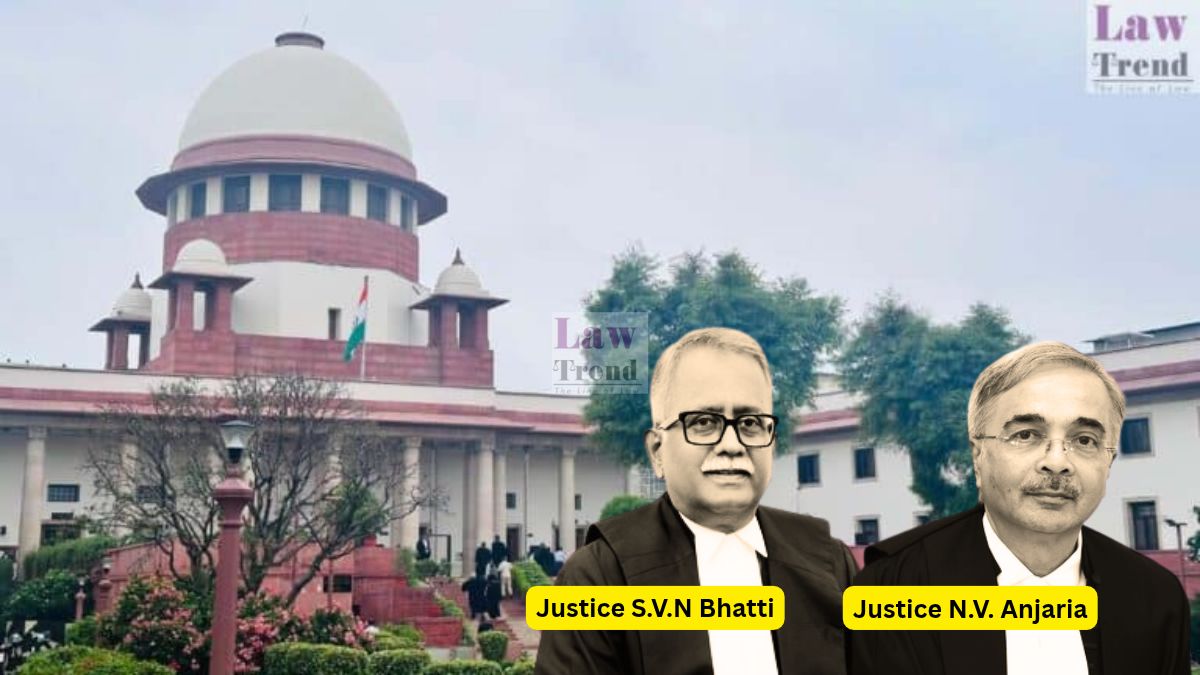
A Bench of Justice S.V.N. Bhatti and Justice N.V. Anjaria dismissed an appeal filed by the Gem and Jewellery Export Promotion Council (GJEPC), upholding the Bombay High Court’s decision that the India International Jewellery Show (IIJS) and IIJS Signature exhibitions were liable to entertainment duty.
In its judgement dated November 19, 2026, the Court clarified that the commercial nature of an exhibition or restrictions on public entry cannot exclude an event from the statutory definition when admission is subject to payment.
Payment for Admission Determines Taxability
The central question before the Supreme Court was whether exhibitions conducted exclusively for traders, manufacturers and commercial buyers could attract entertainment duty under Sections 2(a) and 3 of the 1923 Act.
Examining the statutory definition, the Court held that Section 2(a) expressly includes exhibitions, performances, amusements, games and sports to which persons are admitted for payment.
The Bench observed:
“The words ‘to which persons are admitted for payment’ would be the deciding factor in determining whether an event falls within, or in determining the scope of ‘entertainment’ under Section 2(a) of the Act, 1923.”
The Court rejected the Council’s argument that its exhibitions were outside the scope of entertainment because they facilitated commercial transactions rather than recreational activities.
It held:
“The entry is on payment, and upon entry, even if it is a business-to-business transaction, the same cannot be taken away from the definition of ‘entertainment’ under the Act, 1923.”
The Bench further explained that requiring visitors to submit applications and business credentials before admission did not alter the statutory position. Such screening requirements could serve several purposes, including security, but could not defeat the plain meaning of the law.
Background of the Entertainment Duty Dispute
The GJEPC, a company incorporated under Section 25 of the Companies Act, 1956, under the aegis of the Union Ministry of Commerce, organises IIJS and IIJS Signature to promote India’s gems and jewellery exports.
The exhibitions provide a platform for domestic and international buyers to interact with manufacturers, exporters and other jewellery traders.
The dispute arose when Maharashtra authorities demanded entertainment duty from the Council in connection with its exhibitions in Mumbai.
For IIJS 2011, the Council initially deposited ₹62,76,875 under protest to obtain the necessary no-objection certificate. Subsequently, the Additional Collector assessed its liability at ₹97,09,500 and demanded the remaining ₹34,32,625.
On appeal, the Divisional Commissioner, Konkan Division, reduced the assessment for IIJS 2011 to ₹45,40,125 after deleting the duty and penalty imposed in relation to 919 exhibitor passes. The appellate authority also directed a refund of ₹51,69,250.
The Council challenged the levy itself before the Bombay High Court, seeking a declaration that its exhibitions did not constitute entertainment under the 1923 Act. However, the High Court dismissed its petition on March 4, 2013.
The Council subsequently approached the Supreme Court.
Arguments Before the Supreme Court
Advocate Aman Raj Gandhi, appearing for the Council, argued that IIJS and IIJS Signature were exclusively business-to-business exhibitions and did not involve amusement, recreation, performances or other activities ordinarily associated with entertainment.
He submitted that members of the general public could not enter the exhibitions as a matter of right. Prospective visitors had to establish their business credentials, undergo scrutiny and pay registration charges before receiving admission.
According to the Council, payment of an entry fee could not, by itself, establish that an event constituted entertainment. It also relied on the Supreme Court’s decision in Geeta Enterprises v. State of U.P., arguing that the exhibitions did not satisfy the relevant legal tests.
Advocate Bharat Bagla, appearing for the respondents, maintained that the statutory definition covered exhibitions admitting visitors on payment. He argued that restricting admission through a screening process did not take the exhibitions outside the scope of Section 2(a).
Supreme Court Explains Scope of Inclusive Definition
The Bench examined the interpretation of the word “includes” in statutory definitions and referred to its earlier decisions in Commissioner of Sales Tax, State of Gujarat v. Union Medical Agency, Bharat Cooperative Bank (Mumbai) Ltd. v. Cooperative Bank Employees Union and Forest Range Officer v. P. Mohammed Ali.
The Court explained that an inclusive definition generally extends the ordinary meaning of a statutory expression rather than restricting it.
It also considered Geeta Enterprises, which addressed the meaning of entertainment and the relevance of payments made to access an activity.
Applying these principles, the Bench found that visitors to IIJS and IIJS Signature were admitted upon payment and that the exhibitions displayed merchandise belonging to participating traders.
The Court concluded that the commercial purpose of these events did not change their classification under the 1923 Act.
It also agreed with the Bombay High Court’s interpretation of the law and its assessment of the exhibitions.
Appeal Dismissed
Finding no reason to interfere with the Bombay High Court’s judgement, the Supreme Court upheld the application of entertainment duty to the Council’s exhibitions.
The Bench concluded:
“We are in full agreement with the impugned Judgment.”
Accordingly, the civil appeal was dismissed, and all pending applications were disposed of.
Case Details
Case Title: The Gem and Jewellery Export Promotion Council v. The State of Maharashtra and Others
Case Number: Civil Appeal No. 1889 of 2015
Bench: Justice S.V.N. Bhatti and Justice N.V. Anjaria
Date of Judgement: November 19, 2026