

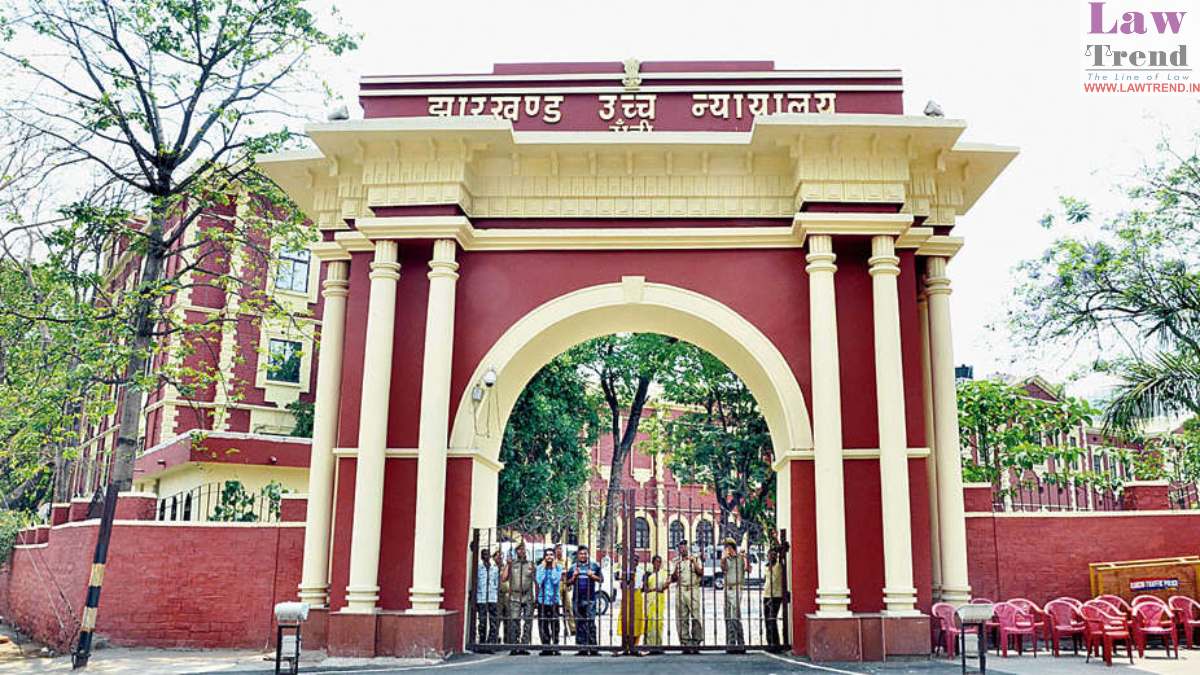
The Jharkhand High Court has directed the state authorities to appoint a 38-year-old woman with locomotor disability as a chowkidar after finding that she was excluded from recruitment for exceeding the prescribed running-test limit by just three seconds without being provided reasonable accommodation under the Rights of Persons with Disabilities Act, 2016.
Justice Deepak Roshan, in an order dated November 4, held that the recruitment authorities could not rely on service rules to deny accommodations mandated by parliamentary legislation. The court directed the Deputy Collector (Establishment), Dumka, to issue an appointment letter to petitioner Juthika Pal within eight weeks of receiving the order.
The court also noted that 11 of the 13 posts reserved for persons with disabilities (PwD) remained vacant, even though Pal had qualified in the written examination.
High Court Rejects State’s Reliance on Recruitment Rules
The court examined Section 20 of the Rights of Persons with Disabilities Act, 2016, which prohibits discrimination against persons with disabilities in government employment and requires employers to provide reasonable accommodation and a barrier-free environment.
It also considered Section 2(y), which defines reasonable accommodation as necessary and appropriate modifications or adjustments that do not impose a disproportionate or undue burden and enable persons with disabilities to exercise their rights equally.
The state government maintained that neither the Chowkidar Cadre Rules, 2015, nor the personnel department’s resolution of April 3, 2018, permitted additional time or exemptions for disabled candidates in physical tests.
Rejecting this position, Justice Roshan held that administrative rules and notifications cannot prevail over legislation enacted by Parliament.
The court also relied on the Supreme Court’s decision in Vikash Kumar v Union Public Service Commission, which recognised reasonable accommodation as an essential obligation under disability rights law and emphasised equality, non-discrimination and dignity.
Finding that Pal had missed the running-test requirement by only three seconds because no reasonable accommodation had been provided, the court concluded that her exclusion was legally unsustainable.
Candidate Cleared Written Examination but Missed Running Limit
The dispute arose from a recruitment advertisement issued by the Dumka district administration in 2025 for 328 chowkidar vacancies involving village-level watch and ward duties.
Pal, a resident of Jaruadih village in Dumka, applied under the PwD category, for which four per cent of the posts were reserved. She appeared in the written examination on October 5, 2025, and qualified.
A general notice issued on November 1 required successful candidates to attend physical tests scheduled between November 4 and 6. Pal’s name appeared at serial number 628 in the candidate list.
Despite her locomotor disability, the authorities required her to undertake the same running test as other candidates without providing additional time or any other accommodation.
She completed the run in 10 minutes and three seconds, exceeding the maximum permitted time of 10 minutes. Following the test, she was asked to sign a document recording that she had failed to qualify by three seconds.
Her roll number was subsequently omitted from the provisional merit list. Pal also complained that the authorities had not published separate results or qualifying cut-off marks for PwD applicants.
State Defends Physical Test Criteria
Opposing the petition, the state submitted that recruitment was based on performance in the written examination, physical test and work experience.
Under the applicable assessment criteria, women completing the run within eight minutes received 20 marks, while those finishing within 10 minutes received 10 marks. Candidates exceeding the 10-minute limit were disqualified.
The government argued that Pal’s recorded time of 10 minutes and three seconds made her ineligible under these criteria and that the governing recruitment provisions contained no relaxation for candidates with disabilities.
Pal’s counsel challenged the decision, arguing that applying identical physical standards to a candidate with locomotor disability without reasonable accommodation violated the statutory protections available under the 2016 Act.
Eleven Reserved Vacancies Remained Unfilled
The court recorded that 13 of the advertised vacancies were reserved for persons with disabilities, but only two candidates had been selected against those posts.
Pal had submitted a representation requesting consideration for one of the remaining 11 vacancies. With no decision forthcoming, she approached the High Court seeking appointment under the disability quota.
Allowing her claim, the court held that she was entitled to appointment against a PwD-reserved chowkidar vacancy under the 2025 advertisement.
Justice Roshan directed the Deputy Collector (Establishment), Dumka district, to complete the necessary appointment formalities and issue her appointment letter within eight weeks from the date of receipt of the court’s order.


