

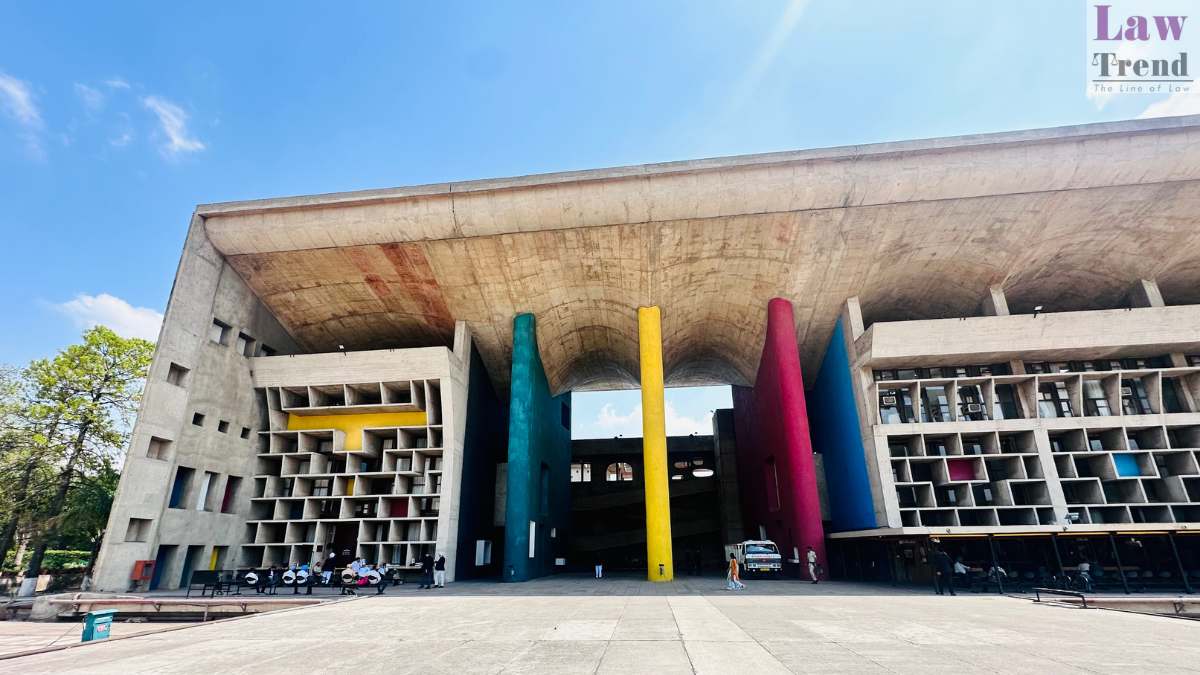
The Punjab and Haryana High Court has upheld compensation of Rs 44.63 lakh awarded to the family of a 36-year-old advocate who died in a road accident in 2024, rejecting an insurance company’s challenge to the assessment of his annual earnings.
Justice Harsh Bunger held that the Motor Accident Claims Tribunal (MACT) had correctly assessed the deceased advocate’s income at Rs 4.16 lakh per annum on the basis of his income tax return for the assessment year 2022-23.
The court also took judicial notice of the growing volume of litigation and improving economic conditions, observing that both developments had contributed to increased earnings among legal professionals over the past three decades.
Court Rejects Insurance Company’s Income Calculation Argument
National Insurance Company Limited had challenged the tribunal’s award, arguing that the deceased advocate’s annual income should have been determined by averaging his income tax returns for the preceding three years rather than relying on a single return.
Appearing for the insurer, advocate Harjinder Singh submitted that the tribunal had incorrectly assessed the victim’s yearly earnings at Rs 4.16 lakh using only the return for assessment year 2022-23.
The High Court, however, found no justification for disturbing the tribunal’s calculation.
It considered the deceased’s professional status as a practising advocate before the High Court and noted that his income tax returns for the three years preceding his death reflected a progressive increase in earnings.
The court further observed that rising litigation and improved financial capacity among clients had positively affected the legal profession.
According to the ruling, economic prosperity and the growth in litigation had contributed to the economic advancement of lawyers as a professional community. The court noted that lawyers had benefited from the increased paying capacity of their clients.
On these considerations, Justice Bunger declined to interfere with the tribunal’s assessment of the advocate’s annual income.
Insurance Company Also Disputed Accident Liability
Apart from questioning the compensation calculation, the insurer denied the involvement of the vehicle allegedly responsible for the collision.
It contended that the accident had occurred entirely because of the deceased advocate’s own negligence.
The case arose from an accident in March 2024, when the advocate was travelling from Delhi towards his village, Rasulpur.
According to the claim petition, at approximately 4.30 am, his car reached an area near Shivalik College at village Binjalpur in Mullana, Ambala district, when another vehicle allegedly struck it from behind.
The claimants alleged that the other car was being driven at excessive speed and in a rash and negligent manner. The collision caused the advocate to lose control of his vehicle, which veered off the road and struck a tree.
He sustained multiple serious injuries and was taken to hospital, where he subsequently died. An FIR was registered following the incident.
His family thereafter approached the Motor Accident Claims Tribunal seeking compensation.
The tribunal assessed his earnings using his latest income tax return and awarded Rs 44.63 lakh to the family.
The High Court ultimately upheld the tribunal’s assessment, finding no reason to interfere with the determination of the deceased advocate’s yearly income.


