

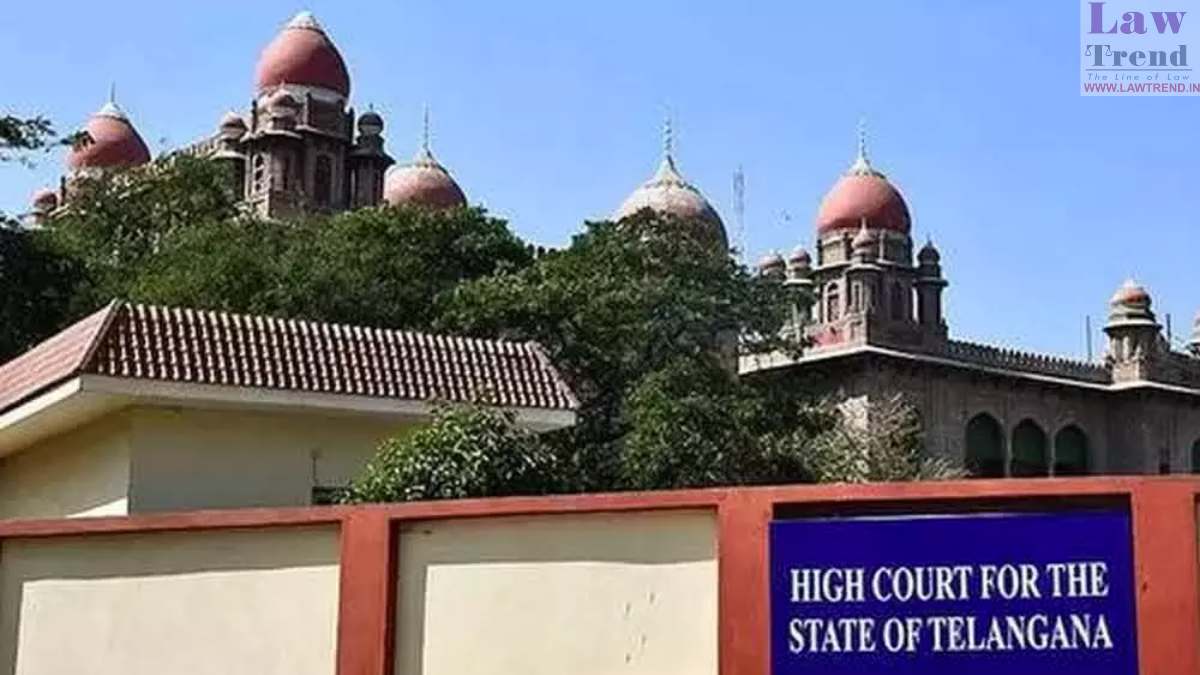
The Telangana High Court has upheld an Armed Forces Tribunal order granting pensionary benefits to a former Army personnel who was discharged on medical grounds after serving nine years, six months and 15 days, holding that a marginal shortfall in qualifying service could be condoned when the discharge was involuntary.
A Division Bench of Acting Chief Justice P Sam Koshy and Justice Narsing Rao Nandikonda dismissed the Army authorities’ petition challenging the tribunal’s March 2022 decision. In its November 11 order, the court emphasised that pension is a benefit earned through service rather than a discretionary payment by the State.
The bench found that the former soldier’s inability to complete the required 10 years of service resulted from the Army’s decision to declare him medically unfit, not from any voluntary decision to leave service.
Medical Board’s Findings Remain Undisturbed
The former soldier joined the Indian Army in July 2000 and was discharged in January 2010. A medical examination conducted in December 2009 diagnosed him with Alcohol Dependence Syndrome.
The Invaliding Medical Board assessed his disability at 11–14 per cent and concluded that the condition was neither attributable to nor aggravated by military service. Consequently, the Army denied him disability pension, a decision confirmed by the authorities on August 18, 2010.
Although he did not appeal against the rejection of disability pension, he subsequently approached the Armed Forces Tribunal seeking pensionary relief.
The tribunal, in March 2022, ruled in his favour and directed the authorities to extend pension and associated benefits after condoning the deficiency in qualifying service.
Army Challenges Tribunal’s Decision
Representing the Army authorities before the High Court, standing counsel Arvind Kumar Kata maintained that the medical board’s conclusion ruled out entitlement to disability pension.
He also submitted that judicial bodies lack the medical expertise necessary to independently evaluate disabilities and should ordinarily refrain from interfering with professional medical assessments.
Advocate S Govinda Rao represented the former soldier.
The High Court accepted the general principle that courts and tribunals should exercise restraint when examining medical board findings. However, it distinguished the medical assessment from the legal question concerning pension eligibility.
The judges clarified that the tribunal had neither reversed the medical board’s conclusions nor independently reassessed the nature of the soldier’s illness.
The finding that Alcohol Dependence Syndrome was unrelated to military service remained unchanged.
Instead, the tribunal had determined the legal consequences of an involuntary medical discharge where the soldier had completed slightly less than the prescribed qualifying service.
Marginal Service Shortfall Cannot Defeat Pensionary Relief
The High Court observed that the former soldier had completed nine years, six months and 15 days of service before the Army itself declared him medically unfit.
Considering the limited shortfall against the 10-year requirement, the bench found that condonation was consistent with the objective of the pension scheme.
The court also noted that the Army authorities had failed to identify any provision expressly preventing such condonation.
Emphasising the character of pension as an earned benefit, the bench stated:
“Pension is not a bounty granted at the pleasure of the State. It is a benefit earned by service.”
The judges further explained that while the medical board’s determination regarding the disease and its lack of connection with military service remained binding, that finding did not prevent the tribunal from deciding the applicable pensionary consequences.
Accordingly, the High Court dismissed the Army authorities’ challenge and affirmed the Armed Forces Tribunal’s order directing payment of pension and related benefits to the former soldier.


