

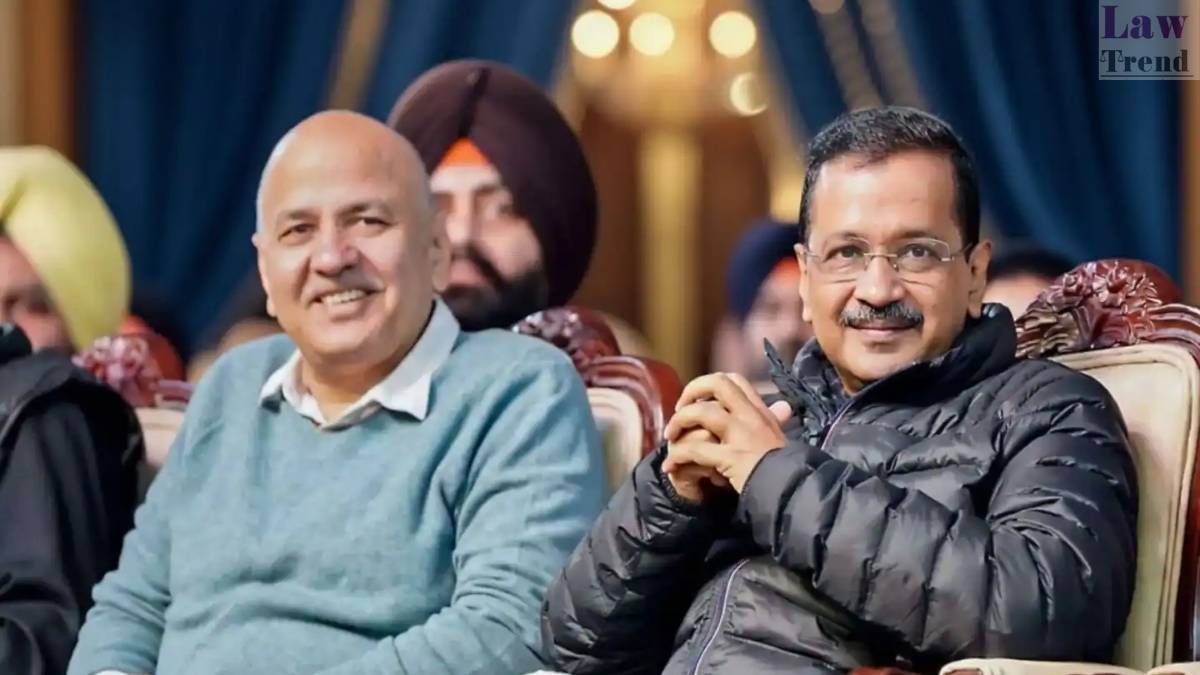
The Delhi High Court on Tuesday granted a final three-week opportunity to AAP leaders Arvind Kejriwal, Manish Sisodia, Sanjay Singh and others to file their responses in criminal contempt proceedings concerning social media posts allegedly targeting Justice Swarana Kanta Sharma.
A Division Bench of Justices Navin Chawla and Arun Bhardwaj made it clear that the respondents would lose their right to file replies if they failed to comply within the stipulated period.
The court also directed the AAP leaders, including former MLA Gopal Rai, and journalist Saurav Das to respond to a separate contempt petition alleging their involvement in an organised social media campaign against Justice Sharma.
The matter will be heard next on January 14.
Court Rejects Request for Further Time
During the hearing, counsel representing one of the respondents claimed that the complete case record had not been supplied despite an earlier direction.
The Bench rejected the submission after referring to a registry report confirming that the necessary documents had been provided.
Expressing displeasure over the delay, the judges said no further extension would be granted beyond three weeks. They warned that failure to submit responses within that period would result in the closure of the respondents’ right to file them.
Contempt Proceedings Over Social Media Posts
The proceedings originated from an order passed by Justice Swarana Kanta Sharma on May 14, initiating criminal contempt action against Kejriwal, Sisodia, Singh and several other AAP leaders, including Durgesh Pathak, Saurabh Bharadwaj and Vinay Mishra.
The action concerned social media posts allegedly directed against the judge in connection with proceedings arising from the Delhi excise policy case.
Justice Sharma also initiated contempt proceedings against X user Devesh Vishwakarma. Subsequently, advocate Ashok Chaitanya filed a separate petition seeking criminal contempt action.
On May 19, the High Court issued notices to the politicians in the suo motu proceedings and allowed them four weeks to submit their responses. Senior advocate Rajdipa Behura was appointed amicus curiae.
In her contempt order, Justice Sharma alleged that Kejriwal had undertaken a calculated social media campaign against her instead of pursuing available legal remedies.
The judge referred to posts that allegedly attributed political affiliations and allegiances to her. She also raised concerns about the circulation of an allegedly misleading edited video of a speech she had delivered at an educational institution in Varanasi.
Justice Sharma further referred to the widespread sharing of video clips from court proceedings, observing that the proposed contemnors were attempting to construct a parallel narrative concerning the case.
She maintained that remaining silent in the circumstances would amount to yielding to a powerful litigant rather than exercising judicial restraint.
The judge also clarified that the CBI’s petition challenging the discharge of the accused in the excise policy case would be placed before another Bench.
Background of the Excise Policy Proceedings
The contempt dispute arose against the backdrop of litigation challenging the discharge of Kejriwal, Sisodia and 21 others in the liquor policy case.
On February 27, the trial court discharged all 23 accused, finding that the prosecution case could not withstand judicial scrutiny and was discredited in its entirety.
The CBI subsequently challenged the discharge order before the Delhi High Court.
During those proceedings, Kejriwal, Sisodia and Durgesh Pathak sought Justice Sharma’s recusal from hearing the matter. Their applications were dismissed on April 20.
Following the rejection, the three AAP leaders addressed a letter to Justice Sharma stating that they would neither appear before her personally nor engage lawyers to represent them.
They also declared their intention to follow Mahatma Gandhi’s path of Satyagraha.
The criminal contempt proceedings will now continue with the High Court requiring the respondents to submit their replies within the final three-week period.


