

The Supreme Court has held that a resolution plan which leaves dissenting financial creditors to be paid through debentures redeemable over six years does not provide for “payment” under Section 30(2)(b) of the Insolvency and Bankruptcy Code, 2016. The ruling came in the Videocon group insolvency.
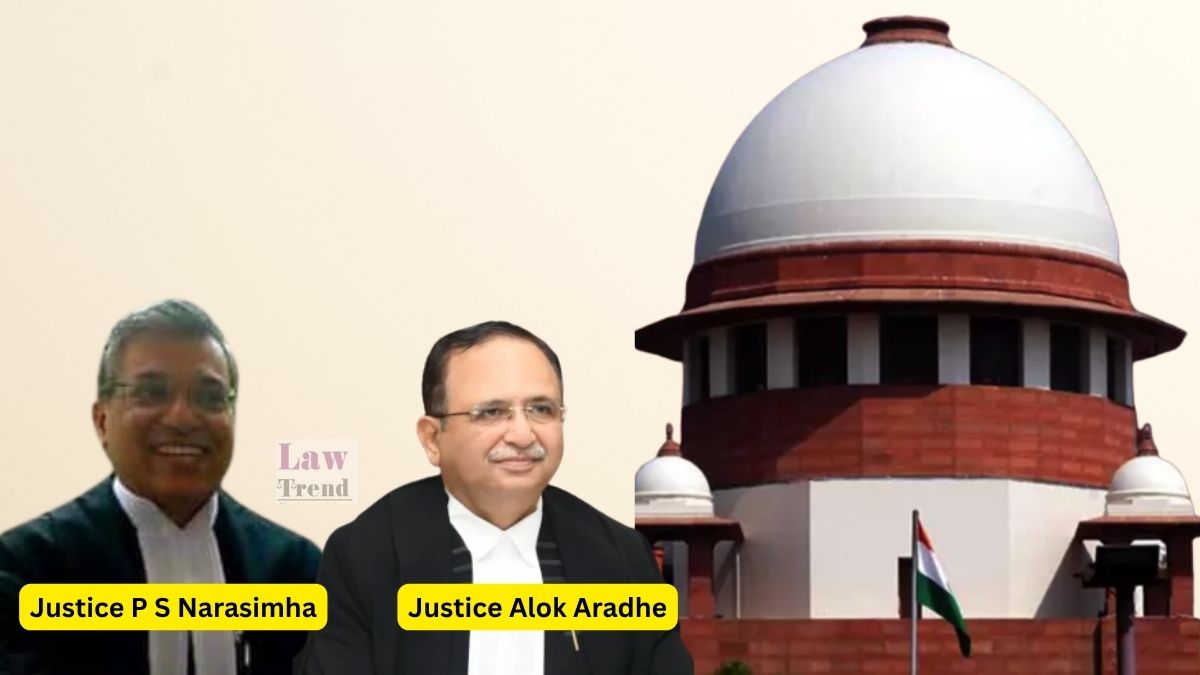
A Bench of Justice Pamidighantam Sri Narasimha and Justice Alok Aradhe upheld the NCLAT’s decision setting aside approval of Twinstar Technologies Limited’s resolution plan for Videocon Industries Limited (VIL) and twelve group companies, and sending the matter back to the Committee of Creditors (CoC). In the same judgment, the Court dismissed the appeals seeking to bring the group’s foreign oil and gas assets into VIL’s insolvency.
The Resolution Plan
Twinstar’s amended plan had a total outlay of ₹2,962.02 crore. It offered financial creditors an upfront payment of ₹200 crore and non-convertible debentures (NCDs) with a face value of ₹2,700 crore at a 6.65 per cent annual coupon. The NCDs were redeemable in five instalments: the first, of ₹200 crore, 25 months after the closing date, and the remaining four, of ₹625 crore each, from the third to the sixth year.
The CoC approved the plan on December 11, 2020, with 95.09 per cent of the voting share. Bank of Maharashtra, IFCI, SIDBI and ABG Shipyard, holding about 3.077 per cent, dissented. On June 8, 2021, the NCLT approved the plan, but directed that the dissenting creditors be paid their liquidation value in cash, upfront, before any payment to the assenting creditors.
On appeal by the dissenting creditors, the NCLAT stayed the approval and ordered status quo ante. The CoC then told the NCLAT that it wished to reconsider its approval. On January 5, 2022, the NCLAT set aside the approval and remitted the matter to the CoC.
Arguments
Senior Advocate Guru Krishna Kumar, for Twinstar, argued that the CoC becomes functus officio once it approves a plan and cannot revisit its decision. He relied on Ebix Singapore and Amtek Auto. He also argued that the plan exceeded the liquidation value of ₹2,568.13 crore, and that the haircut was a commercial decision beyond the NCLAT’s review.
Additional Solicitor General N. Venkataraman, for Bank of Maharashtra, argued that the plan provided neither priority nor cash payment to dissenting creditors, as required by Jaypee Kensington. Solicitor General Tushar Mehta, for the CoC, submitted that the power to approve a plan carries with it the power to reconsider it, and that the CoC acts as a custodian of public trust.
Court’s Findings
Relying on the three-Judge Bench ruling in Jaypee Kensington, the Court held that “A plan which leaves the dissenting financial creditors to be discharged, in substance, through debentures redeemable over a period of six years does not provide for “payment” within the meaning of Section 30(2)(b) of the Code.”
The Court rejected Twinstar’s reliance on Clause 3.5.7 of the plan, which promised payment to dissenters strictly as per Section 30(2)(b). It observed that “Compliance with Section 30(2) of the Code is to be found in the terms of the plan, and not in an undertaking to comply.” It also held that the plan violated Regulation 38(1)(b) of the CIRP Regulations because it did not secure priority for dissenting creditors.
The NCLT’s direction to pay dissenters in cash was, in substance, a modification of the plan, the Court said. Only the CoC can alter a plan, so the NCLT could not cure the defect.
On the CoC’s role, the Court held that the CoC is not an adjudicatory body and does not become functus officio on approving a plan. Distinguishing Ebix and Amtek Auto, it stated that “The binding character of a plan approved by the CoC presupposes a plan that is compliant with the Code.”
The Court found in Twinstar’s favour on one point. It held that Competition Commission of India approval was obtained on December 8, 2020, before voting concluded, so the proviso to Section 31(4) was complied with.
Guardrails on Remand
The Court held that the NCLAT has the power to remit a non-compliant plan to the CoC, but laid down considerations to guide its use. A remand must further the Code’s objectives, rest on a finding of legal non-compliance, be used sparingly, and be accompanied by a strict direction to follow the Code’s timelines. The NCLAT may also remand where the NCLT has modified a plan instead of sending it back to the CoC. The Court cautioned that “A remand that advances none of these objectives is not justified merely because the power to order it exists.”
Foreign Oil and Gas Assets
Senior Advocates K.K. Venugopal and Gopal Sankaranarayanan, for promoter Venugopal Dhoot, argued that the Brazilian and Indonesian oil and gas assets belonged to VIL and should be part of its insolvency. Senior Advocate Maninder Singh, for the VIL Vendors Association, supported this.
The Court rejected the plea. It held that the assets are held through VIL’s subsidiaries and are excluded by clause (b) of the Explanation to Section 18 of the Code. It found that the promoter had himself asked to keep the assets out of the process and was estopped from seeking their inclusion. The Court also declined to interfere with Bharat PetroResources’ exercise of its right of first refusal in VOVL’s insolvency.
Outcome
All appeals were dismissed with no order as to costs. GAIL’s claim is to be dealt with by the resolution professional, and the Union of India is free to raise its contentions before the RP and the adjudicating authority. The VIL Vendors Association was given liberty to pursue remedies available under law.
Case Title: Twinstar Technologies Limited v. Bank of Maharashtra & Ors.
Case No.: Civil Appeal No. 894 of 2022 (with connected appeals)
Bench: Justice Pamidighantam Sri Narasimha and Justice Alok Aradhe
Date: November 16, 2026


